

Compare models
Galaxy Z Flip7 Vs Google Pixel 7A
- 1-year minimum warranty
- Free delivery on all items
- Free 30-day returns
Differences at a glance
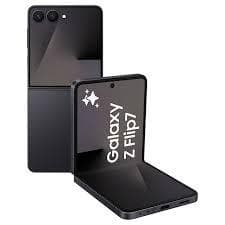
The Samsung Galaxy Z Flip7 (2025) and the Google Pixel 7a (2023) represent two entirely different approaches to modern smartphone design within the Android ecosystem. While the Galaxy Z Flip7 features a foldable clamshell form factor with a flexible inner display, the Google Pixel 7a adopts a traditional slate design focused on streamlined everyday utility. Both devices run on the Android operating system, yet they cater to completely different user preferences regarding physical structure, form factor utility, and core operational philosophies.
Available Models
Colour
Storage (GB)
Scores
Durability
Evaluating the long-term potential of these devices reveals distinct timelines regarding software support, hardware durability, and structural longevity in everyday use.
- Release timeline and update support: The Galaxy Z Flip7 benefits from a more recent release year, granting it a longer window of upcoming software upgrades compared to the Google Pixel 7a, which launched earlier in the decade.
- Structural durability and mechanics: The Google Pixel 7a relies on a rigid slate body with standard glass and frame materials, whereas the Galaxy Z Flip7 incorporates a folding mechanism and flexible display glass that require careful handling over years of frequent opening and closing.
- Expected practical lifespan: Both units handle routine daily tasks reliably, though users seeking extended software support timelines will find the newer release model better equipped for long-term usage consistency.
Year of Release
2025
2023
Performance
Performance capabilities vary noticeably between the two models, shaped by differences in internal hardware configuration, available memory capacities, and thermal management during extended tasks.
- Multitasking and daily fluidity: The Galaxy Z Flip7 features ample memory and a current-generation processor configuration that handles demanding applications, heavy multitasking, and gaming smoothly. The Google Pixel 7a manages everyday messaging, web browsing, and standard media streaming reliably, though intensive gaming sessions may push its hardware limits sooner.
- Storage capacity choices: The Galaxy Z Flip7 offers expansive built-in storage tiers suitable for large media libraries and offline files, while the Google Pixel 7a provides a fixed, moderate storage baseline adequate for standard applications and cloud-backed media storage.
- Battery behavior: Battery endurance varies under heavy workloads; the Galaxy Z Flip7 balances a multi-screen setup with efficient power management, while the Google Pixel 7a provides dependable daily power for moderate usage patterns before requiring a recharge.
Screen quality
Display experiences differ fundamentally due to screen architecture, physical layout, and interactive features available on the exterior and interior surfaces.
- Display technology and form factor: The Galaxy Z Flip7 utilizes an expansive foldable OLED interior panel paired with a functional cover screen for quick glances at notifications, while the Google Pixel 7a features a flat, rigid OLED display with a fixed traditional layout.
- Visual clarity and refresh rate: Both models support smooth refresh rates that ensure fluid scrolling through web pages and menus, alongside sharp resolutions that render text and high-definition video with distinct clarity.
- Brightness and outdoor visibility: Each device incorporates high-brightness modes to maintain legibility under direct sunlight, ensuring content remains viewable outdoors regardless of whether the user is interacting with a traditional slate panel or a folding screen.
Audiovisual
Capture capabilities and media consumption features reflect distinct hardware choices tailored to different photography styles and audio-visual preferences.
- Camera system configuration: The Google Pixel 7a utilizes computational photography algorithms paired with a standard dual-lens rear setup to produce balanced everyday photos with minimal user input. The Galaxy Z Flip7 relies on its main and ultra-wide sensors, offering unique shooting angles enabled by its folding hinge that allows the device to prop itself up on flat surfaces.
- Video and low-light performance: Both handsets manage low-light environments effectively using software stabilization, recording steady video clips and crisp evening photographs for casual documentation.
- Audio output: Built-in stereo speakers on both models deliver clear sound for hands-free calls, podcasts, and casual video viewing, though neither includes a physical headphone port.
Miscellaneous
Practical everyday elements such as connectivity standards, physical dimensions, and security features shape how each phone integrates into daily routines.
- Connectivity and ports: Both models support modern 5G networks, fast Wi-Fi standards, and Bluetooth pairing, utilizing reversible charging ports for power replenishment and data transfer.
- Authentication sensors: The Google Pixel 7a uses an optical under-display fingerprint reader and facial recognition, whereas the Galaxy Z Flip7 integrates its fingerprint scanner into the side power button alongside facial unlock options.
- Handling and portability: The Google Pixel 7a maintains a classic, solid slate footprint, while the Galaxy Z Flip7 folds in half to occupy significantly less space in pockets or small bags when traveling. A quality-assured refurbished option can provide a sustainable choice for consumers looking to explore advanced mobile technology while reducing environmental impact.
Screen size (in)
6.9
6.1
Mobile network
5G
5G
SIM card
Physical SIM + eSIM
Physical SIM + eSIM
Carrier compatibility
Unlocked
Unlocked
What the community thinks
User feedback from online communities highlights distinct patterns of praise and common considerations for both devices. Owners of the Google Pixel 7a frequently commend its reliable everyday performance, straightforward user experience, and dependable camera output for daily snapshots. Conversely, users of the Galaxy Z Flip7 often praise its pocket-friendly folding design, versatile cover screen utility, and modern processing speeds, while occasionally noting that the folding crease requires minor adjustment during initial use.
Users prioritizing a compact, pocketable form factor with innovative screen flexibility may prefer the Galaxy Z Flip7, while users prioritizing a traditional, straightforward smartphone experience with robust everyday utility will find the Google Pixel 7a well-suited to their needs. Deciding between these two options depends entirely on individual preferences regarding physical design and daily interaction habits, making either model a practical consideration depending on personal workflow.