
Google Pixel 6 Vs iPhone 15 Pro

Google Pixel 6
Google Pixel 6
Starting at

Refurbished price:£101.00

Versus £649.99 new

See options
iPhone 15 Pro
iPhone 15 Pro
Starting at

Refurbished price:£399.00

Versus £999.00 new

See options

Ratings

The Google Pixel 6, released in October 2021, and the iPhone 15 Pro, launched in September 2023, represent distinct approaches to the premium smartphone experience. While the Pixel 6 showcases Google's vision for Android with a strong emphasis on computational photography and artificial intelligence, the iPhone 15 Pro offers Apple's latest advancements in performance, camera technology, and the iOS ecosystem. These devices cater to users with differing preferences for operating systems and feature priorities.

Scores

Durability

When considering the longevity of a smartphone, several factors come into play, including software support, physical durability, and ease of repair. The Pixel 6 and iPhone 15 Pro offer different timelines and approaches in these areas.

  • Release Timeline: The Google Pixel 6 was released in October 2021, making it an older device compared to the iPhone 15 Pro, which launched in September 2023. This age difference inherently impacts their remaining software support windows.
  • Software Support: Google has committed to providing five years of OS and security updates for the Pixel 6 series, meaning its last major Android OS update is expected around October 2026. The iPhone 15 Pro, on the other hand, is guaranteed a minimum of five years of security updates from its release date, extending until at least September 2028, with Apple typically providing major iOS updates for longer periods, often 6-7 years.
  • Physical Durability: Both devices feature IP68 ratings for dust and water resistance, indicating protection against immersion. The Pixel 6 uses Corning Gorilla Glass Victus on the front and Gorilla Glass 6 on the back, while the iPhone 15 Pro incorporates Apple's Ceramic Shield on the front and a durable back glass, framed by a lightweight titanium band.
  • Repairability: The Pixel 6 has a repairability score of around 6 out of 10, with official parts available through partnerships like iFixit, making some DIY repairs feasible. The iPhone 15 Pro has seen improvements in repairability, with iFixit giving it a 7 out of 10 score after updates, though some component pairing can still complicate independent repairs.

Year of Release

2021

2023

Compatible with latest Update

Yes

Yes

OS

Android

iOS

Foldable

No

No

Performance

The performance of a smartphone is crucial for daily tasks, from navigating apps to demanding gaming sessions. Both the Pixel 6 and iPhone 15 Pro deliver capable experiences, though with different underlying architectures and resulting capabilities.

  • Processor Capabilities: The Google Pixel 6 is powered by Google's first-generation Tensor processor, designed to enhance on-device AI and machine learning tasks, contributing to features like advanced computational photography and voice processing. The iPhone 15 Pro features a more recent-generation processor, which provides substantial improvements in raw processing power and graphical performance, making it highly responsive for intensive applications and advanced gaming.
  • System Responsiveness: Users of the Pixel 6 generally report a smooth and fluid experience for everyday use, with apps loading efficiently. The iPhone 15 Pro offers an exceptionally fluid and instantaneous user experience, particularly noticeable in app transitions, multitasking, and graphically demanding games, thanks to its powerful processing unit and optimized software.
  • Multitasking and Storage: The Pixel 6 comes with 8GB of RAM, which supports efficient multitasking for most users. Storage options for the Pixel 6 include 128GB and 256GB. The iPhone 15 Pro also features 8GB of RAM, ensuring smooth handling of multiple applications simultaneously. It offers a wider range of storage configurations, from 128GB up to 1TB, providing more flexibility for users with extensive storage needs.
  • Battery Behavior: The Pixel 6 is equipped with a 4614mAh battery, generally providing good all-day battery life for moderate usage, though heavy use can lead to more frequent charging and some reports of the device getting warm. The iPhone 15 Pro, with a 3274mAh battery, also delivers all-day battery life for medium to heavy usage, benefiting from its efficient processor and optimized iOS.

Memory (GB)

8 GB

8 GB

Screen quality

The display is a primary interface for any smartphone, and both the Pixel 6 and iPhone 15 Pro offer high-quality viewing experiences, albeit with differences in size, refresh rate, and peak brightness.

  • Display Technology and Size: The Google Pixel 6 features a 6.4-inch FHD+ OLED display, offering deep blacks and vibrant colors. The iPhone 15 Pro comes with a slightly smaller 6.1-inch Super Retina XDR OLED display, also known for its excellent color accuracy and contrast.
  • Resolution and Clarity: The Pixel 6 has a resolution of 2400 x 1080 pixels at 411 pixels per inch (ppi), providing clear and sharp visuals for most content. The iPhone 15 Pro offers a resolution of 2556 x 1179 pixels at 460 ppi, resulting in a slightly sharper image, particularly noticeable with fine details.
  • Refresh Rate and Smoothness: The Pixel 6 features a 90Hz refresh rate, which provides a smoother scrolling experience and more fluid animations compared to standard 60Hz displays. The iPhone 15 Pro elevates this with ProMotion technology, offering an adaptive refresh rate that can scale from 1Hz up to 120Hz. This dynamic adjustment ensures exceptional smoothness when needed (e.g., scrolling, gaming) and conserves power when static content is displayed.
  • Brightness Levels: The iPhone 15 Pro boasts higher peak brightness levels, reaching up to 1000 nits typical and 2000 nits peak for outdoor visibility, making it highly legible even in direct sunlight. While the Pixel 6's brightness is sufficient for most indoor and outdoor conditions, it does not reach the same peak levels as the iPhone 15 Pro.

Resolution

1080 x 2400

1179 x 2556

Screen type

AMOLED

LTPO Super Retina XDR OLED

Audiovisual

Both the Google Pixel 6 and iPhone 15 Pro are recognized for their advanced camera systems, each with a distinct philosophy in image processing and feature sets, catering to different photographic styles.

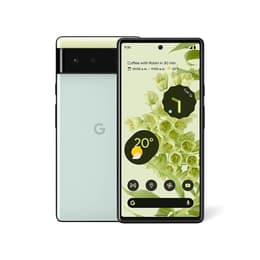
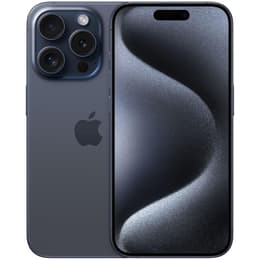
  • Camera System Configuration: The Google Pixel 6 features a dual-camera setup on the rear, consisting of a 50MP main sensor with optical image stabilization (OIS) and a 12MP ultrawide lens. The iPhone 15 Pro offers a more versatile triple-camera system, including a 48MP main sensor with OIS, a 12MP ultrawide lens, and a 12MP 3x telephoto lens with OIS for optical zoom.
  • Photography Performance: The Pixel 6 is renowned for its computational photography, producing sharp, clear photos with excellent dynamic range and accurate colors, particularly in everyday and low-light conditions. Its AI-driven features like Magic Eraser are also a highlight. The iPhone 15 Pro delivers consistently high-quality images with realistic colors and impressive detail across its lenses. Its larger main sensor and advanced image processing contribute to strong performance in various lighting scenarios, including night mode.
  • Video Recording Quality: The iPhone 15 Pro excels in video recording, offering features like ProRes video capture and improved stabilization, making it a strong tool for videographers. The Pixel 6 also offers capable video recording, with 4K resolution at up to 60 frames per second, but the iPhone 15 Pro generally provides more advanced features and a more polished video experience.
  • Front Camera and Audio: Both devices feature capable front-facing cameras for selfies and video calls. The Pixel 6 has an 8MP front camera, while the iPhone 15 Pro has a 12MP front camera. For audio, both phones offer stereo speakers and multiple microphones for clear call quality and media consumption.

Main camera

50 megapixels

48 megapixels

Front camera

8 megapixels

12 megapixels

Miscellaneous

Beyond core performance and camera, several practical features and design elements differentiate these two smartphones, impacting daily usability and connectivity.

  • Connectivity Options: Both the Google Pixel 6 and iPhone 15 Pro support 5G connectivity for fast mobile data. The Pixel 6 includes Wi-Fi 6E and Bluetooth 5.2, while the iPhone 15 Pro supports Wi-Fi 6E and Bluetooth 5.3, offering slightly newer standards for wireless communication.
  • Port Types and Biometrics: The Pixel 6 features a USB-C port for charging and data transfer and relies on an in-display fingerprint sensor for biometric authentication. The iPhone 15 Pro also adopts a USB-C port, which supports faster data transfer speeds (USB 3) compared to the Pixel 6. For security, it uses Face ID, Apple's facial recognition system.
  • Design and Materials: The Pixel 6 has a distinctive design with a camera bar spanning the width of the phone, featuring an aluminum frame with a matte finish. The iPhone 15 Pro introduces a new design with a lightweight titanium frame, contoured edges, and the thinnest borders on an iPhone, contributing to a premium feel and reduced weight.
  • Weight and Dimensions: The Pixel 6 measures 158.6 x 74.8 x 8.9 mm and weighs 207 grams. The iPhone 15 Pro is more compact and lighter at 146.6 x 70.6 x 8.25 mm and 187 grams, making it potentially easier for one-handed use.

Weight

207 g

187 g

Screen size (in)

6.4

6.1

Mobile network

5G

5G

SIM card

Physical SIM + eSIM

Physical SIM + eSIM

Carrier compatibility

Unlocked

Unlocked

User sentiment for the Google Pixel 6 often praises its exceptional camera capabilities, particularly its computational photography features like Magic Eraser, and its clean Android experience. Many users appreciate its distinctive design and the value it offered at its launch. Common criticisms sometimes include reports of the device running warm during heavy use and a refresh rate that, while smooth, isn't as adaptive as some newer flagships. The iPhone 15 Pro is frequently lauded for its powerful performance, the fluidity of iOS, its versatile camera system with strong video capabilities, and its premium, lightweight titanium design. Some users have noted that while battery life is good, it might not always surpass larger competitors, and the starting storage capacity of 128GB can feel limited for those who capture a lot of high-resolution media. The transition to USB-C has been a welcome change for many, enhancing compatibility with other devices.

Users prioritizing an advanced Android experience with a focus on computational photography and Google's AI features may find the Pixel 6 well-suited to their needs. Its software support, while not as long as the latest Pixel models, still provides a solid foundation for several years. Conversely, users who value top-tier performance, a highly refined iOS ecosystem, superior video recording, and a more compact, lightweight design will likely lean towards the iPhone 15 Pro. Its longer expected software support and robust build quality also contribute to its appeal for those seeking a device with extended usability. Both devices offer quality-assured refurbished options, providing an eco-friendly alternative for consumers looking to make a sustainable choice.


See all articles

Our recent comparisons