
Compare models
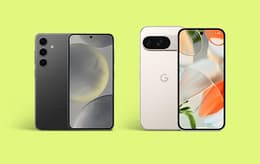
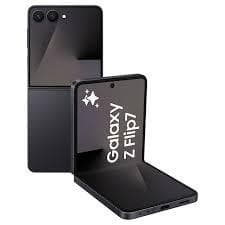
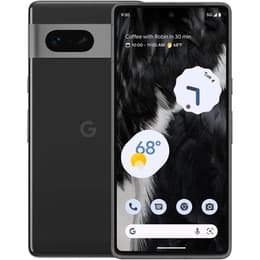
Galaxy Z Flip7 Vs Google Pixel 7
- 1-year minimum warranty
- Free delivery on all items
- Free 30-day returns
Differences at a glance
The Samsung Galaxy Z Flip7 (2025) and the Google Pixel 7 (2022) represent two entirely distinct approaches to modern smartphone design, contrasting a contemporary foldable clamshell framework with a traditional slab-style form factor. While the Galaxy Z Flip7 delivers a cutting-edge flexible display and a compact folding footprint, the Google Pixel 7 offers a streamlined, classic candybar build powered by clean software. Both devices run on the Android operating system, though they launch with different generations of user interfaces and feature sets tailored to distinct physical preferences.
Available Models
Colour
Storage
Scores
Durability
When evaluating longevity, these two smartphones differ significantly in their release timelines, physical construction, and expected software support lifecycles.
- Release timeline and software support: The Galaxy Z Flip7 arrives with a newer launch date and extended software update commitments, whereas the Google Pixel 7 has been on the market longer but benefits from structured multi-year security and operating system updates.
- Build mechanics and repairability: The Galaxy Z Flip7 incorporates a complex folding hinge mechanism that requires careful handling over years of daily physical wear, while the solid slate construction of the Google Pixel 7 presents a more traditional, rigid framework.
- Expected practical lifespan: Both units handle everyday communication tasks well, but the newer hardware generation of the Galaxy Z Flip7 positions it for a longer active service window before software obsolescence occurs.
Year of Release
2025
2022
Compatible with latest Update
Yes
Yes
OS
Android
Android
Foldable
Yes
No
Performance
Internal hardware configurations and memory capacity shape how each device handles daily apps, multitasking, and battery management.
- Multitasking and system memory: The Galaxy Z Flip7 is equipped with generous RAM to support split-screen tasks effortlessly, while the Google Pixel 7 relies on a moderate memory configuration that manages standard daily applications smoothly.
- Everyday responsiveness: Both devices load apps quickly and switch between tasks without noticeable stutter, though demanding mobile games and intensive graphic rendering run with greater thermal stability on the newer processor architecture found in the Galaxy Z Flip7.
- Battery behavior: The Galaxy Z Flip7 features a split-cell battery designed to balance power demands across two screens, whereas the Google Pixel 7 provides dependable day-long endurance for moderate users under standard usage patterns.
Screen quality
Display technology creates a major divergence in visual presentation, surface area utility, and outdoor viewing capability.
- Display technology and form factor: The Galaxy Z Flip7 utilizes an unfolding flexible OLED panel paired with a larger exterior cover screen for quick interactions, while the Google Pixel 7 features a rigid, flat OLED panel with a fixed viewing area.
- Brightness and outdoor clarity: Both screens deliver deep contrast levels and rich colors, though the peak brightness output on the Galaxy Z Flip7 helps maintain legibility under direct sunlight.
- Refresh rate and smoothness: The Galaxy Z Flip7 supports a higher 120Hz refresh rate for fluid scrolling animations, compared to the 90Hz refresh rate standard on the Google Pixel 7.
Resolution
1080x2520
1080 x 2400
Audiovisual
Optics and multimedia reproduction dictate how well each smartphone captures memories and plays back audio-visual content.
- Camera system versatility: Both models feature high-resolution main sensors accompanied by ultra-wide lenses, delivering sharp daylight photos and reliable low-light processing aided by computational software.
- Video recording quality: Each device records stable 4K video streams with effective image stabilization, making them well-suited for casual creators and video messaging.
- Media consumption experience: Built-in stereo speakers on both smartphones provide clear dialogue output for podcasts and video streaming, though the immersive folding display of the Galaxy Z Flip7 alters how media fills the field of view.
Main camera
50 megapixels
50 megapixels
Front camera
10 megapixels
10.8 megapixels
Miscellaneous
Connectivity standards, physical dimensions, and security sensors influence daily ergonomics and handling convenience.
- Connectivity and ports: Both devices support modern 5G cellular networks, standard Wi-Fi protocols, and Bluetooth pairing, utilizing reversible USB Type-C ports for charging and data transfer.
- Security and authentication: The Google Pixel 7 relies on an under-display optical fingerprint reader alongside facial recognition, while the Galaxy Z Flip7 integrates its fingerprint sensor directly into the side power button for quick unlocking.
- Dimensions and handling: The Google Pixel 7 offers a familiar slate-like grip, whereas the Galaxy Z Flip7 folds cleanly in half to occupy minimal pocket space when traveling.
Weight
188 g
197 g
Screen size (in)
6.9
6.3
Mobile network
5G
5G
SIM card
Physical SIM + eSIM
Physical SIM + eSIM
Carrier compatibility
Unlocked
Unlocked
What the community thinks
User discussions and community feedback indicate that the Google Pixel 7 receives consistent praise for its clean software experience, reliable everyday camera output, and comfortable ergonomics. At the same time, some users note that its charging speeds and battery capacity require mindful management during heavy usage days. Conversely, the Galaxy Z Flip7 draws positive remarks for its space-saving folding design and expanded cover screen utility, though users occasionally highlight the visible crease along the main display and the higher level of care required for folding hardware.
Users prioritizing compact portability, innovative folding mechanics, and a modern visual layout will find the Galaxy Z Flip7 well-suited to their lifestyle, while those preferring a classic, straightforward smartphone experience with robust everyday reliability may lean toward the Google Pixel 7. For buyers looking into a quality-assured refurbished option, exploring sustainable choices through platforms like Back Market provides an eco-friendly way to access these devices.