
Galaxy S24 FE Vs Google Pixel 8

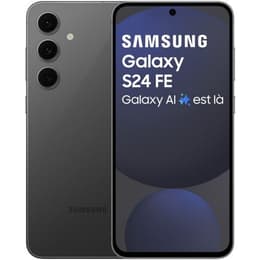
Galaxy S24 FE
Galaxy S24 FE
Starting at

Refurbished price:£256.00

Versus £741.91 new

See options
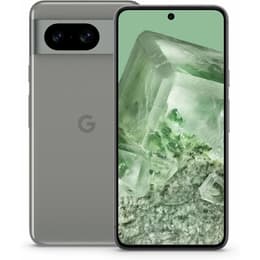
Google Pixel 8
Google Pixel 8
Starting at

Refurbished price:£195.00

Versus £856.87 new

See options

Ratings

The Samsung Galaxy S24 FE, released in October 2024, and the Google Pixel 8, launched in October 2023, are both Android smartphones offering distinct user experiences. While the Galaxy S24 FE focuses on delivering a balanced feature set with a versatile camera system and a larger display, the Pixel 8 emphasizes an AI-driven experience, a compact form factor, and extended software longevity. Both devices operate on the Android platform, providing access to a wide ecosystem of applications and services.

Scores

Durability

When considering the long-term usability of these devices, their respective release timelines and software support policies are key factors.

  • Software Support: The Google Pixel 8, released in October 2023, is guaranteed seven years of OS upgrades, security updates, and Feature Drops, extending its support until October 2030. The Samsung Galaxy S24 FE, launched a year later in October 2024, also offers seven years of software support, including OS upgrades and security updates, meaning its support will extend further into the future.
  • Expected Lifespan: Both phones are designed for extended use, with their manufacturers committing to prolonged software support. The Pixel 8's commitment to providing spare parts for seven years further supports its repairability and practical lifespan. The Galaxy S24 FE is built to be robust, contributing to its overall durability.
  • Durability Features: The Pixel 8 features an IP68 rating for dust and water resistance and its display is protected by Gorilla Glass Victus. While the Galaxy S24 FE is described as tough, specific details on its IP rating are not consistently highlighted, though it is part of a series generally known for robust builds.

Year of Release

2024

2023

Compatible with latest Update

Yes

Yes

OS

Android

Android

Foldable

No

No

Performance

The performance of a smartphone is central to its daily usability, influencing everything from app responsiveness to gaming experiences.

  • Processing Power: The Samsung Galaxy S24 FE is powered by the Exynos 2400e, a processor designed to handle both everyday tasks and demanding applications smoothly, with good thermal management. The Google Pixel 8 features the Google Tensor G3, which is noted for its efficiency, performance, and advanced AI capabilities, contributing to a fluid user experience.
  • Multitasking and Storage: Both devices come with 8GB of RAM, enabling efficient multitasking. The Galaxy S24 FE offers storage options up to 512GB, while the Pixel 8 is available with up to 256GB of internal storage. Neither device supports expandable storage.
  • Battery Performance: The Galaxy S24 FE includes a 4700 mAh battery, capable of lasting approximately 1.5 days for moderate to heavy users and achieving nearly 16 hours in video streaming tests. The Pixel 8 has a 4575 mAh battery, typically providing 8-10 hours of screen time for mixed usage, and around 9 hours 50 minutes in video playback tests (at 60Hz refresh rate). Both support fast wired charging (25W for S24 FE, 27W for Pixel 8) and wireless charging.

Memory (GB)

8 GB

8 GB

Screen quality

The display is a primary interface for smartphone interaction, and both devices offer high-quality viewing experiences with some key differences.

  • Display Technology and Size: The Samsung Galaxy S24 FE features a larger 6.7-inch Dynamic AMOLED 2X display, providing vibrant colors and deep blacks. The Google Pixel 8 comes with a more compact 6.2-inch Actua OLED display. Both displays offer FHD+ resolution, ensuring clear and detailed visuals.
  • Brightness and Clarity: The Galaxy S24 FE boasts a peak brightness of 1900 nits, with adaptive brightness for varying environments. The Pixel 8's display reaches a peak brightness of 2000 nits, with 1400 nits for HDR content, enhancing visibility in bright outdoor conditions.
  • Refresh Rate: Both phones feature a 120Hz refresh rate, contributing to smoother scrolling and more fluid animations. The Galaxy S24 FE has a variable refresh rate from 60Hz to 120Hz, while the Pixel 8 also offers a variable refresh rate within the 60-120Hz range.

Resolution

1080 x 2340

1080 x 2400

Screen type

Dynamic AMOLED 2X

OLED

Audiovisual

Both smartphones offer capable camera systems, though they approach photography with slightly different philosophies and hardware configurations.

  • Rear Camera Systems: The Samsung Galaxy S24 FE features a versatile triple-camera setup on the rear, including a 50MP main sensor with optical image stabilization (OIS), a 12MP ultrawide lens, and an 8MP telephoto lens offering 3x optical zoom with OIS. The Google Pixel 8 is equipped with a dual-camera system, comprising a 50MP main sensor with OIS and a 12MP ultrawide lens. The inclusion of a dedicated telephoto lens on the S24 FE provides greater flexibility for zoomed shots.
  • Photography Performance: The Galaxy S24 FE is noted for producing photos with vibrant colors and good dynamics, though some users might find the saturation levels pronounced. Its low-light performance is generally decent. The Pixel 8, leveraging Google's computational photography, is known for its natural color reproduction and strong performance across various lighting conditions, often excelling with AI-enhanced features.
  • Video and Front Camera: The S24 FE supports video recording up to 8K at 30fps, and features a 10MP front camera. The Pixel 8 records video up to 4K at 60fps and has a 10.5MP front camera. Both offer quality for video calls and content creation.

Main camera

50 megapixels

50 megapixels

Front camera

10 megapixels

10.5 megapixels

Miscellaneous

Beyond core performance and display, several practical elements contribute to the overall user experience of these devices.

  • Connectivity and Ports: The Google Pixel 8 supports the newer Wi-Fi 7 standard, alongside Bluetooth 5.3 and a USB-C 3.2 port. The Samsung Galaxy S24 FE features Wi-Fi 6E, Bluetooth 5.3, and a USB-C 3.2 port. Both devices offer dual SIM capabilities, supporting both physical Nano-SIMs and eSIMs.
  • Biometrics and Design: The Galaxy S24 FE incorporates an optical in-display fingerprint sensor for secure unlocking. The Pixel 8 also uses an in-display fingerprint sensor and offers facial recognition for convenient access. In terms of physical design, the Pixel 8 is more compact and lighter, measuring 150.5 x 70.8 x 8.9 mm and weighing 187g. The Galaxy S24 FE is larger at 162.0 x 77.3 x 8.0 mm and heavier at 213g.
  • Additional Features: Both phones integrate advanced AI capabilities, with the Galaxy S24 FE featuring Samsung's Galaxy AI suite and the Pixel 8 leveraging Google's Tensor G3 for its AI-centric functionalities. The Pixel 8 also includes stereo speakers for an enhanced audio experience.

Weight

213 g

187 g

Screen size (in)

6.7

6,2

Mobile network

5G

5G

SIM card

Dual Physical SIM

Physical SIM + eSIM

Carrier compatibility

Unlocked

Unlocked

Connector

USB-C

USB-C

User sentiment for the Samsung Galaxy S24 FE often highlights its strong performance, improved battery life over its predecessor, and the inclusion of a telephoto camera as significant advantages. Reviewers frequently praise its vibrant display and the comprehensive suite of Galaxy AI features, positioning it as a well-rounded device. Some observations suggest that while its camera produces pleasingly saturated images, low-light performance might not always be ultra clear. The optical fingerprint sensor is noted to be functional, though not as fast as the ultrasonic sensors found in some higher-end models.

For the Google Pixel 8, common praise points revolve around its exceptional software experience, including the promise of seven years of updates, and its advanced AI capabilities that enhance various aspects of phone usage. Users appreciate its compact size and the quality of its computational photography, which delivers natural-looking images. However, some user discussions indicate mixed experiences with battery life, describing it as generally good but not outstanding for heavy usage. The display's peak brightness is well-regarded for outdoor visibility.

Users prioritizing a larger, vibrant display and a dedicated telephoto camera for versatile photography, along with Samsung's ecosystem and Galaxy AI features, may find the Galaxy S24 FE well-suited to their needs. Conversely, individuals who value a more compact device, a pure Android experience with cutting-edge AI integration, and an industry-leading software support timeline might lean towards the Google Pixel 8. Both devices represent compelling choices within the Android smartphone market, and considering a quality-assured refurbished option for either model can be a sustainable choice for consumers.


See all articles

Our recent comparisons