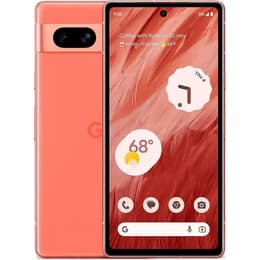
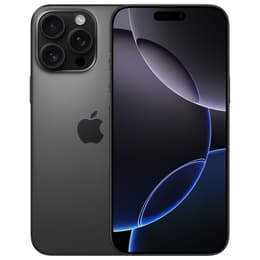

Google Pixel 7A Vs iPhone 16 Pro Max

Google Pixel 7A
Google Pixel 7A
Starting at

Refurbished price:£128.00

Versus £649.99 new

See options
iPhone 16 Pro Max
iPhone 16 Pro Max
Starting at

Refurbished price:£658.00

Versus £1,199.00 new

See options

Ratings

The Google Pixel 7a, released in May 2023, and the iPhone 16 Pro Max, launched in September 2024, represent distinct offerings in the smartphone market. The Pixel 7a operates on Android, focusing on computational photography and a streamlined user experience, while the iPhone 16 Pro Max runs on iOS, emphasizing high-end performance, advanced camera capabilities, and a large display. These devices cater to different user preferences, with the Pixel 7a providing a capable experience in a more compact form, and the iPhone 16 Pro Max delivering a premium, feature-rich platform.

Scores

Durability

When considering the longevity of these devices, both offer substantial software support and robust build qualities, though with some differences in their expected practical lifespans.

  • Software Support: The Google Pixel 7a, released in May 2023, typically receives three major Android OS updates and five years of security updates from its launch. The iPhone 16 Pro Max, released in September 2024, is expected to receive iOS updates for approximately seven years, offering a longer period of software relevance.
  • Build Materials: The Pixel 7a features a Gorilla Glass 3 display, an aluminum frame, and a plastic back that is designed to resist shattering. The iPhone 16 Pro Max incorporates a Ceramic Shield front, a textured matte glass back, and a titanium frame, contributing to its overall durability.
  • Water and Dust Resistance: The Pixel 7a carries an IP67 rating, indicating strong resistance to dust and the ability to withstand temporary submersion in water. The iPhone 16 Pro Max boasts an IP68 rating, allowing for submersion in deeper water for a longer duration.

Year of Release

2023

2024

Compatible with latest Update

Yes

Yes

Foldable

No

No

Performance

The performance capabilities of the Pixel 7a and the iPhone 16 Pro Max reflect their respective positions in the smartphone landscape, with the iPhone offering a more powerful and future-proof experience.

  • Processing Power: The Pixel 7a is equipped with a current-generation processor that handles everyday applications and multitasking smoothly. The iPhone 16 Pro Max features a more advanced processor, providing exceptional speed and efficiency for demanding applications, intensive gaming, and complex AI tasks.
  • Multitasking and Storage: Both devices offer sufficient RAM for efficient multitasking. The Pixel 7a comes with 8GB of RAM and 128GB of internal storage, which is not expandable. The iPhone 16 Pro Max typically offers 8GB of RAM with multiple storage options, including 256GB, 512GB, and 1TB, catering to users with extensive storage needs.
  • Battery Behavior: The Pixel 7a has a battery capacity of 4385 mAh, providing reliable power for a full day of moderate use. The iPhone 16 Pro Max features a larger 4685 mAh battery, consistently delivering extended usage times, often exceeding a full day even with heavy use, and setting a new standard for battery longevity in its category.

Memory (GB)

8 GB

8 GB

Screen quality

The display experience on these two smartphones differs significantly, primarily in size, refresh rate, and overall brightness, impacting media consumption and daily interaction.

  • Display Technology and Size: The Google Pixel 7a features a 6.1-inch OLED display with a resolution of 2400 by 1080 pixels, offering vibrant colors and deep blacks. The iPhone 16 Pro Max boasts a larger 6.9-inch Super Retina XDR OLED display with a higher resolution of 2868 by 1320 pixels, providing an expansive and detailed viewing area.
  • Refresh Rate and Smoothness: The Pixel 7a's display has a 90Hz refresh rate, contributing to smoother scrolling and a more responsive feel compared to standard 60Hz screens. The iPhone 16 Pro Max features ProMotion technology with an adaptive refresh rate up to 120Hz, which dynamically adjusts for fluid motion and enhanced responsiveness, particularly noticeable in gaming and fast-paced content.
  • Brightness and Clarity: Both phones offer good clarity, but the iPhone 16 Pro Max's display provides higher peak brightness levels, making it more comfortable for outdoor viewing and HDR content. The Pixel 7a's screen offers solid brightness, even in direct sunlight.

Resolution

1080 x 2400

1320 x 2868

Screen type

OLED

LTPO Super Retina XDR OLED

Audiovisual

Both devices offer strong camera systems, but the iPhone 16 Pro Max provides a more versatile and advanced photography and videography experience, particularly in specialized scenarios.

  • Rear Camera System: The Pixel 7a features a dual-camera setup with a 64MP main lens and a 13MP ultrawide lens, excelling in capturing crisp photos with good color accuracy. The iPhone 16 Pro Max comes with a triple-camera system, including a 48MP main sensor, a 48MP ultrawide lens, and a 12MP telephoto lens with 5x optical zoom, offering greater flexibility and detail across various focal lengths.
  • Low-Light and Video Performance: The Pixel 7a delivers good low-light performance, especially in scenes with specific lighting, and records 4K video at up to 60fps with effective image stabilization. The iPhone 16 Pro Max provides excellent low-light photography and class-leading video recording capabilities, including 4K Dolby Vision video at various frame rates and advanced stabilization, making it suitable for professional-grade content creation.
  • Front Camera: The Pixel 7a has a 13MP front camera with a wide field of view, capable of 4K video recording. The iPhone 16 Pro Max features a 12MP TrueDepth front camera that supports advanced features like Face ID and high-quality selfies and video calls.

Main camera

64 megapixels

48 megapixels

Front camera

13 megapixels

12 megapixels

Miscellaneous

Beyond core features, several practical elements differentiate the user experience between the Pixel 7a and the iPhone 16 Pro Max, from connectivity to physical design.

  • Connectivity and Ports: Both devices support 5G networks and modern Wi-Fi standards. The Pixel 7a includes Wi-Fi 6E and Bluetooth 5.3, utilizing a USB-C port for charging and data transfer. The iPhone 16 Pro Max supports Wi-Fi 7 and Bluetooth 5.3, also featuring a USB-C port, with faster charging speeds.
  • Biometric Security and Sensors: The Pixel 7a offers both an under-display fingerprint reader and face unlock for security. The iPhone 16 Pro Max relies on Face ID for secure authentication.
  • Design and Handling: The Pixel 7a is a more compact device, measuring 152 x 72.9 x 9 mm and weighing 193.5g, making it comfortable for one-handed use. The iPhone 16 Pro Max is larger and heavier at 163 x 77.6 x 8.25 mm and 227g, offering a more expansive screen experience but potentially requiring two hands for comfortable operation. The iPhone 16 Pro Max also features a new Camera Control button for quick photo and video capture.

Weight

193 g

227 g

Screen size (in)

6.1

6.9

Mobile network

5G

5G

SIM card

Physical SIM + eSIM

Physical SIM + eSIM

Carrier compatibility

Unlocked

Unlocked

The Google Pixel 7a and the iPhone 16 Pro Max cater to distinct user needs and preferences. Users frequently praise the Pixel 7a for its exceptional camera performance, especially considering its accessible positioning, and its clean Android experience. Some users appreciate its compact size and robust build for a device in its category. However, common concerns for the Pixel 7a include its non-expandable storage and slower charging speeds compared to some alternatives.

The iPhone 16 Pro Max is widely lauded for its industry-leading battery life, powerful performance, and advanced camera system, particularly its video capabilities. Its large, vibrant display and premium build materials are also frequent points of praise. Some user feedback, however, points to it being an incremental upgrade for those coming from recent Pro Max models, with some experiencing software glitches or finding the device's size and weight substantial.

Users prioritizing a highly capable camera in a more compact Android device with a focus on software intelligence may find the Pixel 7a well-suited to their needs. Conversely, individuals seeking the pinnacle of smartphone performance, an expansive display, extended battery life, and a comprehensive camera system for both photos and videos will likely lean towards the iPhone 16 Pro Max. Both devices offer compelling experiences, and for those looking for a more sustainable choice, quality-assured refurbished options for either model can provide an excellent alternative.

See all articles

Our recent comparisons