
Compare models
Galaxy S23 Ultra Vs Google Pixel 6
- 1-year minimum warranty
- Free delivery on all items
- Free 30-day returns
Differences at a glance
The Samsung Galaxy S23 Ultra, released in February 2023, and the Google Pixel 6, launched in October 2021, represent distinct approaches to the high-end smartphone market. While both devices operate on the Android platform, they offer different user experiences, particularly in camera capabilities, design philosophy, and software integration. The S23 Ultra emphasizes advanced hardware and a versatile camera system, whereas the Pixel 6 focuses on computational photography and a streamlined software experience.
Available Models
Colour
Storage (GB)
Scores
Durability
When considering the longevity of these devices, their release timelines and software support policies are key factors. The Galaxy S23 Ultra, being a newer device, benefits from a longer guaranteed period of software updates compared to the Pixel 6.
- Software Updates: The Galaxy S23 Ultra was promised 4 years of operating system updates and 5 years of security updates from its February 2023 release. This means it will receive major Android OS updates until early 2027 and security patches until early 2028. The Pixel 6, released in October 2021, launched with Android 12 and was expected to receive major Android updates for three years and security updates for five years, extending to late 2026.
- Build Materials: Both devices feature robust build materials. The Galaxy S23 Ultra uses Gorilla Glass Victus 2 on the front and back, along with an Armor Aluminum frame, offering enhanced scratch and drop resistance. The Pixel 6 incorporates Gorilla Glass Victus on the front and Gorilla Glass 6 on the back, also with an aluminum frame, providing good durability against everyday wear and tear.
- Water and Dust Resistance: Both smartphones carry an IP68 rating, indicating resistance to dust and submersion in up to 1.5 meters of fresh water for up to 30 minutes. This level of protection contributes to their practical lifespan under various environmental conditions.
Year of Release
2023
2021
Compatible with latest Update
Yes
Yes
OS
Android
Android
Foldable
No
No
Performance
The performance of a smartphone is crucial for daily tasks, app usage, and overall responsiveness. These two devices, despite their different release dates, offer distinct performance profiles.
- Processing Power: The Galaxy S23 Ultra is equipped with a more recent-generation processor, designed to handle demanding applications and intensive multitasking with efficiency. This translates to smoother operation, faster app loading times, and enhanced capabilities for complex tasks like high-fidelity gaming or advanced photo and video editing. The Pixel 6 features Google's custom-designed processor, which was optimized for artificial intelligence and machine learning tasks, contributing to a fluid user experience for everyday activities and Google's specific software features.
- Multitasking and Responsiveness: The S23 Ultra typically offers configurations with higher RAM options, which can benefit users who frequently switch between many applications or run several demanding processes simultaneously, maintaining overall system responsiveness. The Pixel 6, with its 8GB of RAM, provides a capable multitasking experience for most users, ensuring smooth transitions between common applications.
- Battery Performance: The Galaxy S23 Ultra houses a 5000 mAh battery, generally providing extended usage on a single charge, even for heavy users. The Pixel 6 has a 4614 mAh battery, which for some users, may require more frequent charging, especially with intensive use or 5G connectivity.
Screen quality
The display is a primary interface for smartphone interaction, and both devices offer high-quality viewing experiences with notable differences in their specifications.
- Display Technology and Size: The Galaxy S23 Ultra features a large 6.8-inch Dynamic AMOLED 2X display, providing vibrant colors, deep blacks, and excellent contrast. The Pixel 6 comes with a 6.4-inch OLED display, also offering rich colors and good contrast, though in a slightly more compact form factor.
- Resolution and Clarity: The S23 Ultra boasts a QHD+ resolution (3088 x 1440 pixels), resulting in a very sharp and detailed image, particularly noticeable when viewing high-resolution content. The Pixel 6 offers a Full HD+ resolution (2400 x 1080 pixels), which provides clear and crisp visuals for most everyday viewing.
- Refresh Rate and Brightness: The S23 Ultra features an adaptive refresh rate of up to 120Hz, ensuring smooth scrolling and fluid animations, along with a high peak brightness for excellent outdoor visibility. The Pixel 6 has a 90Hz refresh rate, which offers a noticeably smoother experience than standard 60Hz displays, and provides adequate brightness for various lighting conditions.
Resolution
1440 x 3088
1080 x 2400
Screen type
Dynamic AMOLED 2X
AMOLED
Audiovisual
Both the Galaxy S23 Ultra and the Google Pixel 6 are recognized for their camera capabilities, though they achieve impressive results through different hardware and software philosophies.
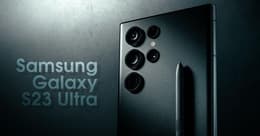
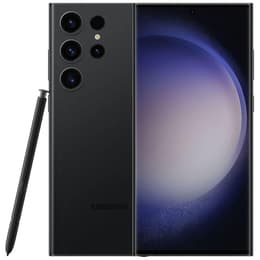
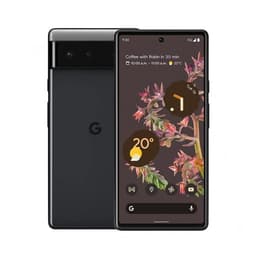
- Rear Camera Systems: The Galaxy S23 Ultra features a highly versatile quad-camera setup, including a 200-megapixel main sensor, a 12-megapixel ultrawide lens, and two 10-megapixel telephoto lenses offering significant optical zoom capabilities. This allows for detailed shots across various focal lengths and impressive zoom performance. The Pixel 6 employs a dual-camera system with a 50-megapixel main sensor and a 12-megapixel ultrawide lens, relying heavily on computational photography to enhance image quality.
- Photography Performance: The S23 Ultra excels in capturing highly detailed images, especially with its high-resolution main sensor and advanced zoom features, making it suitable for a wide range of photographic scenarios. The Pixel 6 is known for its consistent image processing, producing natural-looking photos with excellent dynamic range and strong low-light performance, often without needing to manually activate a night mode.
- Video Recording and Front Camera: The S23 Ultra offers advanced video recording options, including high-resolution capture and various stabilization features. Its front camera provides detailed selfies. The Pixel 6 records 4K video at 60 frames per second with good image stabilization. Its 8-megapixel front camera delivers good quality for video calls and selfies.
Main camera
200 megapixels
50 megapixels
Front camera
12 megapixels
8 megapixels
Miscellaneous
Beyond the core features, several practical elements contribute to the overall user experience and differentiate these two smartphones.
- Connectivity: Both devices support 5G connectivity, enabling fast mobile data speeds. They also feature modern Wi-Fi standards, with the S23 Ultra supporting Wi-Fi 6E for potentially faster and more stable connections in compatible networks.
- Ports and Biometrics: Both the Galaxy S23 Ultra and the Pixel 6 utilize a USB-C port for charging and data transfer. For security, both phones incorporate in-display fingerprint sensors for convenient unlocking. The S23 Ultra also includes the integrated S Pen, offering additional functionality for note-taking and navigation.
- Dimensions and Handling: The Galaxy S23 Ultra is a larger and heavier device, measuring 163.4 x 78.1 x 8.9 mm and weighing 234g, which might appeal to users who prefer a substantial device with a large screen. The Pixel 6 is slightly more compact and lighter at 158.6 x 74.8 x 8.9 mm and 207g, potentially offering easier one-handed use for some.
Weight
233 g
207 g
Screen size (in)
6.8
6.4
Mobile network
5G
5G
SIM card
Dual Physical SIM + eSIM
Physical SIM + eSIM
Carrier compatibility
Unlocked
Unlocked
Connector
USB-C
USB-C
What the community thinks
The Samsung Galaxy S23 Ultra and Google Pixel 6 cater to different user preferences, each with its own set of strengths. Users often praise the S23 Ultra for its exceptional camera versatility, particularly its zoom capabilities and high-resolution sensor, making it a strong choice for photography enthusiasts. Its large, vibrant display and integrated S Pen are also frequently highlighted as significant advantages for productivity and media consumption.
On the other hand, the Google Pixel 6 receives consistent acclaim for its computational photography, delivering reliable and aesthetically pleasing photos with a focus on natural tones and excellent low-light performance. Users appreciate its clean Android experience and the seamless integration of Google's AI features. Some Pixel 6 users have noted that battery life can be inconsistent, particularly with heavy usage or after extended periods.
Users prioritizing a highly advanced and versatile camera system, a large immersive display, and stylus functionality may find the Galaxy S23 Ultra better suited to their needs. Conversely, those who value a streamlined software experience, consistent computational photography, and a slightly more compact design might lean towards the Google Pixel 6. Both devices offer a quality-assured refurbished option, providing an eco-friendly alternative for consumers.