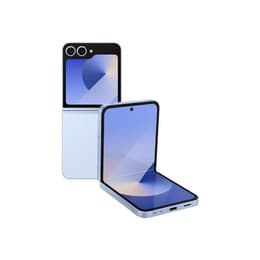


Galaxy Z Flip6 Vs Google Pixel 9

Galaxy Z Flip6
Galaxy Z Flip6
Starting at

Refurbished price:£335.00

Versus £1,011.35 new

See options
Google Pixel 9
Google Pixel 9
Starting at

Refurbished price:£327.25

Versus £890.22 new

See options

Ratings

The Samsung Galaxy Z Flip6, released in July 2024, and the Google Pixel 9, launched in August 2024, represent distinct approaches to modern smartphone design and functionality. While the Galaxy Z Flip6 offers a unique foldable form factor that prioritizes portability and a compact experience, the Google Pixel 9 adheres to a traditional slab design, focusing on a streamlined user experience and advanced computational features. Both devices operate on the Android platform, with each manufacturer providing their own software enhancements and user interfaces.

Scores

Durability

When considering the longevity of a smartphone, factors such as software support, physical durability, and repairability play a crucial role. Both the Galaxy Z Flip6 and the Pixel 9 are recent releases, ensuring they benefit from the latest software and hardware advancements.

  • Software Support: Both Samsung and Google have committed to providing extensive software support for their flagship devices. The Galaxy Z Flip6 is promised 7 generations of Android OS updates, 7 years of software updates, and 7 years of security updates, starting with Android 14 and One UI 6.1. Similarly, the Google Pixel 9 also offers seven years of OS, security, and Pixel Drop updates, beginning with Android 14 (upgradable to 15), ensuring a long period of feature and security enhancements.
  • Physical Durability: The Galaxy Z Flip6 features an improved hinge design and is the first flip phone in the U.S. to receive an IP48 rating, indicating resistance to dust ingress and water splashes. Its main display is protected by Gorilla Glass Victus 2, and the crease is noted to be less prominent than previous models. The Pixel 9, with its traditional form factor, is built with Corning Gorilla Glass Victus 2 on both the front and back, offering enhanced scratch and drop resistance. It also boasts an IP68 rating for dust and water resistance, signifying a higher level of protection against immersion.
  • Expected Lifespan: With both devices offering seven years of software updates, users can expect a practical lifespan that extends well into the future. The Pixel 9's traditional design might offer a perceived advantage in long-term physical resilience for some users, while the Z Flip6's foldable mechanism has seen significant improvements in durability.

Year of Release

2024

2024

Compatible with latest Update

Yes

Yes

OS

Android

Android

Foldable

Yes

No

Performance

The performance of a smartphone is central to the daily user experience, influencing everything from app responsiveness to multitasking capabilities and gaming. Both the Galaxy Z Flip6 and the Pixel 9 are equipped with powerful internal components designed to handle demanding tasks efficiently.

  • Processing Power: The Galaxy Z Flip6 is powered by a current-generation processor, which includes a vapor chamber cooling system to help maintain performance during intensive use, such as gaming or heavy multitasking. This allows for smooth operation across various applications and ensures a responsive user interface. The Google Pixel 9 features Google's own advanced processor, designed to optimize the device's AI capabilities and overall system fluidity. Users report that this processor provides a snappy experience for everyday tasks, web browsing, and social media, with no noticeable stuttering or lag.
  • Memory and Storage: The Galaxy Z Flip6 is available with 8 GB or 12 GB of RAM, paired with storage options of 256 GB or 512 GB. The Pixel 9 comes with 12 GB of RAM and offers 128 GB or 256 GB of internal storage. Higher RAM configurations generally contribute to smoother multitasking and app switching, benefiting users who frequently switch between many applications.
  • Battery Behavior: The Galaxy Z Flip6 houses a 4000 mAh battery, which has shown significant improvements in endurance compared to its predecessor, offering over 16 hours of web browsing and more than 10 hours of 3D gaming in tests. The Pixel 9 is equipped with a 4700 mAh battery, designed to provide over 24 hours of typical usage. Both devices support fast wired charging and wireless charging, with the Pixel 9 also offering 45W fast charging.

Memory (GB)

12 GB

12 GB

Screen quality

The display is a primary interface for any smartphone, and both the Galaxy Z Flip6 and the Google Pixel 9 offer high-quality viewing experiences, albeit with different form factors and specific characteristics.

  • Display Technology and Resolution: The Galaxy Z Flip6 features a 6.7-inch Dynamic AMOLED 2X main display with a resolution of 1080 x 2640 pixels, providing vibrant colors and deep blacks. When folded, it reveals a 3.4-inch Super AMOLED cover display with a 720 x 748 pixel resolution, suitable for quick glances and notifications. The Pixel 9 sports a 6.3-inch Actua OLED display with a resolution of 1080 x 2424 pixels, also delivering rich colors and strong contrast.
  • Brightness and Refresh Rate: The Z Flip6's main display offers an adaptive refresh rate ranging from 1 to 120 Hz, ensuring smooth scrolling and responsiveness, and can reach up to 2600 nits peak brightness for HDR content. The cover screen operates at a 60 Hz refresh rate with up to 1600 nits peak brightness. The Pixel 9's display also features an adaptive refresh rate from 60 to 120 Hz and can achieve up to 2700 nits peak brightness, making it highly visible even in bright outdoor conditions.
  • Viewing Experience: The Z Flip6's foldable design offers a compact form factor when closed, expanding to a full-sized screen for media consumption and productivity. The main display's crease is less noticeable than in previous generations. The Pixel 9 provides a consistently flat, high-quality display experience, with users noting its clarity and brightness for various content.

Resolution

1080 x 2640

1080 x 2424

Screen type

Foldable Dynamic LTPO AMOLED 2X

OLED

Audiovisual

Camera capabilities are a significant consideration for many smartphone users, and both the Galaxy Z Flip6 and the Google Pixel 9 offer advanced systems with distinct strengths in photography and videography.

  • Rear Camera Systems: The Galaxy Z Flip6 features a dual-camera setup on the rear, comprising a 50 MP wide-angle lens with optical image stabilization (OIS) and a 12 MP ultra-wide-angle lens. This system is designed for versatile shooting, with improvements noted in low-light performance due to a dedicated image processing block. The Google Pixel 9 is equipped with a dual rear camera system, including a 50 MP primary camera and a 48 MP secondary camera, which is typically an ultrawide lens. Pixel phones are renowned for their computational photography, leveraging advanced AI for image processing.
  • Photography Performance: The Pixel 9 generally offers strong camera capabilities, particularly in low-light conditions, benefiting from Google's advanced image processing and AI enhancements. Users often praise the Pixel's ability to produce detailed and well-exposed photos. The Z Flip6's camera hardware is solid, and while it performs well in everyday scenarios, some comparisons suggest the Pixel 9 might have an edge in challenging lighting.
  • Video Recording and Audio: Both devices are capable of high-quality video recording, with the Pixel 9 offering features like 4K video at various frame rates. For audio, the Pixel 9 includes stereo speakers and multiple microphones with noise suppression for clear calls and recordings. Details on the Z Flip6's specific audio recording and speaker performance are less emphasized in comparisons, but it provides a standard media consumption experience.
  • Front Camera and Unique Features: The Z Flip6 has a 10 MP front camera, while the Pixel 9 features a 10.5 MP selfie camera. The Z Flip6's cover screen can be used for quick selfies, offering a practical perk. The Pixel 9 integrates Gemini-branded AI features, which can enhance photo editing and other camera functionalities.

Main camera

50 megapixels

50 megapixels

Front camera

10 megapixels

10.5 megapixels

Miscellaneous

Beyond core performance and display, several practical features contribute to the overall user experience and differentiate these two smartphones.

  • Connectivity and Ports: Both the Galaxy Z Flip6 and the Google Pixel 9 support 5G connectivity, ensuring fast mobile data speeds. The Z Flip6 supports Wi-Fi 6E and Bluetooth 5.3, while the Pixel 9 steps up to Wi-Fi 7 and Bluetooth 5.3. Both devices utilize a USB-C 3.2 port for charging and data transfer. A notable feature on the Pixel 9 is its enhanced satellite connectivity, enabling emergency services contact via satellite, a first for an Android phone.
  • Biometric Security: The Galaxy Z Flip6 incorporates a side-mounted fingerprint sensor for quick and convenient access. The Google Pixel 9 features an under-display fingerprint sensor, which users generally find to be responsive. The Pixel 9 also includes the Titan M2 security co-processor for enhanced data protection.
  • Dimensions and Handling: The Galaxy Z Flip6's defining characteristic is its foldable design. When unfolded, it measures 71.9 x 165.1 x 6.9 mm and weighs 187 grams. When folded, it becomes significantly more compact at 71.9 x 85.1 x 14.9 mm, making it highly portable and easy to fit into smaller pockets or bags. The Google Pixel 9, a traditional slab phone, measures 152.8 x 72.0 x 8.5 mm and weighs 198 grams. Its flat design and slightly heavier build contribute to a solid in-hand feel.
  • Build Materials: Both phones utilize premium materials. The Z Flip6 features a matte glass back and an aluminum frame. The Pixel 9 also uses Gorilla Glass Victus 2 on both the front and back, with a polished back finish.

Weight

187 g

198 g

Screen size (in)

6.7

6.3

Mobile network

5G

5G

SIM card

Physical SIM + eSIM

Physical SIM + eSIM

Carrier compatibility

Unlocked

Unlocked

The Samsung Galaxy Z Flip6 and the Google Pixel 9 cater to different user preferences, each excelling in its own domain. User sentiment for the Galaxy Z Flip6 often highlights its unique foldable form factor as a major draw, offering unparalleled portability and a distinctive aesthetic. Many appreciate the improved battery life and the enhanced durability of the hinge and display compared to previous generations. However, some users note that the cover screen's functionality, while improved, could still be more expansive, and the camera, while solid, might not always match the computational prowess of dedicated photography-focused phones in all scenarios. The visible crease on the main display, though minimized, is still a point of discussion for some.

For the Google Pixel 9, common praise revolves around its exceptional camera performance, particularly its advanced AI-driven image processing that delivers consistent and high-quality photos, especially in challenging lighting. Users frequently commend its smooth and responsive software experience, often attributing this to Google's optimized operating system and powerful processor. The extended software support and robust durability features, including Gorilla Glass Victus 2 and an IP68 rating, are also highly valued. Some criticisms occasionally surface regarding the initial battery optimization period, though it generally improves with usage, and some users find the design, while refined, to be less innovative than foldable alternatives.

Users prioritizing a compact, stylish device that offers a unique interaction experience and fits easily into small spaces may find the Samsung Galaxy Z Flip6 well-suited to their needs. Its improved battery and enhanced durability make it a compelling choice for those seeking a modern foldable. Conversely, individuals who place a premium on cutting-edge camera technology, a consistently fluid software experience, and long-term software support in a traditional smartphone form factor will likely lean towards the Google Pixel 9. Both devices represent excellent choices in the current smartphone market, and considering a quality-assured refurbished option for either model can be an eco-friendly alternative to purchasing new, allowing users to make a sustainable choice without compromising on performance or features.


See all articles

Our recent comparisons