iPhones
Compare models
Differences at a glance
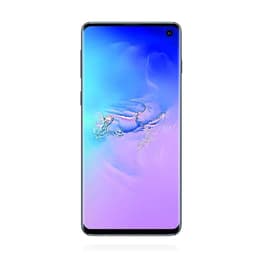
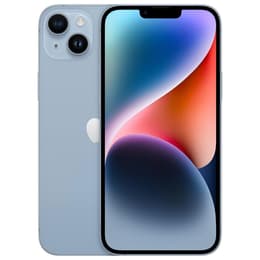
The Samsung Galaxy S10, released in March 2019, and the iPhone 14 Plus, launched in October 2022, represent different generations and operating systems within the smartphone landscape. While the Galaxy S10 runs on Android, offering a customizable experience, the iPhone 14 Plus operates on Apple's iOS, known for its integrated ecosystem. Key distinctions lie in their release timelines, display sizes, and camera capabilities, catering to varying user preferences.
Colour
Storage
The practical lifespan of a smartphone is significantly influenced by its release date and subsequent software support. The Samsung Galaxy S10, having been released in March 2019, has reached the end of its major Android operating system updates, with its last official update being Android 12 (One UI 4.1). This means users will no longer receive new Android features, though security updates might continue for a limited period. In contrast, the iPhone 14 Plus, released in October 2022, benefits from Apple's extended software support, ensuring it will receive iOS updates for several more years, providing access to the latest features and security enhancements. Both devices feature robust build quality, with the Galaxy S10 utilizing Gorilla Glass 6 on the front and Gorilla Glass 5 on the back, alongside an IP68 rating for water and dust resistance. The iPhone 14 Plus boasts Ceramic Shield on the front and a glass back, also with an IP68 rating, offering comparable protection against environmental elements.
Year of Release
Compatible with latest Update
OS
Foldable
When evaluating performance, the age difference between these two devices plays a substantial role in their real-world capabilities. The Galaxy S10, with its 2019-era processor, handles everyday tasks smoothly, including web browsing, social media, and moderate multitasking. However, for more demanding applications, intensive gaming, or heavy video editing, users may notice slower loading times and less fluid operation compared to newer devices. The iPhone 14 Plus, featuring a more recent and powerful processor, delivers a highly responsive user experience. It excels in handling graphically intensive games, complex applications, and seamless multitasking, maintaining smooth performance even under significant load. Storage options for the Galaxy S10 included 128GB and 512GB, with some variants offering up to 1TB and expandable storage via microSD. The iPhone 14 Plus comes with 128GB, 256GB, and 512GB storage configurations, without expandable storage. Battery behavior also differs; the Galaxy S10 has a 3400 mAh battery, while the iPhone 14 Plus features a larger 4323 mAh battery, generally translating to longer usage times for the latter.
The visual experience on both devices is delivered through high-quality OLED displays, though with notable differences in size and specific characteristics. The Samsung Galaxy S10 features a 6.1-inch Dynamic AMOLED display with a resolution of 1440 x 3040 pixels, offering sharp images and vibrant colors. Its HDR10+ support enhances contrast and color accuracy for compatible content. The iPhone 14 Plus, on the other hand, sports a larger 6.7-inch Super Retina XDR OLED display with a resolution of 2778 x 1284 pixels. Both displays operate at a standard 60Hz refresh rate, providing a smooth visual experience for typical smartphone interactions. The iPhone 14 Plus offers high brightness levels, reaching up to 800 nits typical and 1200 nits peak for HDR content, which aids in outdoor visibility. The Galaxy S10 also provides excellent brightness and color accuracy, particularly in its 'Natural' display mode.
Resolution
Screen type
The camera systems on the Galaxy S10 and iPhone 14 Plus reflect their respective design philosophies and technological advancements over time. The Samsung Galaxy S10 features a versatile triple-camera setup on the rear, comprising a 12MP wide lens, a 12MP telephoto lens, and a 16MP ultrawide lens, offering flexibility for various shooting scenarios. It delivers strong performance in good lighting conditions, producing images with good detail and vibrant colors, and its low-light performance was considered competitive at its release. The iPhone 14 Plus comes with a dual-camera system, featuring a 12MP main camera with a larger sensor and a 12MP ultrawide camera. It introduces Apple's Photonic Engine, which significantly improves low-light performance by applying deep fusion processing earlier in the image pipeline. The front-facing camera on the iPhone 14 Plus is a 12MP TrueDepth camera with autofocus, enhancing selfie quality. The Galaxy S10 has a 10MP front camera. Both devices are capable of recording high-quality video, with the iPhone 14 Plus offering features like Cinematic mode and Action mode for enhanced video stabilization.
Main camera
Front camera
Beyond core features, several practical elements differentiate the user experience between these two smartphones. For connectivity, the Galaxy S10 supports 4G LTE and was among the first to feature Wi-Fi 6 and Bluetooth 5.0. The iPhone 14 Plus steps up to 5G connectivity, Wi-Fi 6, and Bluetooth 5.3, offering faster cellular data speeds and more efficient wireless connections. In terms of physical ports, the Galaxy S10 retains a 3.5mm headphone jack and uses a USB-C port for charging and data transfer. The iPhone 14 Plus, consistent with Apple's design, uses a Lightning port and omits the headphone jack. For biometric security, the Galaxy S10 features an ultrasonic in-display fingerprint sensor. The iPhone 14 Plus relies solely on Face ID for secure authentication. Regarding physical attributes, the Galaxy S10 measures 149.9 x 70.4 x 7.8 mm and weighs 157g, making it a more compact and lighter device. The iPhone 14 Plus is larger and heavier at 160.8 x 78.1 x 7.8 mm and 203g, providing a more substantial feel and a larger screen footprint. The iPhone 14 Plus also introduced features like Crash Detection and Emergency SOS via satellite for enhanced safety.
Weight
Screen size (in)
Mobile network
SIM card
Carrier compatibility
Connector
The comparison between the Samsung Galaxy S10 and the iPhone 14 Plus highlights the rapid evolution of smartphone technology over a few years. Users often praise the Galaxy S10 for its comprehensive feature set at its time of release, including the versatile triple camera system with a telephoto lens, the inclusion of a headphone jack, and expandable storage. Its Dynamic AMOLED display was also highly regarded for its clarity and color reproduction. However, common criticisms now revolve around its aging software support and the natural degradation of battery performance over time. On the other hand, the iPhone 14 Plus is frequently lauded for its robust performance, extended software longevity, and significant improvements in low-light photography thanks to features like the Photonic Engine. Its larger display and excellent battery life are also strong points for many users. Some users might express concerns about the absence of a telephoto lens and the continued use of the Lightning port.
Users prioritizing a larger screen, long-term software updates, and advanced camera capabilities, particularly in challenging lighting, may find the iPhone 14 Plus well-suited to their needs. Its strong performance makes it ideal for demanding applications and gaming. Conversely, individuals who value the flexibility of a headphone jack, expandable storage, and a more compact design might still appreciate the Samsung Galaxy S10, especially if their usage patterns are less intensive and they are comfortable with an older operating system. For those considering either device, exploring quality-assured refurbished options can provide an eco-friendly alternative, extending the life of these products and offering a sustainable choice.