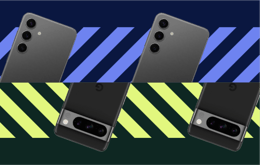

Google Pixel 7A Vs Google Pixel 9 Pro Fold

Google Pixel 7A
Google Pixel 7A
Starting at

Refurbished price:£128.00

Versus £649.99 new

See options
Google Pixel 9 Pro Fold
Starting at

Refurbished price:£538.00

Versus £1,739.49 new

See options

Ratings

The Google Pixel 7a (2023) and the Google Pixel 9 Pro Fold (2024) represent distinct approaches to smartphone design and functionality within the Android ecosystem. While the Pixel 7a offers a traditional smartphone experience, the Pixel 9 Pro Fold introduces a foldable form factor, providing a larger, adaptable screen for enhanced productivity and media consumption. Both devices run on the Android operating system, but they cater to different user needs through their hardware and design.

Scores

Durability

The expected lifespan of these devices varies significantly due to their release timelines and Google's software support policies.

  • Release Timeline: The Pixel 7a was released in May 2023, making it an established device. The Pixel 9 Pro Fold, launched in September 2024, benefits from more recent hardware and a longer support window.
  • OS Support Duration: The Pixel 7a is expected to receive five years of security updates, extending until May 2028. In contrast, the Pixel 9 Pro Fold is committed to seven years of OS and security updates, ensuring support until August 2031.
  • Durability Features: The Pixel 7a features an IP67 rating for dust and water resistance and Corning Gorilla Glass 3 on its display. The Pixel 9 Pro Fold boasts an IPX8 rating, indicating higher water resistance, and incorporates Gorilla Glass Victus 2 for its cover screen, alongside a more robust hinge design. However, foldable displays are generally considered less durable than traditional slab phone screens.

Year of Release

2023

2024

Compatible with latest Update

Yes

Yes

OS

Android

Android

Foldable

No

Yes

Performance

Performance capabilities differ between these two Pixel devices, reflecting their intended use cases and hardware generations.

  • Processing Power: The Pixel 7a is powered by the Google Tensor G2, which handles everyday applications and moderate gaming smoothly. The Pixel 9 Pro Fold features the newer Google Tensor G4, offering enhanced performance for more demanding applications, intensive multitasking, and advanced AI features.
  • Memory and Storage: The Pixel 7a comes with 8GB of RAM and 128GB of internal storage, utilizing UFS 3.1 technology. The Pixel 9 Pro Fold offers more substantial memory, typically 16GB of RAM, and 256GB of storage, employing faster UFS 4.0 technology, which contributes to quicker app loading and smoother operation, especially when managing multiple applications on its larger display.
  • System Responsiveness: Users will find the Pixel 7a responsive for daily tasks. The Pixel 9 Pro Fold, with its more advanced processor and increased RAM, provides a noticeably smoother experience for power users, heavy multitasking, and graphically intensive applications, ensuring sustained performance over time.

Memory (GB)

8 GB

16 GB

Screen quality

The display experience is a primary differentiator, with the Pixel 9 Pro Fold offering a unique adaptable screen.

  • Display Technology and Size: The Pixel 7a features a 6.1-inch OLED display. The Pixel 9 Pro Fold offers a dual-screen setup: a 6.29-inch or 6.5-inch OLED cover display and a large 8.0-inch or 8.02-inch foldable OLED main display when unfolded.
  • Resolution and Clarity: The Pixel 7a provides a 1080p FHD+ resolution (2400 x 1080 pixels), delivering clear visuals for its size. The Pixel 9 Pro Fold's main display offers a higher resolution (e.g., 2152x2076 or 1840x2208 pixels), resulting in a sharper image across its larger surface, while its cover display also maintains high clarity.
  • Refresh Rate and Brightness: Both devices feature a 90Hz refresh rate on the Pixel 7a and 120Hz on the Pixel 9 Pro Fold's displays, contributing to smoother scrolling and animations. The Pixel 9 Pro Fold's displays also offer higher peak brightness levels, improving visibility in bright outdoor conditions and enhancing HDR content.

Resolution

1080 x 2400

2076 x 2152

Audiovisual

Both Pixel phones leverage Google's computational photography, but the Pixel 9 Pro Fold offers a more versatile camera system.

  • Rear Camera System: The Pixel 7a includes a dual-camera setup with a 64MP main sensor and a 13MP ultrawide lens. The Pixel 9 Pro Fold features a triple-camera system, typically comprising a 50MP main sensor, a 10.8MP ultrawide lens, and a 10.8MP telephoto lens with 5x optical zoom, providing greater flexibility for different photographic scenarios.
  • Photography Performance: Both devices excel in computational photography, offering features like Night Sight for low-light conditions and consistent color science. The Pixel 9 Pro Fold's dedicated telephoto lens allows for clearer zoomed-in shots, a capability not present on the Pixel 7a, which relies on digital zoom.
  • Video Recording and Front Camera: The Pixel 7a supports 4K video recording at up to 60fps on its rear camera and 4K at 30fps on its 13MP front camera. The Pixel 9 Pro Fold also offers high-quality video recording and features dual front cameras (one on the cover, one on the inner display), enhancing selfie and video call options in both folded and unfolded modes.

Front camera

13 megapixels

10 megapixels

Miscellaneous

Beyond core specifications, several practical elements distinguish these two devices in daily use.

  • Connectivity and Ports: Both phones support 5G connectivity and feature a USB-C port for charging and data transfer. The Pixel 9 Pro Fold may support newer Wi-Fi standards (e.g., Wi-Fi 7) compared to the Pixel 7a's Wi-Fi 6E, offering potentially faster and more stable wireless connections.
  • Biometric Security: The Pixel 7a uses an under-display fingerprint sensor for secure unlocking. The Pixel 9 Pro Fold typically integrates a side-mounted fingerprint sensor, often combined with face recognition for convenient access.
  • Physical Design and Handling: The Pixel 7a is a compact, traditional smartphone weighing around 193.5g. The Pixel 9 Pro Fold, as a foldable, is heavier and thicker when folded, but offers a much larger screen when unfolded, transforming its utility. Its design is intended to be slimmer than its predecessor.

Weight

193 g

257 g

Screen size (in)

6.1

8.0

Mobile network

5G

5G

SIM card

Physical SIM + eSIM

Physical SIM + eSIM

Carrier compatibility

Unlocked

Unlocked

The Google Pixel 7a and Google Pixel 9 Pro Fold cater to different user priorities, offering distinct experiences within the Android ecosystem. The Pixel 7a is frequently praised by users for its reliable camera performance and consistent software experience in a more traditional, compact form factor. Common feedback highlights its solid everyday performance and the value it offers for its capabilities. Some users, however, note that its charging speeds are not the fastest and that its performance can feel less robust compared to flagship devices.

The Pixel 9 Pro Fold, on the other hand, is lauded for its innovative foldable design, providing a large, immersive display for productivity and media. Users appreciate the versatility of having both a standard smartphone screen and a tablet-sized display. Early user sentiment often focuses on the impressive screen quality and the enhanced multitasking possibilities. Concerns sometimes revolve around the inherent durability considerations of foldable screens and the battery life, though the Pixel 9 Pro Fold has shown improvements in this area compared to earlier foldable models.

Users prioritizing a straightforward, dependable smartphone with a strong camera and long-term software support in a compact design may find the Pixel 7a well-suited to their needs. Conversely, users who require a larger, adaptable screen for advanced multitasking, media consumption, and who value cutting-edge technology with extended software longevity will likely lean towards the Pixel 9 Pro Fold. Both devices offer quality-assured refurbished options, providing an eco-friendly alternative for consumers seeking to make informed and sustainable choices.


See all articles

Our recent comparisons