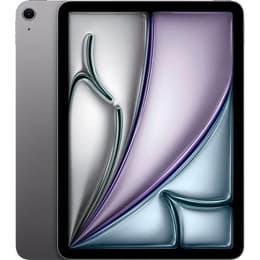

Galaxy Tab S9+ (12.4", 2023) Vs iPad Air 7 (2025, M3 series)

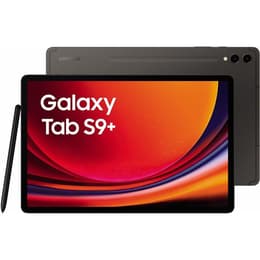
Galaxy Tab S9+ (12.4", 2023)
Starting at

Refurbished price:£440.84

Versus £868.13 new

See options
iPad Air 7 (2025, M3 series)
Starting at

Refurbished price:£456.00

Versus £599.00 new

See options

Ratings

The Samsung Galaxy Tab S9+ (released in 2023) and the iPad Air M3 (introduced in 2025) represent distinct approaches to the premium tablet experience. While both devices offer robust performance and high-quality displays, they differ significantly in their operating systems, display technology, and ecosystem integration. This comparison aims to highlight the practical distinctions to help users make an informed decision, considering a quality-assured refurbished option as a sustainable choice.

Scores

Durability

When considering the long-term usability of a tablet, software support and physical durability are key factors.

  • Software Longevity: The iPad Air M3, running iPadOS, typically receives software updates for an extended period, often 5-7 years from its release in 2025. The Galaxy Tab S9+, launched in 2023 with Android 13, generally receives 4-5 years of major Android OS updates and security patches from Samsung. This means the iPad Air M3 is likely to have a longer period of official software support.
  • Physical Durability: The Galaxy Tab S9+ features an IP68 rating for dust and water resistance, offering a higher level of protection against environmental elements. The iPad Air M3 does not carry an official IP rating for water and dust resistance. Both devices are constructed with durable materials, with the Galaxy Tab S9+ featuring an Armor Aluminum frame and Gorilla Glass display.
  • Repairability: Repair services for common issues like screen and battery replacement are available for both devices. However, the iPad Air M3 has received a low repairability score from some experts due to the difficulty of removing certain components, though its battery cells include pull tabs for easier replacement.

Year of Release

2023

2025

Compatible with latest Update

Yes

Yes

OS

Android

iPadOS

Performance

Both tablets are designed for demanding tasks, offering powerful processing capabilities suitable for a range of activities from everyday browsing to intensive creative work.

  • Processing Power: The iPad Air M3 is equipped with a highly capable processor, delivering performance suitable for complex applications, advanced gaming, and hardware-accelerated tasks like ray tracing. Users report it handles demanding apps smoothly. The Galaxy Tab S9+ features a powerful current-generation processor, which ensures smooth operation for apps, multitasking, and gaming on the Android platform.
  • Multitasking and Responsiveness: The Galaxy Tab S9+ typically comes with 12GB of RAM, which supports extensive multitasking and keeps numerous applications active in the background without slowdowns. The iPad Air M3 generally includes 8GB of RAM, which, combined with iPadOS optimization, provides a responsive user experience and efficient app management.
  • Storage Options and Battery Behavior: Both devices offer various storage configurations, with the Galaxy Tab S9+ supporting expandable storage via microSD, a feature not present on the iPad Air M3. The Galaxy Tab S9+ has a 10,090 mAh battery, providing around a full day of mixed usage or up to two days for lighter use. The iPad Air M3's battery is rated for up to 10 hours of web surfing or video streaming over Wi-Fi, with some users reporting varied real-world battery life depending on usage intensity, sometimes experiencing quicker drain with heavy tasks.

Memory (GB)

12 GB

8 GB

Screen quality

The visual experience is a primary consideration for tablets, and both models offer high-quality displays with distinct characteristics.

  • Display Technology and Size: The Galaxy Tab S9+ features a 12.4-inch Dynamic AMOLED 2X display, known for its deep blacks, vibrant colors, and high contrast. The iPad Air M3 is available with an 11-inch or 13-inch Liquid Retina IPS LCD display. While the iPad Air's LCD panel offers excellent color accuracy and brightness, it does not achieve the same level of black depth as an AMOLED screen.
  • Resolution and Refresh Rate: The Galaxy Tab S9+ offers a resolution of 2800 x 1752 pixels with an adaptive 120Hz refresh rate, providing smooth scrolling and fluid visuals. The iPad Air M3 features a 2360x1640 pixel resolution for the 11-inch model and 2732x2048 pixels for the 13-inch model, both at 264 pixels per inch. Its display operates at a standard 60Hz refresh rate.
  • Brightness and Viewing Experience: The Galaxy Tab S9+ display is noted for being incredibly bright and easily viewable outdoors. The iPad Air M3's 11-inch model offers 500 nits of brightness, while the 13-inch model reaches 600 nits, providing good visibility in various lighting conditions. Both displays support wide color (P3) and anti-reflective coatings for an enhanced viewing experience.

Resolution

1752 x 2800

2360 x 1640

Screen type

Dynamic AMOLED 2X

Liquid Retina display

Pixel density

270ppp

264ppp

Audiovisual

While tablets are not typically primary photography devices, their cameras are important for video calls, document scanning, and casual capture.

  • Rear Camera Systems: The Galaxy Tab S9+ includes a dual-camera setup on the rear, featuring a 13MP wide lens and an 8MP ultrawide lens. The iPad Air M3 is equipped with a single 12MP wide rear camera. Both are capable of capturing high-resolution photos and 4K video.
  • Front Camera and Video Calls: Both tablets feature a 12MP ultrawide front-facing camera. The iPad Air M3's front camera is positioned on the longer edge, which is beneficial for landscape video calls and supports Center Stage, keeping the user in frame. The Galaxy Tab S9+'s front camera also performs well for video calls, especially in good lighting. Some users have reported that the iPad Air M3's front camera quality can be poor in low-light conditions.
  • Audio Experience: The Galaxy Tab S9+ features fantastic speakers, enhancing the media consumption experience. The iPad Air M3 also offers good speaker quality, with support for Dolby Atmos on the 13-inch model, though some users have noted that the volume level might be lower than expected.

Miscellaneous

Beyond core performance and display, several practical features contribute to the overall user experience and device utility.

  • Connectivity Standards: Both the Galaxy Tab S9+ and the iPad Air M3 support modern wireless connectivity, including Wi-Fi 6E for fast internet speeds and Bluetooth 5.3 for accessory pairing. Both also offer optional 5G cellular connectivity for on-the-go internet access.
  • Ports and Biometrics: Both tablets utilize a USB-C port for charging and data transfer. The iPad Air M3's USB-C port supports faster data transfer speeds (USB 3.1 Gen 2 at 10 Gbps). The Galaxy Tab S9+ uses USB 3.2. For security, the iPad Air M3 integrates Touch ID into the power button, while the Galaxy Tab S9+ features an in-display fingerprint sensor.
  • Stylus and Ecosystem: The Galaxy Tab S9+ includes the S Pen in the box, which is IP68 rated and offers a responsive writing and drawing experience. The iPad Air M3 supports the Apple Pencil Pro, which is sold separately. The Galaxy Tab S9+ also offers Samsung DeX, providing a desktop-like interface for enhanced productivity.
  • Dimensions and Handling: The Galaxy Tab S9+ measures 285.4 x 185.4 x 5.7 mm and weighs 581g (Wi-Fi model). The 11-inch iPad Air M3 is more compact at 247.6 x 178.5 x 6.1 mm and 460g, while the 13-inch model is larger at 280.6 x 214.9 x 6.1 mm and 616g. The S9+ offers a larger screen in a form factor that many users find to be a good balance between portability and screen real estate.

Weight

129 g

460 g

Screen size (in)

12.4

11

Network

Wi-Fi

Wi-Fi

Carrier compatibility

Unlocked

Without SIM Port

The choice between the Samsung Galaxy Tab S9+ and the iPad Air M3 largely depends on individual user preferences and ecosystem alignment. Users frequently praise the Galaxy Tab S9+ for its stunning AMOLED display, the inclusion of the S Pen, and its robust performance for media consumption and gaming. Its Android operating system, coupled with features like DeX, makes it a versatile tool for those accustomed to the Android ecosystem and seeking a desktop-like experience. Some users appreciate its larger screen size as a 'sweet spot' for both portability and viewing.

On the other hand, the iPad Air M3 is often lauded for its powerful processor, smooth iPadOS experience, and long software support. Its integration within the Apple ecosystem and access to a wide array of tablet-optimized applications are significant advantages for many. However, some users have noted concerns regarding battery life under heavy loads and occasional thermal throttling. The 60Hz refresh rate on the iPad Air M3's display is also a point of discussion for some, especially compared to higher refresh rate alternatives.

Users prioritizing a vibrant, high-refresh-rate AMOLED display and an included stylus for creative or note-taking tasks, within the Android ecosystem, may find the Galaxy Tab S9+ to be a compelling option. Those who value a highly optimized software experience, a powerful processor for demanding applications, and deep integration with the Apple ecosystem, even with a standard refresh rate LCD, might lean towards the iPad Air M3. Both devices offer premium tablet experiences, and considering a quality-assured refurbished option can provide an eco-friendly alternative for either model.

See all articles

Our recent comparisons