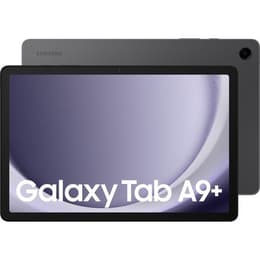
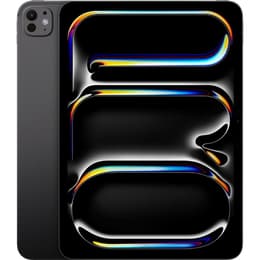

Galaxy Tab A9+ (11.0", 2023) Vs iPad Pro (2024, M4 series)

Galaxy Tab A9+ (11.0", 2023)
Starting at

Refurbished price:£144.00

Versus £309.90 new

See options
iPad Pro (2024, M4 series)
Starting at

Refurbished price:£642.00

Versus £999.00 new

See options

Ratings

The Samsung Galaxy Tab A9 Plus, released in October 2023, and the Apple iPad Pro M4 Series, launched in May 2024, represent distinct approaches to tablet design and functionality. While both offer large displays for media consumption and productivity, the Galaxy Tab A9 Plus focuses on providing a capable Android experience for everyday use, whereas the iPad Pro M4 Series is engineered for demanding professional workflows within the iPadOS ecosystem. Key differentiators lie in their display technology, processing power, and overall software philosophy.

Scores

Durability

The longevity of a tablet is influenced by its release timeline, software support, and physical durability. These two devices offer different expectations in these areas.

  • Release Timeline and Software Support: The Galaxy Tab A9 Plus, released in late 2023, typically receives major Android updates for a shorter period, with some reports suggesting around two to three years of significant OS upgrades [5, 22]. However, Samsung has committed to providing security updates for the A9 Plus for up to seven years from its release [17, 22]. The iPad Pro M4 Series, launched in mid-2024, benefits from Apple's generally longer software support, with expectations of five to seven years of major iPadOS updates and seven to ten years of security updates [12, 16].
  • Durability and Practical Lifespan: The Galaxy Tab A9 Plus features a plastic back, contributing to its lighter weight but potentially offering less resistance to wear compared to more premium materials [23]. The iPad Pro M4 Series boasts an aluminum build, known for its robust and premium feel [27]. Both devices are designed for daily use, but the iPad Pro's extended software support and build materials may contribute to a longer practical lifespan for users who prioritize keeping their device updated and in pristine condition.

Year of Release

2023

2024

Compatible with latest Update

Yes

Yes

OS

Android

iPadOS

Performance

Performance is a critical aspect for tablets, impacting everything from app responsiveness to handling intensive tasks. These two tablets offer different levels of processing power tailored to their intended use cases.

  • Everyday Task Handling: The Galaxy Tab A9 Plus is equipped to handle daily productivity tasks, web browsing, streaming media, and moderately intensive games smoothly [2, 10, 14]. Users report that general navigation and multitasking are efficient, though opening some applications might involve a brief delay [10]. The iPad Pro M4 Series, featuring a current-generation processor, delivers unparalleled performance, ensuring demanding applications like video editing and graphic design run without slowdowns [9, 15]. It maintains high performance even during extended intensive use, managing heat effectively despite its thin design [9].
  • Multitasking and Responsiveness: The Galaxy Tab A9 Plus offers sufficient performance for multitasking with several apps open, with some configurations providing more memory for smoother transitions [18]. The iPad Pro M4 Series excels in multitasking, allowing users to run numerous complex applications simultaneously with immediate responsiveness, supported by its substantial memory configurations [1, 3, 8]. This makes it well-suited for professional users who frequently switch between heavy workloads.

Memory (GB)

4 GB

8 GB

Screen quality

The display is a primary interface for tablets, and both models offer distinct visual experiences based on their underlying technology and specifications.

  • Display Technology and Clarity: The Galaxy Tab A9 Plus features an 11-inch TFT LCD panel with a resolution of 1920 x 1200 pixels [2, 11, 14]. While it provides good color reproduction and a clear viewing experience for general media consumption, it does not offer the deep blacks or vibrant colors found on more advanced display types [10, 25]. The iPad Pro M4 Series introduces an Ultra Retina XDR display, which is a Tandem OLED panel, offering exceptional contrast, true-to-life colors, and deep blacks [1, 3, 15, 27]. Its higher resolution (up to 2752 x 2064 pixels on the 13-inch model) provides superior clarity and detail [8, 15].
  • Brightness and Smoothness: The Galaxy Tab A9 Plus has a brightness level of around 400 nits, which can make it challenging to view comfortably in direct sunlight [18, 23]. It features a 90Hz adaptive refresh rate, contributing to smoother scrolling and a more fluid user experience compared to standard 60Hz displays [2, 10]. The iPad Pro M4 Series offers significantly higher brightness, reaching up to 1000 nits for standard content and a peak of 1600 nits for HDR content, ensuring excellent visibility even in bright outdoor conditions [3, 8, 27]. It also includes ProMotion technology, providing an adaptive refresh rate from 10Hz to 120Hz for incredibly smooth motion and responsiveness [3, 8].

Resolution

1200 x 1920

2420 x 1668

Screen type

TFT LCD

Ultra Retina XDR display

Pixel density

210ppp

264ppp

Audiovisual

Tablet cameras are often used for video calls, document scanning, and casual photography, and these devices provide different capabilities in this regard.

  • Photography and Video Capabilities: The Galaxy Tab A9 Plus includes an 8MP main camera with autofocus and a 5MP front-facing camera [11, 14]. It is suitable for scanning documents and video calls, performing adequately in well-lit environments, but its low-light performance is limited [23, 25]. Video recording is supported up to FHD (1920 x 1080) at 30 frames per second [11]. The iPad Pro M4 Series features a 12MP wide main camera with a LiDAR scanner and an upgraded True Tone flash, alongside a 12MP landscape ultrawide front camera [1, 24]. This system offers enhanced photography and video recording quality, making it capable for more detailed captures and improved performance in various lighting conditions [15].
  • Audio Experience: The Galaxy Tab A9 Plus is equipped with quad speakers that support Dolby Atmos, providing loud audio output for media consumption [14, 25]. The sound quality is generally considered average for its category [25]. The iPad Pro M4 Series also delivers good audio quality, contributing to an immersive media experience [27]. Both tablets are well-suited for video calls, with the iPad Pro's landscape front camera being particularly convenient for this purpose [1].

Miscellaneous

Beyond core performance and display, several practical features contribute to the overall user experience and device utility.

  • Connectivity and Ports: The Galaxy Tab A9 Plus supports Wi-Fi 5 and Bluetooth 5.1, with 5G connectivity available on cellular models, and includes a USB-C port for charging and data transfer [2, 6, 14]. It also retains a 3.5mm headphone jack and offers expandable storage via a microSD card slot, which can be useful for users with large media libraries [14, 23]. The iPad Pro M4 Series features more advanced connectivity with Wi-Fi 6E and Bluetooth 5.3, alongside 5G support in cellular configurations [1, 3, 27]. Its USB-C port supports Thunderbolt 3 and USB 40Gbps, enabling high-speed data transfer and external display connections [1].
  • Security and Design: For security, the Galaxy Tab A9 Plus relies on face recognition, lacking a fingerprint sensor [2, 10, 23]. It has a relatively thin and light design with a plastic back [23]. The iPad Pro M4 Series incorporates Face ID for secure authentication [28]. It boasts an exceptionally thin and light aluminum chassis, contributing to a premium feel and comfortable handling, especially for extended periods [4, 24, 27].

Weight

1 g

444 g

Screen size (in)

11.0

11

Network

Wi-Fi + 4G

Wi-Fi

Carrier compatibility

Unlocked

Without SIM Port

The Samsung Galaxy Tab A9 Plus and the iPad Pro M4 Series cater to different user needs and expectations, offering distinct strengths in their respective categories.

Users frequently praise the Galaxy Tab A9 Plus for its large, smooth 90Hz display, which enhances media consumption and casual gaming. Its expandable storage is a significant advantage for those who need ample space for files and media. Common criticisms often point to its screen's performance in bright sunlight and the absence of a fingerprint sensor. Overall, user consensus highlights it as a reliable device for everyday tasks and entertainment, particularly for those seeking a functional Android tablet experience.

The iPad Pro M4 Series is widely lauded for its stunning OLED display, offering vibrant colors and deep blacks, and its exceptional processing power, which handles professional-grade applications with ease. Users appreciate its thin and light design, contributing to comfortable portability. However, some users express concerns about the limitations of iPadOS for truly replacing a laptop in complex workflows and the additional investment required for accessories. It is generally seen as a powerhouse for creative professionals and users who demand top-tier performance and display quality.

Users prioritizing a versatile and budget-conscious tablet for general use, media consumption, and light productivity, especially those who value expandable storage and the Android ecosystem, may find the Galaxy Tab A9 Plus well-suited to their needs. Conversely, users who require a device for intensive creative work, advanced multitasking, and appreciate a premium display and robust performance within the Apple ecosystem will likely lean towards the iPad Pro M4 Series. Both devices are available as quality-assured refurbished options, providing an eco-friendly alternative for consumers.

See all articles

Our recent comparisons