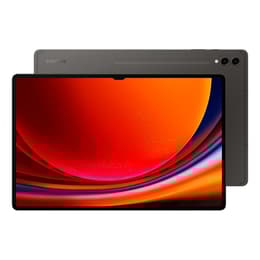

Compare models
Galaxy Tab A11+ (11.0", 2025) Vs Galaxy Tab S9 Ultra (14.6", 2023)
- 1-year minimum warranty
- Free delivery on all items
- Free 30-day returns
Differences at a glance
The Samsung Galaxy Tab A11+ (2025) and Samsung Galaxy Tab S9 Ultra (2023) cater to very different tablet experiences, ranging from an accessible everyday device to a sprawling productivity powerhouse. While the Galaxy Tab A11+ offers a portable, modern layout focused on daily essentials, the Galaxy Tab S9 Ultra prioritizes an expansive workspace and high-end multimedia capabilities. These devices run on Android-based software interfaces tailored to their respective hardware architectures, providing distinct balances between portability and performance.
Available Models
Colour
Storage (GB)
Scores
Durability
Both tablets offer long-term usability, though their release years and software update commitments shape different expectations for lifespan and support longevity.
- Release timeline and software support: The Galaxy Tab A11+ debuted in late 2025 with an extended update schedule supporting multiple major operating system upgrades, whereas the Galaxy Tab S9 Ultra launched in 2023 and benefits from an established track record of system patches.
- Repairability and durability: Both models feature robust build qualities designed to withstand regular handling, with standard structural repair pathways available through authorized service channels.
- Practical lifespan: Users seeking extended software currency will find the newer Galaxy Tab A11+ well-positioned for long-term updates, while the Galaxy Tab S9 Ultra relies on its high-tier hardware build to maintain longevity.
Year of Release
2025
2023
Compatible with latest Update
Yes
Yes
OS
Android
Android
Performance
System capabilities differ significantly based on internal hardware configuration, directly impacting multitasking headroom, app loading speeds, and battery endurance during daily routines.
- Multitasking and everyday speed: The Galaxy Tab A11+ handles everyday web browsing, media streaming, and document editing smoothly, while the Galaxy Tab S9 Ultra provides extra processing headroom for demanding creative applications and intensive multitasking.
- Battery behavior: The Galaxy Tab A11+ features a power-efficient profile suited for standard daily usage, whereas the Galaxy Tab S9 Ultra utilizes a large battery capacity to support its massive screen during extended work sessions.
- Storage configuration: Both devices offer expandable storage options via microSD cards alongside ample onboard memory choices to accommodate large file libraries.
Screen quality
Display characteristics represent one of the most prominent distinctions between the two models, defined by panel technology, physical dimensions, and visual fluidity.
- Display technology: The Galaxy Tab A11+ utilizes a clear LCD screen with a smooth 90Hz refresh rate for fluid scrolling, while the Galaxy Tab S9 Ultra deploys a massive 14.6-inch Dynamic AMOLED panel with deep contrast and a 120Hz refresh rate.
- Viewing experience: The Galaxy Tab A11+ provides a balanced 11-inch workspace that is easy to hold in portrait or landscape, whereas the Galaxy Tab S9 Ultra functions almost like a secondary desktop monitor for split-screen apps.
- Outdoor usability: Both screens offer sufficient brightness levels for comfortable viewing indoors and in shaded outdoor environments, though high-end panel properties on the Ultra model enhance contrast under bright light.
Resolution
1920 x 1200
1848 x 2960
Pixel density
180ppp
240ppp
Audiovisual
Media consumption and capture features vary considerably, reflecting the intended use cases for a portable daily tablet versus a desktop replacement device.
- Camera systems: The Galaxy Tab A11+ is equipped with standard front and rear lenses adequate for casual snapshots and quick video calls, while the Galaxy Tab S9 Ultra includes an expanded dual front-facing camera setup optimized for wide-angle video conferencing.
- Speaker output: Both models incorporate multi-speaker arrays tuned with spatial audio support, delivering clear sound output for streaming movies, listening to music, or joining virtual meetings.
- Microphone performance: Integrated multi-microphone arrays capture clean audio during voice calls and video recordings on both tablets.
Miscellaneous
Physical dimensions, connectivity standards, and accessory compatibility dictate how easily each device integrates into mobile or stationary work habits.
- Handling and dimensions: The Galaxy Tab A11+ weighs significantly less and features a compact profile for easy portability, whereas the Galaxy Tab S9 Ultra is wider and heavier due to its expansive screen real estate.
- Connectivity and ports: Both models support fast Wi-Fi standards and Bluetooth pairing, utilizing USB-C ports for charging and data transfer, with the Ultra model bundling an S Pen stylus in the box.
- Ecosystem integration: Both tablets support desktop-style window interfaces when connected to external displays or keyboards, making quality-assured refurbished options from platforms like Back Market an eco-friendly choice for accessing sustainable technology.
Weight
335 g
129 g
Screen size (in)
11.0
14.6
Network
Wi-Fi
Wi-Fi
Carrier compatibility
Without SIM Port
Unlocked
Connector
USB Type-C
USB Type-C
What the community thinks
Choosing between these two Samsung tablets depends entirely on physical scale and workflow intensity. Users prioritizing a lightweight, portable footprint for everyday reading, streaming, and casual browsing will find the Galaxy Tab A11+ well-suited to their needs. Conversely, users who require a massive canvas for multi-window productivity, digital drawing, and intensive media consumption will lean toward the Galaxy Tab S9 Ultra. Reviewers and everyday owners frequently praise the Tab A11+ for its balanced portability and update longevity, while noting that the Tab S9 Ultra's heavy chassis is best suited for stationary desk or lap use rather than handheld reading. Evaluating whether a compact layout or an expansive workspace matters more will guide the final decision. For buyers exploring sustainable purchases, opting for a quality-assured refurbished device provides an eco-friendly path to obtaining either model without compromising on performance standards.