
Compare models

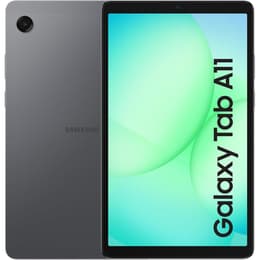
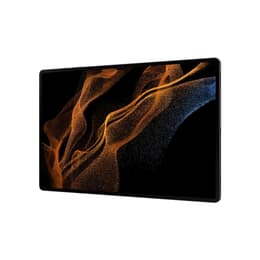
Galaxy Tab A11 (8.7", 2025) Vs Galaxy Tab S8 (11.0", 2022)

  • 1-year minimum warranty
  • Free delivery on all items
  • Free 30-day returns
Galaxy Tab A11 (8.7", 2025)
Starting at

Refurbished price:£113.99

Versus £224.77 new

See options
Galaxy Tab S8 (11.0", 2022)
Starting at

Refurbished price:£313.00

Versus £999.00 new

See options

Differences at a glance

The Samsung Galaxy Tab A11 (8.7", 2025) and the Samsung Galaxy Tab S8 (11.0", 2022) represent two distinct approaches to portable computing within Samsung's tablet lineup. While the Galaxy Tab A11 focuses on compact, modern daily utility with a recent software release, the Galaxy Tab S8 is positioned as a higher-tier productivity tool with a larger workspace and more robust processing hardware. Choosing between them depends on whether portability and recent platform foundations or screen workspace and performance capability take priority.

Available Models

Colour

Storage (GB)

Scores

Durability

Both tablets offer distinct structural lifespans shaped by their release years, software support schedules, and hardware construction.

  • Software Support and Age: The Galaxy Tab A11 benefits from a newer 2025 release window, supporting modern Android iterations and extended patch timelines. The Galaxy Tab S8, launched in 2022, operates on an earlier software generation, meaning its active update lifecycle will conclude sooner than its newer counterpart.
  • Build and Repairability: The Galaxy Tab S8 features a rigid aluminum chassis designed for durability, whereas the Galaxy Tab A11 utilizes a lightweight frame optimized for handheld use. Both models rely on authorized service channels for repairs, though parts availability generally favors high-tier historical models.
  • Practical Longevity: Users seeking extended OS update compatibility will find the newer software timeline of the Galaxy Tab A11 advantageous for long-term deployment, while structural hardware endurance remains robust in both quality-assured refurbished options and brand-new units.

Year of Release

2025

2022

Compatible with latest Update

Yes

Yes

OS

Android

Android

Performance

Performance profiles differ significantly, reflecting the intended tier and hardware capacity of each device.

  • Multitasking and Processing: The Galaxy Tab S8 handles demanding productivity apps, heavy split-screen multitasking, and graphic-intensive gaming smoothly thanks to its high-end processor tier and generous RAM configurations. The Galaxy Tab A11 relies on an efficient mid-range processor paired with balanced RAM options, which handles daily tasks, web browsing, and streaming reliably without matching peak raw processing speeds.
  • Storage Configurations: Both devices offer expandable storage via microSD card slots, alongside internal capacity tiers starting at 64 GB or 128 GB, accommodating media libraries and offline files efficiently.
  • Battery Behavior: The Galaxy Tab A11 pairs a smaller 5,100 mAh power cell with an energy-efficient layout suited for light reading and video playback, while the Galaxy Tab S8 utilizes a larger 8,000 mAh battery to support its expansive display and demanding workloads.

Screen quality

Display characteristics establish stark differences in visual workspace size, panel technology, and motion clarity.

  • Display Technology and Resolution: The Galaxy Tab S8 features an 11.0-inch LTPS TFT display with a sharp WQXGA resolution (2560 x 1600 pixels), delivering crisp text and detailed media rendering. The Galaxy Tab A11 uses a compact 8.7-inch TFT display with a WXGA+ resolution (1340 x 800 pixels), prioritizing single-handed comfort over high pixel density.
  • Refresh Rate and Smoothness: The Galaxy Tab S8 supports up to a 120Hz adaptive refresh rate for fluid scrolling and responsive pen input, whereas the Galaxy Tab A11 incorporates a 90Hz refresh rate that ensures smooth visual transitions during everyday navigation.
  • Viewing Experience: The larger screen real estate of the Galaxy Tab S8 suits multi-window workflows and document editing, while the compact form factor of the Galaxy Tab A11 fits casual media consumption during travel.

Resolution

800x1340

1600 x 2560

Pixel density

180ppp

280ppp

Audiovisual

Multimedia capabilities and hardware outputs cater to distinct usage habits, ranging from casual capture to media consumption.

  • Camera System Performance: The Galaxy Tab S8 houses a dual rear camera setup and an ultra-wide front-facing lens suited for video conferencing. The Galaxy Tab A11 features a simpler single 8 MP rear camera and a 5 MP front sensor, adequate for quick document scanning and casual video calls.
  • Audio Output: The Galaxy Tab S8 incorporates quad stereo speakers tuned for immersive media playback, while the Galaxy Tab A11 is equipped with dual stereo speakers enhanced by spatial audio technology for clear everyday listening.
  • Wired Audio Support: Notably, the Galaxy Tab A11 includes a traditional 3.5 mm headphone jack, allowing direct connection for wired headphones without adapters.

Miscellaneous

Physical design elements and connectivity options shape how each device integrates into daily travel and routines.

  • Dimensions and Handling: The Galaxy Tab A11 weighs approximately 335 grams with an 8.7-inch footprint, making it exceptionally portable for one-handed reading. The Galaxy Tab S8 weighs around 507 grams with an 11.0-inch frame, requiring two hands or a stand for comfortable prolonged handling.
  • Connectivity Standards: Both tablets provide reliable dual-band Wi-Fi and Bluetooth capabilities, with select variants supporting cellular data connectivity for remote internet access on the go.
  • Physical Ports: Both models utilize USB Type-C ports for charging and data synchronization, ensuring compatibility with modern charging accessories.

Weight

335 g

503 g

Screen size (in)

8.7

11.0

Network

Wi-Fi

Wi-Fi + 5G

Carrier compatibility

Without SIM Port

Unlocked

Connector

USB Type-C

USB Type-C

What the community thinks

User feedback from online communities highlights distinct advantages for each model. Owners of the Galaxy Tab S8 frequently praise its expansive 120Hz display, fluid multitasking performance, and robust build quality, though some note that its larger physical footprint is less convenient for one-handed reading. Conversely, users of the Galaxy Tab A11 appreciate its highly portable size, lightweight design, and inclusion of a headphone jack, while acknowledging that its processing capacity is best suited for lighter daily tasks rather than intensive creative workflows.

Users prioritizing maximum screen workspace, high-end processing power for multitasking, and smooth pen support will find the Galaxy Tab S8 well-suited to their needs. Meanwhile, users prioritizing compact portability, light daily entertainment, and a travel-friendly form factor may lean toward the Galaxy Tab A11. Eco-conscious buyers can also explore quality-assured refurbished options for either model as sustainable alternatives that extend device lifecycles. Ultimately, the choice depends on matching hardware capabilities and physical dimensions to individual daily routines.

Our recent comparisons