
Galaxy S25 Vs Xiaomi Redmi Note 11 Pro 5G

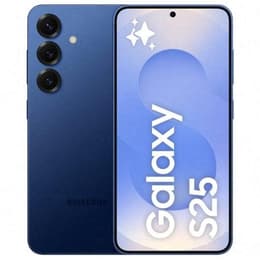
Galaxy S25
Galaxy S25
Starting at

Refurbished price:£435.00

Versus £766.13 new

See options
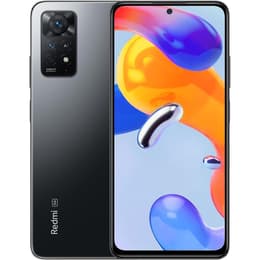
Xiaomi Redmi Note 11 Pro 5G
Starting at

Refurbished price:£102.00

Versus £599.00 new

See options

Ratings

The Samsung Galaxy S25, a flagship smartphone released in early 2025, and the Xiaomi Redmi Note 11 Pro 5G, a mid-range device launched in early 2022, represent different segments and generations of the Android smartphone market. While both offer 5G connectivity and large displays, the Galaxy S25 focuses on advanced performance, camera capabilities, and extended software support, whereas the Redmi Note 11 Pro 5G prioritizes a large battery and a high-resolution main camera within its category.

Scores

Durability

The expected practical lifespan of these devices differs significantly due to their release timelines and manufacturer support policies.

  • Release Timeline: The Galaxy S25 was released in February 2025, making it a current-generation device. In contrast, the Redmi Note 11 Pro 5G was launched in January 2022, positioning it as an older model.
  • Software Longevity: Samsung has committed to providing seven years of Android OS and security updates for the Galaxy S25 series, with support extending into 2032. The Redmi Note 11 Pro 5G typically receives security updates for at least two years from its initial shipment, with users sometimes reporting slower updates.
  • Physical Durability: The Galaxy S25 features an IP68 rating for dust and water resistance, meaning it can withstand submersion in up to 1.5 meters of freshwater for 30 minutes, and is protected by Corning Gorilla Glass Victus 2. The Redmi Note 11 Pro 5G offers IP53 splash and dust resistance and uses Corning Gorilla Glass 5 for screen protection.

Year of Release

2025

2022

OS

Android

Android

Foldable

No

No

Performance

Performance capabilities vary between these two devices, reflecting their different market positions and release years.

  • Processing Power: The Galaxy S25 is equipped with a current-generation, high-performance processor, enabling smooth operation for demanding applications, intensive multitasking, and advanced gaming. The Redmi Note 11 Pro 5G utilizes a mid-range processor that handles everyday tasks and moderate gaming efficiently, but may show limitations with very resource-intensive applications.
  • System Responsiveness: With 12 GB of RAM as standard, the Galaxy S25 offers substantial memory for seamless app switching and background processes. The Redmi Note 11 Pro 5G comes with 6 GB or 8 GB of RAM, which is sufficient for typical smartphone usage and multitasking.
  • Storage Options: The Galaxy S25 offers internal storage starting from 128 GB, with options up to 1 TB, though it does not support expandable storage. The Redmi Note 11 Pro 5G provides 128 GB of internal storage, which can be expanded up to 1 TB using a microSD card.

Memory (GB)

12 GB

6 GB

Screen quality

Both smartphones feature large displays, but they differ in their underlying technology and visual characteristics.

  • Display Technology and Clarity: The Galaxy S25 features a 6.2-inch Dynamic LTPO AMOLED 2X display with a 2340 x 1080 pixel resolution, providing sharp images and vibrant colors. The Redmi Note 11 Pro 5G has a larger 6.67-inch Super AMOLED display with a 1080 x 2400 pixel resolution, offering good clarity and color reproduction.
  • Brightness and Smoothness: The Galaxy S25's display can reach a peak brightness of 2600 nits, ensuring excellent visibility even in bright outdoor conditions, and features a 120 Hz adaptive refresh rate for smooth scrolling and animations. The Redmi Note 11 Pro 5G offers a peak brightness of 1200 nits and a 120 Hz refresh rate, contributing to a fluid visual experience.
  • Viewing Experience: The Galaxy S25's display is well-suited for users who prioritize a compact form factor with a high-quality visual experience. The Redmi Note 11 Pro 5G's larger screen provides an expansive viewing area, which can be beneficial for media consumption.

Resolution

1080x2340

1080 x 2400

Screen type

Dynamic LTPO AMOLED 2X

Super AMOLED

Audiovisual

The camera systems on these devices offer different strengths and capabilities for capturing photos and videos.

  • Rear Camera Setup: The Galaxy S25 features a versatile triple-camera system with a 50 MP main sensor, a 12 MP ultra-wide lens, and a 10 MP telephoto lens with 3x optical zoom, allowing for detailed shots across various focal lengths. The Redmi Note 11 Pro 5G includes a 108 MP main sensor, an 8 MP ultra-wide lens, and a 2 MP macro sensor.
  • Photography Performance: The Galaxy S25 benefits from advanced image processing and AI enhancements, contributing to consistent image quality, particularly in challenging lighting conditions and with features like AI-powered editing tools. The Redmi Note 11 Pro 5G's 108 MP main sensor can capture detailed images in good lighting, but its secondary cameras and overall image processing may not match the consistency of a flagship device.
  • Video Recording and Audio: The Galaxy S25 supports high-resolution video recording and includes features like Audio Eraser for videos. The Redmi Note 11 Pro 5G is limited to Full HD video recording and does not offer 4K capabilities. Both devices offer stereo speakers for media consumption.

Miscellaneous

Beyond core specifications, several practical elements differentiate these two smartphones in daily use.

  • Connectivity and Ports: Both devices support 5G connectivity. The Galaxy S25 includes Wi-Fi 7 and Bluetooth 5.3, offering newer wireless standards. The Redmi Note 11 Pro 5G supports Wi-Fi 802.11 a/b/g/n/ac and Bluetooth v5. The Galaxy S25 uses a USB-C port, while the Redmi Note 11 Pro 5G also features a USB-C port and retains a 3.5mm headphone jack.
  • Biometrics and Build: The Galaxy S25 incorporates an ultrasonic in-screen fingerprint sensor. The Redmi Note 11 Pro 5G features a side-mounted fingerprint scanner. The Galaxy S25 has a premium build with a glass rear and aluminum frame. The Redmi Note 11 Pro 5G typically features a glass backplate with a plastic frame.
  • Dimensions and Weight: The Galaxy S25 is a more compact device, measuring 146.9 x 70.5 x 7.2mm and weighing 162 grams. The Redmi Note 11 Pro 5G is larger and slightly heavier at 164.19 x 76.10 x 8.12mm and 202 grams.

Weight

162 g

202 g

Screen size (in)

6.2

6.67

Mobile network

5G

5G

SIM card

Physical SIM + eSIM

Dual Physical SIM

Carrier compatibility

Unlocked

Unlocked

User feedback for the Samsung Galaxy S25 often highlights its powerful performance, advanced camera system with AI capabilities, and the assurance of extended software updates as key strengths. Users appreciate its vibrant display and premium build. Common observations might include its battery life being sufficient for a day of use, though not necessarily class-leading, and its compact size appealing to those who prefer a smaller flagship device.

For the Xiaomi Redmi Note 11 Pro 5G, users frequently praise its long-lasting battery life and fast wired charging capabilities, often noting that it can easily last a full day even with heavy use. Its large, smooth AMOLED display is also a consistent positive. However, some users point out that its secondary cameras are less impressive than the main sensor, and the lack of 4K video recording is a limitation. The software update frequency has also been a point of discussion.

Users prioritizing cutting-edge performance, a highly versatile camera system with advanced computational photography, and a long period of software support will find the Samsung Galaxy S25 well-suited to their needs. Its compact design and premium materials also cater to those seeking a refined user experience. Conversely, individuals who prioritize extended battery life, very fast wired charging, and a large display for media consumption, and who are less concerned with the absolute latest processor or advanced camera features, may lean towards the Xiaomi Redmi Note 11 Pro 5G. Both devices are available as quality-assured refurbished options, providing an eco-friendly alternative for consumers.


See all articles

Our recent comparisons