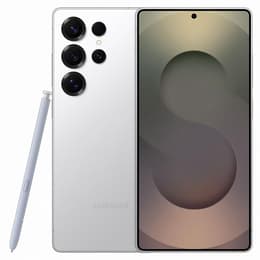
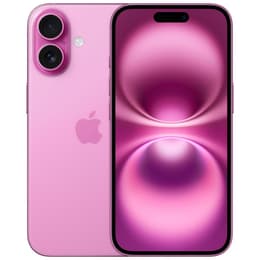

Galaxy S25 Ultra Vs iPhone 16

Galaxy S25 Ultra
Galaxy S25 Ultra
Starting at

Refurbished price:£654.00

Versus £1,249.00 new

See options
iPhone 16
iPhone 16
Starting at

Refurbished price:£475.00

Versus £699.00 new

See options

Ratings

The Samsung Galaxy S25 Ultra, released in February 2025, and the Apple iPhone 16, launched in September 2024, represent distinct approaches to high-end smartphone design and functionality. While both devices offer advanced mobile experiences, they cater to different user preferences through their respective Android and iOS operating systems. The Galaxy S25 Ultra emphasizes a large display and a versatile multi-lens camera system, whereas the iPhone 16 focuses on a streamlined user experience and integrated software features.

Scores

Durability

When considering the long-term usability of these devices, several factors contribute to their expected practical lifespan.

  • Software Support: The Galaxy S25 Ultra, running on Android 15, is anticipated to receive up to seven major Android upgrades, offering extended software longevity. The iPhone 16, launched with iOS 18, typically receives iOS updates for approximately 5-6 years from its release, ensuring a consistent and secure software experience over time.
  • Physical Durability: The Galaxy S25 Ultra features a titanium frame and Corning Gorilla Armor 2 on both its front and back for enhanced protection against drops and scratches. The iPhone 16 utilizes a Ceramic Shield front cover, which provides robust durability against impacts. Both devices carry an IP68 rating for dust and water resistance, indicating their ability to withstand immersion in water up to 6 meters for 30 minutes.
  • Repairability: The iPhone 16 has demonstrated improved repairability, earning an iFixit score of 7 out of 10, attributed to its enhanced internal layout and more modular components. The Galaxy S25 Ultra received an iFixit score of 5 out of 10, noted for its easier battery replacement with pull tabs and modular camera design, though screen removal can be challenging.

Year of Release

2025

2024

Compatible with latest Update

Yes

Yes

Foldable

No

No

Performance

Both the Galaxy S25 Ultra and the iPhone 16 deliver robust performance for daily tasks and demanding applications, though they achieve this through different hardware and software optimizations.

  • Processing Power: The Galaxy S25 Ultra is equipped with a current-generation processor optimized for its ecosystem, enabling smooth handling of intensive gaming and complex multitasking. The iPhone 16 features an advanced chip designed to efficiently manage its operating system and applications, providing responsive performance for everyday use and supporting advanced AI features.
  • Multitasking and Responsiveness: The Galaxy S25 Ultra offers configurations with up to 16GB of RAM, facilitating seamless transitions between numerous applications and supporting heavy usage scenarios. The iPhone 16, with 8GB of RAM, is optimized to deliver fluid multitasking and quick app loading, benefiting from tight integration between its hardware and software.
  • Battery Behavior: The Galaxy S25 Ultra houses a 5000 mAh battery, with users reporting it can last a full day with moderate to heavy use, and achieving over 17 hours in some tests. The iPhone 16, with a 3561 mAh battery, shows improved endurance over its predecessor, offering up to 22 hours of video playback and typically lasting a full day for many users.

Memory (GB)

12 GB

8 GB

Screen quality

The visual experience on both devices is a highlight, with each offering a high-quality display tailored to different preferences in size and technology.

  • Display Technology and Size: The Galaxy S25 Ultra features a large 6.9-inch Dynamic LTPO AMOLED 2X display, known for its deep blacks, vibrant colors, and energy efficiency. The iPhone 16 comes with a 6.1-inch Super Retina XDR OLED display, providing excellent contrast and color accuracy in a more compact form factor.
  • Brightness and Clarity: The Galaxy S25 Ultra's display can reach a peak brightness of up to 2600-3000 nits, ensuring excellent visibility even in bright outdoor conditions, and includes an anti-reflective coating. The iPhone 16 offers a peak outdoor brightness of 2000 nits and a typical maximum brightness of 1000 nits, providing clear viewing in various lighting environments. Both displays offer high resolution, resulting in sharp text and detailed images.
  • Smoothness and Features: The Galaxy S25 Ultra boasts a 120Hz adaptive refresh rate, contributing to smooth scrolling and fluid animations. It also incorporates ProScaler AI upscaling technology for enhanced content viewing. The iPhone 16 maintains a standard refresh rate, offering a consistently smooth experience for general use, and features the Dynamic Island for interactive alerts and activities.

Resolution

1440x3120

1179 x 2556

Audiovisual

Both smartphones offer advanced camera systems capable of capturing high-quality photos and videos, though they differ in their hardware configurations and photographic approaches.

  • Rear Camera Systems: The Galaxy S25 Ultra features a versatile quad-camera setup, including a 200 MP main sensor, a 50 MP ultrawide lens, a 10 MP telephoto lens with 3x optical zoom, and a 50 MP periscope telephoto lens offering 5x optical zoom and up to 10x optical quality zoom. The iPhone 16 is equipped with a dual-camera system, featuring a 48 MP main camera that supports 2x telephoto capabilities through sensor-shift optical image stabilization, and a 12 MP ultrawide camera.
  • Photography Performance: The Galaxy S25 Ultra excels in capturing highly detailed images, offering features like 50MP macro photos with its ultrawide lens and advanced AI-based processing for various scenarios. The iPhone 16 leverages its Photonic Engine and Smart HDR 5 for excellent low-light performance, accurate colors, and detailed shots, with users noting significant improvements over older iPhone models.
  • Video Capabilities and Audio: The Galaxy S25 Ultra supports 8K video recording at 30 frames per second and offers features like Dual Recording in 4K and the ability to record video in log format for professional-grade editing. The iPhone 16 records 4K Dolby Vision video at up to 60 frames per second, with Cinematic mode and Action mode for stabilized and creative video capture. Both devices provide clear audio recording and stereo speakers for media consumption.

Front camera

12

12 megapixels

Miscellaneous

Beyond core features, several practical elements distinguish the user experience of these two devices.

  • Connectivity and Ports: Both the Galaxy S25 Ultra and the iPhone 16 support 5G connectivity and Wi-Fi 7 for fast wireless speeds. The Galaxy S25 Ultra includes a USB-C port, while the iPhone 16 also features a USB-C port, aligning with modern connectivity standards.
  • Biometric Security and Navigation: The Galaxy S25 Ultra incorporates an ultrasonic in-screen fingerprint sensor for secure unlocking. The iPhone 16 relies on Face ID, its facial recognition system, for secure authentication. Both devices offer precise location services.
  • Unique Features and Handling: The Galaxy S25 Ultra integrates the S Pen, offering a distinct input method for note-taking and creative tasks, though it no longer supports Bluetooth-powered Air Actions. The iPhone 16 introduces a customizable Action Button and a Camera Control button for quick access to functions. The Galaxy S25 Ultra is a larger and heavier device at 162.8 x 77.6 x 8.2 mm and 218 grams, compared to the iPhone 16's more compact 147.6 x 71.6 x 7.8 mm and 170 grams, impacting one-handed use and pocketability.

Weight

233 g

170 g

Screen size (in)

6.9

6.1

Mobile network

5G

5G

SIM card

Dual Physical SIM + eSIM

Physical SIM + eSIM

Carrier compatibility

Unlocked

Unlocked

Connector

USB-C

USB-C (USB 2)

User sentiment for the Galaxy S25 Ultra often highlights its exceptional display quality, with many praising its brightness and anti-reflective properties for outdoor use. The versatile camera system, particularly the periscope zoom and high-resolution sensors, receives commendation for its ability to capture detailed and varied shots. Some users, however, have noted that while battery life is generally strong, it might not always match the endurance of some competitors with larger battery capacities. The S Pen, despite changes to its Air Actions, remains a valued feature for productivity and creative tasks.

For the iPhone 16, common praise points include its consistent and reliable performance, the intuitive iOS experience, and the significant improvements in battery life compared to previous generations. Users appreciate the enhanced camera capabilities, especially the computational photography features that deliver impressive results in various lighting conditions. Some feedback suggests that while the display is vibrant, the absence of a high refresh rate found in more premium models is a point of consideration for some users. The improved repairability has also been positively received.

Users prioritizing a large, vibrant display with advanced zoom photography and the unique functionality of a stylus may find the Galaxy S25 Ultra well-suited to their needs. Its extensive software update policy also offers long-term value. Conversely, individuals who prefer a more compact device with a highly integrated ecosystem, robust privacy features, and a focus on consistent performance and ease of use will likely lean towards the iPhone 16. Both devices offer quality-assured refurbished options, providing an eco-friendly alternative for consumers seeking advanced technology with a reduced environmental footprint.

See all articles

Our recent comparisons