Galaxy S24 FE Vs iPhone 17

Galaxy S24 FE
Galaxy S24 FE
Starting at

Refurbished price:£250.00

Versus £741.91 new

See options
iPhone 17
iPhone 17
Starting at

Refurbished price:£688.00

Versus £799.00 new

See options

Ratings

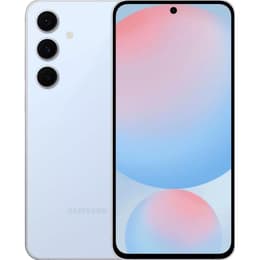
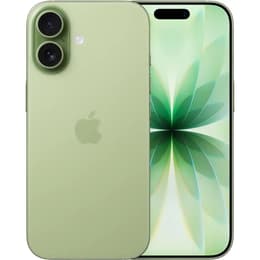
The Samsung Galaxy S24 FE, released in October 2024, and the iPhone 17, launched in September 2025, represent distinct offerings in the smartphone market. While the Galaxy S24 FE operates within the Android ecosystem, the iPhone 17 is part of Apple's integrated iOS environment. Key differences between these two devices lie in their operating systems, processor architectures, and specific camera capabilities, catering to varied user preferences.

Scores

Durability

Both the Galaxy S24 FE and the iPhone 17 are designed with durability in mind, featuring robust construction and IP68 ratings for dust and water resistance. Their practical lifespan is influenced by both physical resilience and ongoing software support.

  • Software Longevity: The iPhone 17, having been released in 2025, is expected to receive major iOS updates for approximately 5 to 7 years, with security updates extending even longer, potentially up to 7-8 years. The Galaxy S24 FE, released in 2024, is anticipated to receive up to 7 years of OS and security updates, aligning with Samsung's commitment for its S24 series.
  • Physical Resilience: The iPhone 17 incorporates Apple's Ceramic Shield 2 on its front cover, which is stated to offer three times better scratch resistance than its predecessor. It also features an aerospace-grade aluminum design. The Galaxy S24 FE is protected by Corning Gorilla Glass Victus+ on both its front and back, and utilizes a strong aluminum frame. Both devices carry an IP68 rating, indicating resistance to dust and submersion in fresh water up to 1.5 meters for 30 minutes.
  • Repairability: Modern smartphone designs, including these two, often require specialized tools and expertise for component replacement. Both models maintain a moderate repairability profile, consistent with current industry standards.

Year of Release

2024

2025

Compatible with latest Update

Yes

Yes

OS

Android

iOS

Foldable

No

No

Performance

The Galaxy S24 FE and iPhone 17 offer distinct performance profiles, shaped by their underlying hardware and operating system optimizations. Both are designed to handle demanding applications and multitasking with ease.

  • Processing Power: The iPhone 17 is equipped with Apple's A19 chip, which provides substantial performance for intensive tasks such as high-fidelity gaming and professional-grade video editing. The Galaxy S24 FE features Samsung's Exynos 2400e processor, an underclocked variant of the Exynos 2400, which is capable of handling demanding apps and multitasking smoothly.
  • System Responsiveness: Users can expect fluid navigation and quick app loading on both devices. The iPhone 17's processor is optimized for iOS, ensuring a highly responsive user experience. The Galaxy S24 FE, with its Exynos chip and Android 14, delivers a capable and efficient performance for everyday use and more intensive applications.
  • Storage and Multitasking: The iPhone 17 starts with a base storage of 256GB, providing ample space for applications, photos, and videos. The Galaxy S24 FE offers storage options of 128GB and 256GB. Both devices are designed to manage multiple applications simultaneously without significant slowdowns, contributing to a smooth multitasking experience.

Memory (GB)

8 GB

8 GB

Screen quality

Both the Galaxy S24 FE and iPhone 17 deliver impressive visual experiences through their advanced display technologies, offering vibrant colors and sharp details.

  • Display Technology and Clarity: The iPhone 17 features a 6.3-inch Super Retina XDR OLED display, known for its deep blacks, high contrast, and precise color accuracy, which enhances the viewing of photos and videos. The Galaxy S24 FE utilizes a 6.7-inch Dynamic AMOLED 2X display, recognized for its vivid color reproduction and excellent brightness, making content appear vibrant. Both offer FHD+ resolution for clear visuals.
  • Brightness and Refresh Rate: The iPhone 17's display includes ProMotion technology, offering an adaptive refresh rate up to 120Hz for smoother scrolling and more fluid animations. It also provides improved outdoor brightness, with typical brightness of 1000 nits and a high brightness mode (HBM) of 1600 nits. The Galaxy S24 FE also features a 120Hz refresh rate for smooth visuals and boasts a peak brightness of 1900 nits, with an adaptive display that adjusts brightness based on the environment.
  • Viewing Experience: The iPhone 17's slightly smaller screen size may appeal to users preferring a more compact device, while the Galaxy S24 FE offers a larger display for an expansive viewing experience.

Resolution

1080 x 2340

2622x1206

Screen type

Dynamic AMOLED 2X

Super Retina XDR

Audiovisual

The camera systems on the Galaxy S24 FE and iPhone 17 are designed to capture high-quality images and videos, though they approach this with different configurations and features.

  • Rear Camera System: The iPhone 17 features a dual 48-megapixel main camera system, capable of capturing detailed photos. The Galaxy S24 FE comes with a triple rear camera setup, including a 50-megapixel wide sensor with optical image stabilization (OIS), a 12-megapixel ultrawide lens, and an 8-megapixel telephoto lens with 3x optical zoom and OIS. The Galaxy S24 FE also incorporates a ProVisual Engine with AI-powered tools to enhance photos and videos.
  • Front Camera and Video: For selfies and video calls, the iPhone 17 is equipped with an 18-megapixel front camera. The Galaxy S24 FE features a 10-megapixel front camera. Both devices offer strong video recording capabilities, with the iPhone 17 supporting 4K video at 60 frames per second in Dolby Vision. The Galaxy S24 FE can record video at UHD 8K resolution at 30 frames per second.
  • Low-Light Performance and Features: Both phones are expected to perform well in various lighting conditions, with computational photography enhancing results in challenging environments. The iPhone's camera system is known for its consistent image processing, while the Galaxy S24 FE's larger main sensor and AI features contribute to its low-light performance.

Main camera

50 megapixels

48 megapixels

Front camera

10 megapixels

18 megapixels

Miscellaneous

Beyond core performance and display, several practical elements differentiate the user experience of the Galaxy S24 FE and iPhone 17.

  • Connectivity and Ports: Both the iPhone 17 and Galaxy S24 FE support 5G connectivity, along with modern Wi-Fi standards and Bluetooth for wireless connections. Both devices have adopted the USB-C port for charging and data transfer, offering universal compatibility.
  • Biometric Security: The iPhone 17 relies on Face ID for secure facial recognition, enabling unlocking, authentication, and purchases. The Galaxy S24 FE integrates an optical in-display fingerprint sensor for convenient and responsive biometric security.
  • Design and Handling: The iPhone 17 features an aerospace-grade aluminum design, with dimensions of approximately 14.9 cm in height, 7.1 cm in width, and less than 0.8 cm in thickness, weighing around 177g. The Galaxy S24 FE has a slightly larger form factor, measuring about 16.2 cm in height, 7.7 cm in width, and 0.8 cm in thickness, with a weight of 213g. These differences impact in-hand feel, with the iPhone 17 being more compact and lighter, while the Galaxy S24 FE offers a larger screen experience.

Weight

213 g

177 g

Screen size (in)

6.7

6.3

Mobile network

5G

5G

SIM card

Dual Physical SIM

Physical SIM + eSIM

Carrier compatibility

Unlocked

Unlocked

Connector

USB-C

USB-C

The Samsung Galaxy S24 FE and iPhone 17 cater to users with distinct priorities, reflecting their respective operating system philosophies and hardware focuses. Users often praise the Galaxy S24 FE for its vibrant display and versatile camera system, particularly its telephoto capabilities and AI enhancements. Some users have noted its battery life is generally sufficient for a full day of moderate use. Criticisms sometimes revolve around the Exynos processor in certain regions, though the 2400e variant aims to provide a consistent experience.

The iPhone 17 is frequently lauded for its powerful processor, ensuring smooth performance across demanding applications, and its consistent software experience. Its Ceramic Shield 2 and IP68 rating contribute to its perceived durability. Some discussions around iPhones often touch upon the preference for Face ID over fingerprint sensors, which is a key differentiator here.

Users prioritizing a larger display, a versatile triple-camera system with optical zoom, and the flexibility of the Android ecosystem may find the Galaxy S24 FE well-suited to their needs. Conversely, users who value a more compact device, industry-leading processing power, a highly integrated software experience, and robust facial recognition security may lean toward the iPhone 17. Both devices offer a quality-assured refurbished option, providing an eco-friendly alternative for consumers seeking to make a sustainable choice.
See all articles

Our recent comparisons