
Galaxy S10 Vs Google Pixel 6

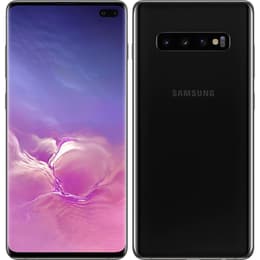
Galaxy S10
Galaxy S10
Starting at

Refurbished price:£108.00

Versus £639.00 new

See options
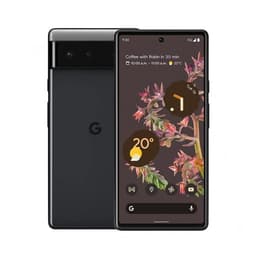
Google Pixel 6
Google Pixel 6
Starting at

Refurbished price:£101.00

Versus £649.99 new

See options

Ratings

The Samsung Galaxy S10, released in March 2019, and the Google Pixel 6, launched in October 2021, represent different eras in smartphone development. While both are Android devices, they offer distinct approaches to design, performance, and camera technology. The Galaxy S10 emphasizes a versatile hardware suite and traditional features, whereas the Pixel 6 focuses on advanced computational photography and a streamlined software experience powered by Google's custom silicon.

Scores

Durability

The practical lifespan of a smartphone is significantly influenced by its release timeline and ongoing software support. These two devices, separated by over two years, present different expectations for longevity.

  • Software Longevity: The Galaxy S10 launched with Android 9 and received major operating system updates up to Android 12, with security updates extending for approximately four years from its release. The Pixel 6, released later, launched with Android 12 and is guaranteed three major OS updates (up to Android 15) and five years of security updates, offering a longer period of official support.
  • Repairability: The Galaxy S10 received a low repairability score of 3 out of 10 from iFixit, primarily due to extensive adhesive use, a soldered charging port, and the ultrasonic fingerprint sensor being fused to the display, making repairs challenging and potentially costly. The Pixel 6, while also featuring a glass construction, generally offers moderate repairability, though screen and battery replacements can still be involved due to adhesive.
  • Build Materials: Both devices feature glass front and back panels with aluminum frames. The Galaxy S10 uses Gorilla Glass 6 on the front and Gorilla Glass 5 on the back, while the Pixel 6 incorporates the more durable Gorilla Glass Victus on the front and Gorilla Glass 6 on the back, offering enhanced scratch and drop resistance. Both also carry an IP68 rating for dust and water resistance.

Year of Release

2019

2021

Compatible with latest Update

No

Yes

OS

Android

Android

Foldable

No

No

Performance

Performance differences between the Galaxy S10 and Pixel 6 stem from their respective processors and system optimizations, impacting how they handle daily tasks and demanding applications.

  • Processing Power: The Galaxy S10 is powered by a flagship processor from 2019, which capably handles everyday applications and multitasking. However, the Pixel 6 features Google's custom-designed processor, optimized for artificial intelligence and machine learning tasks, resulting in generally faster and more efficient performance for modern applications and computational photography.
  • Multitasking and Storage: Both devices typically come with 8GB of RAM, allowing for smooth multitasking. The Galaxy S10 offers storage options up to 512GB and includes a microSD card slot for expandable storage, providing flexibility for users with large media libraries. The Pixel 6 is available with up to 256GB of internal storage but lacks expandable storage.
  • Battery Performance: The Galaxy S10 has a 3400 mAh battery, which provides sufficient power for a day of moderate use, though heavy usage may require more frequent charging. The Pixel 6 features a larger 4614 mAh battery, designed to offer extended usage, with Google claiming over 24 hours of life on a single charge for typical use.

Memory (GB)

8 GB

8 GB

Screen quality

The visual experience on both smartphones is delivered through high-quality displays, though with differences in technology and specifications that cater to varying user preferences.

  • Display Technology and Clarity: The Galaxy S10 features a 6.1-inch Dynamic AMOLED display with a resolution of 1440 x 3040 pixels, offering a very sharp and detailed viewing experience. The Pixel 6 has a slightly larger 6.4-inch AMOLED display with a resolution of 1080 x 2400 pixels, providing clear visuals suitable for most content consumption.
  • Refresh Rate and Smoothness: The Galaxy S10 features a standard 60Hz refresh rate, which provides a smooth experience for general navigation. The Pixel 6, however, offers a 90Hz refresh rate, resulting in noticeably smoother scrolling and more fluid animations, enhancing the overall responsiveness of the interface.
  • Brightness and Viewing Experience: Both displays support HDR10+, delivering vibrant colors and good contrast. The Galaxy S10's Dynamic AMOLED panel is known for its excellent brightness and color accuracy, making it suitable for outdoor visibility. The Pixel 6's AMOLED display also offers good brightness and color reproduction, ensuring a pleasant viewing experience in various lighting conditions.

Resolution

1440 x 3040

1080 x 2400

Screen type

Dynamic AMOLED

AMOLED

Audiovisual

Both the Galaxy S10 and Pixel 6 offer capable camera systems, but they approach photography with different philosophies, impacting the final image output and user experience.

  • Rear Camera Systems: The Galaxy S10 features a versatile triple-camera setup on the rear, including a 12MP wide-angle lens with dual aperture, a 12MP telephoto lens with 2x optical zoom, and a 16MP ultrawide lens, providing a range of focal lengths for different scenarios. The Pixel 6 opts for a dual-camera system with a high-resolution 50MP main sensor and a 12MP ultrawide lens, relying heavily on its advanced computational photography to enhance image quality across various conditions.
  • Photography Performance: The Galaxy S10 delivers strong performance in good lighting, with its hardware versatility allowing for creative shots. The Pixel 6 excels in computational photography, producing consistently detailed images with accurate colors and impressive low-light performance, often leveraging its custom processor for advanced image processing.
  • Video and Audio: Both devices are capable of recording 4K video at 60 frames per second. The Galaxy S10 includes a 3.5mm headphone jack, offering a traditional audio output option. The Pixel 6 does not feature a headphone jack, relying on USB-C or wireless audio solutions.

Main camera

12 megapixels

50 megapixels

Front camera

10 megapixels

8 megapixels

Miscellaneous

Beyond core features, several practical elements differentiate the user experience and connectivity options of the Galaxy S10 and Pixel 6.

  • Connectivity Standards: The Galaxy S10 supports 4G LTE and Wi-Fi 6, providing fast wireless data speeds. The Pixel 6 offers more advanced connectivity with 5G capabilities and Wi-Fi 6e, enabling faster cellular data and improved Wi-Fi performance in compatible networks. Both support Bluetooth 5.0 or newer for wireless accessories.
  • Physical Ports and Biometrics: A notable difference is the inclusion of a 3.5mm headphone jack on the Galaxy S10, a feature absent on the Pixel 6. Both devices utilize a USB-C port for charging and data transfer. For security, the Galaxy S10 features an ultrasonic in-display fingerprint sensor, while the Pixel 6 uses an optical in-display fingerprint sensor, alongside face recognition capabilities on both.
  • Design and Handling: The Galaxy S10 is a more compact and lighter device, measuring 149.9 x 70.4 x 7.8 mm and weighing 157g, making it easier for one-handed use. The Pixel 6 is larger and heavier at 158.6 x 74.8 x 8.9 mm and 207g, offering a more substantial feel in hand.

Weight

175 g

207 g

Screen size (in)

6.1

6.4

Mobile network

4G

5G

SIM card

Physical SIM

Physical SIM + eSIM

Carrier compatibility

Unlocked

Unlocked

User feedback for the Samsung Galaxy S10 often praises its vibrant display, versatile camera system, and the convenience of its 3.5mm headphone jack and expandable storage. Some common criticisms include its battery life compared to larger models in its series and the eventual end of major software updates. The Google Pixel 6 is frequently lauded for its exceptional camera quality, powered by computational photography, its unique processor, and a clean, up-to-date Android experience. User reactions to its in-display fingerprint sensor have been mixed, and while battery life is generally considered good, some users have noted it can be inconsistent, particularly during intensive tasks like gaming.

Users prioritizing a more compact device with traditional features like a headphone jack and expandable storage may find the Galaxy S10 well-suited to their needs. Those who value cutting-edge camera performance, a longer software support window, and a pure Android experience will likely lean towards the Pixel 6. Both devices offer robust performance for everyday tasks, but their strengths lie in different areas. For those considering a sustainable choice, both models are available as quality-assured refurbished options, extending their useful life and reducing electronic waste.

See all articles

Our recent comparisons