
Compare models
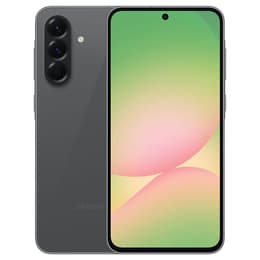
Galaxy A56 Vs Galaxy S25 FE
- 1-year minimum warranty
- Free delivery on all items
- Free 30-day returns
Differences at a glance
The Samsung Galaxy A56 (2025) and the Samsung Galaxy S25 FE (2025) represent two distinct approaches to everyday mobile technology within Samsung's extensive smartphone lineup. While the Galaxy A56 focuses on delivering balanced, reliable everyday performance as part of the mid-range series, the Galaxy S25 FE adopts elements from flagship models to offer enhanced processing power and advanced features. Both devices run on the Android operating system with Samsung's custom interface, providing a familiar software environment, yet they cater to different user priorities regarding capability and hardware design.
Available Models
Colour
Storage (GB)
Scores
Durability
When evaluating the long-term viability and physical resilience of these two smartphones, several practical factors regarding software updates and hardware construction come into play.
- Software longevity and update frequency: Both devices benefit from extended software support timelines typical of modern releases, ensuring several years of security patches and system updates, though the higher-tier model often receives priority for major feature deployments.
- Repairability and build durability: Each phone incorporates robust materials like glass and reinforced frames, alongside water and dust resistance ratings suitable for accidental spills, while maintaining standard repair pathways through authorized service providers.
- Expected practical lifespan: Users can anticipate smooth daily operation across multiple years of ownership, with the more powerful hardware configuration providing a slight advantage in maintaining pace with future software demands.
Year of Release
2024
2025
Compatible with latest Update
Yes
Yes
OS
Android
Android
Foldable
No
No
Performance
Daily operation, multitasking efficiency, and energy management differ notably based on the internal hardware configurations integrated into each device.
- Multitasking and app responsiveness: The Galaxy S25 FE incorporates a higher-tier processor that handles demanding applications, intense multitasking, and graphic-heavy games with noticeable smoothness, whereas the Galaxy A56 handles standard daily tasks, social media, and casual gaming reliably.
- Storage capacity and memory: Both models offer multiple configurations for internal storage and memory, accommodating extensive photo libraries and numerous applications without system slowdowns.
- Battery behavior and endurance: Both smartphones are equipped to last through a full day of mixed moderate usage, though heavy gaming or prolonged navigation will require a recharge before evening on either device.
Screen quality
Display technology across both models delivers bright, sharp visuals, though slight differences in panel execution impact outdoor visibility and media consumption.
- Display panel technology: Both smartphones utilize vibrant OLED screens that offer deep blacks, high contrast ratios, and vivid color reproduction suitable for streaming video and reading text.
- Refresh rate and smoothness: High refresh rate support ensures fluid scrolling through web pages and responsive touch interactions on both screens, creating a seamless visual experience.
- Outdoor brightness levels: Peak brightness capabilities on both panels allow content to remain legible under direct sunlight, making outdoor navigation and messaging straightforward.
Audiovisual
Photography and media recording capabilities vary to accommodate different user expectations, from casual snapshots to detailed video capture.
- Camera system versatility: Both devices feature multi-lens setups including main and ultra-wide sensors, while select models add telephoto capabilities for optical zoom without loss of detail.
- Low-light and everyday photography: Image processing software on both phones produces clear, balanced photos in daylight, with night modes helping to reduce grain in dim environments.
- Video and audio output: High-definition video recording with stabilization features ensures smooth home videos, paired with clear stereo speakers that support comfortable media consumption without external headphones.
Miscellaneous
Physical dimensions, connectivity standards, and daily handling characteristics define the practical ergonomics of using each smartphone.
- Connectivity and ports: Both devices support modern 5G networks, fast Wi-Fi standards, and Bluetooth connectivity, utilizing reversible USB-C ports for charging and data transfer.
- Biometric security features: Integrated fingerprint scanners and facial recognition options provide quick, secure ways to unlock the devices and authorize applications.
- Physical dimensions and handling: Weight and screen size differ slightly, influencing how comfortably each phone rests in a pocket or one-handed grip during daily commutes.
Weight
197 g
190 g
Screen size (in)
6.5
6.7
Mobile network
5G
5G
SIM card
Dual Physical SIM + eSIM
Physical SIM + eSIM
Carrier compatibility
Unlocked
Unlocked
Connector
USB-C
USB-C
What the community thinks
Real user feedback from community discussions highlights that the Galaxy A56 frequently earns praise for its reliable everyday battery longevity and balanced feature set, though some users note that its graphics processing handles heavy gaming less fluidly than flagship alternatives. Conversely, users often commend the Galaxy S25 FE for its responsive performance and versatile camera output, while noting that its demanding processor can generate warmth during extended periods of heavy use. Choosing between the two ultimately depends on individual workflows and habits.
Users prioritizing seamless multitasking, advanced graphics handling, and robust photography options may prefer the Galaxy S25 FE. Meanwhile, users focusing on reliable daily communication, media streaming, and general utility will find the Galaxy A56 well-suited to their needs. For those seeking a quality-assured refurbished option, exploring sustainably restored versions of these models provides an eco-friendly alternative that reduces electronic waste without compromising on functional capability. Both devices offer dependable mobile experiences tailored to distinct consumer preferences.