Galaxy A56 Vs Galaxy S25

Galaxy A56
Galaxy A56
Starting at

Refurbished price:£274.00

Versus £422.50 new

See options
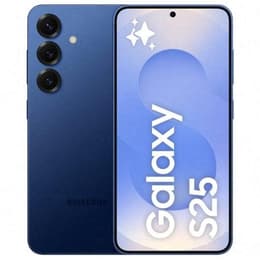
Galaxy S25
Galaxy S25
Starting at

Refurbished price:£435.00

Versus £766.13 new

See options

Ratings

The Samsung Galaxy A56 and the Samsung Galaxy S25 are two distinct smartphone offerings from Samsung, released in March 2025 and February 2025, respectively. While both operate on the Android platform with Samsung's One UI, they cater to different user expectations through their core specifications and feature sets. The Galaxy S25, as a flagship device, emphasizes advanced processing power and camera capabilities, whereas the Galaxy A56 focuses on delivering a balanced experience with strong battery life and robust software support.

Scores

Durability

The longevity of a smartphone is significantly influenced by its release timeline, software support, and physical durability.

  • Release Timeline and Software Support: The Galaxy A56, released in March 2025, ships with Android 15 and One UI 7.0, and is promised six major Android OS upgrades and seven years of security updates, extending its software lifespan significantly. The Galaxy S25, launched slightly earlier in February 2025 with Android 15 and One UI 7.0, offers an even longer commitment with seven years of both OS upgrades and security updates. This means the Galaxy S25 will receive software support for a year longer than the A56 in terms of OS upgrades, and both will receive security updates for an extended period.
  • Physical Durability: The Galaxy A56 features an aluminum frame and Corning Gorilla Glass Victus+ on both the front and back, along with an IP67 rating for dust and water resistance. This provides protection against immersion in up to 1 meter of water for 30 minutes. The Galaxy S25, on the other hand, utilizes an Armor Aluminum frame and Gorilla Glass Victus 2 for display protection, boasting an IP68 rating. The IP68 rating indicates protection against continuous immersion in up to 1.5 meters of water for 30 minutes, offering a slightly higher degree of water resistance.
  • Expected Practical Lifespan: Both devices are designed for extended use, with their respective software support policies ensuring they remain functional and secure for many years. The Galaxy S25's longer OS upgrade promise gives it a slight edge for users prioritizing the absolute latest Android features over the longest possible period.

Year of Release

2025

2025

OS

Android

Android

Foldable

No

No

Performance

Performance in smartphones is determined by the internal components and how they handle various tasks, from everyday applications to demanding processes.

  • Processor Capabilities: The Galaxy A56 is powered by a 4nm processor, which provides capable performance for daily tasks and ensures a smooth user experience. While it handles most applications without issue, it may not be optimized for the most intensive gaming or power-user scenarios. The Galaxy S25 incorporates a current-generation processor specifically optimized for Galaxy devices, delivering exceptionally snappy performance across everyday tasks, demanding applications, and graphics-intensive gaming. This processor also enhances the device's integrated artificial intelligence features.
  • System Responsiveness and Multitasking: The Galaxy A56, with its 8GB or 12GB of RAM, offers smooth multitasking for typical usage. Users generally report a fluid experience without significant stuttering. The Galaxy S25, equipped with 12GB of RAM as standard, provides a highly responsive system that excels in handling numerous applications simultaneously and switching between them quickly. Its processing power ensures that even the most resource-intensive apps run smoothly.
  • Storage and Battery Behavior: The Galaxy A56 offers 128GB or 256GB of internal storage, with the added flexibility of microSD card expansion up to 1TB. Its 5000mAh battery is a notable feature, with many users reporting it comfortably lasts a full day of active use, and some even longer. The Galaxy S25 comes with 128GB or 256GB of internal storage but does not support microSD expansion. Its 4000mAh battery is generally sufficient for casual users to last a full day, though heavy users might find themselves needing to recharge before the day ends.

Memory (GB)

8 GB

12 GB

Screen quality

The display is a primary interface for smartphone interaction, and differences in technology, resolution, and brightness can significantly impact the viewing experience.

  • Display Technology and Clarity: The Galaxy A56 features a 6.7-inch Super AMOLED display with FHD+ resolution (2340x1080 pixels). This technology provides vibrant colors and deep blacks, offering a clear viewing experience for everyday content. The Galaxy S25 sports a 6.2-inch Dynamic LTPO AMOLED 2X display, also with FHD+ resolution (2340x1080 pixels). This advanced panel offers enhanced color accuracy and contrast, contributing to a more refined visual output.
  • Brightness and Refresh Rate: For outdoor visibility, the Galaxy A56's display can reach up to 1200 nits in High Brightness Mode (HBM) and a peak of 1900 nits. It supports a 120Hz refresh rate, ensuring smooth scrolling and animations. The Galaxy S25's display offers a higher peak brightness of 2600 nits, making it exceptionally visible even under direct sunlight. It also features an adaptive 120Hz refresh rate, which can dynamically adjust from 1Hz to 120Hz based on content, contributing to power efficiency and a consistently fluid user experience.
  • Screen Size and Viewing Experience: The Galaxy A56's larger 6.7-inch screen provides an expansive canvas for media consumption and productivity. The Galaxy S25, with its 6.2-inch display, offers a more compact form factor, which some users may find easier for one-handed use. Both displays deliver excellent clarity and color reproduction, making them suitable for various viewing preferences.

Resolution

1080 x 2340

1080x2340

Screen type

Super AMOLED

Dynamic LTPO AMOLED 2X

Audiovisual

Camera systems are a key differentiator, impacting the quality of photos and videos captured in various conditions.

  • Rear Camera System: The Galaxy A56 is equipped with a versatile triple camera setup, including a 50-megapixel main sensor with optical image stabilization (OIS), a 12-megapixel ultrawide lens, and a 5-megapixel macro lens. This configuration is capable of capturing detailed and vibrant images in good lighting conditions. The Galaxy S25 features a more advanced triple camera system, comprising a 50-megapixel wide-angle lens with OIS, a 10-megapixel telephoto lens offering 3x optical zoom, and a 12-megapixel ultrawide lens. This setup provides greater flexibility for different photographic scenarios, including distant subjects.
  • Photography Performance: In everyday photography, both devices produce good results. The Galaxy A56's main sensor performs well, and its AI tools assist in image processing. The Galaxy S25, benefiting from its advanced processor and Next Gen ProVisual Engine, delivers consistently high-quality images with enhanced detail and dynamic range. Its low-light performance is particularly strong, capturing brighter and clearer photos in challenging conditions.
  • Video Recording Quality: Both smartphones support 4K video recording at 30 frames per second. The Galaxy S25, however, offers improved low-light video quality, especially in its Ultra variant, due to its powerful processor, which can also benefit the base model. This makes the S25 a more capable device for capturing videos in dimly lit environments. Both devices also feature a 12-megapixel front-facing camera for selfies and video calls.

Miscellaneous

Beyond core specifications, several practical elements contribute to the overall user experience and device utility.

  • Connectivity and Ports: Both the Galaxy A56 and Galaxy S25 support 5G connectivity, ensuring access to the latest mobile network speeds. The A56 includes Wi-Fi 6 and Bluetooth 5.3, along with a USB Type-C port. The Galaxy S25 features the latest Wi-Fi standards (likely Wi-Fi 7, given its release year) and Bluetooth 5.4, alongside a USB Type-C port. Neither device includes a traditional 3.5mm headphone jack.
  • Biometric Security: The Galaxy A56 incorporates a fingerprint sensor for secure unlocking. The Galaxy S25 utilizes an ultrasonic in-screen fingerprint sensor, offering a seamless and convenient authentication method integrated directly into the display. Both devices also support face recognition for unlocking.
  • Build Materials and Handling: The Galaxy A56 features an aluminum frame and Gorilla Glass Victus+ on both the front and back, providing a durable yet comfortable feel. It weighs 198 grams. The Galaxy S25 uses an Armor Aluminum frame and Gorilla Glass Victus 2, contributing to a premium feel and enhanced durability. Weighing 162 grams, it is noticeably lighter and has a more compact form factor, which can be advantageous for one-handed use.
  • Additional Features: The Galaxy S25 integrates Samsung's Galaxy AI suite of features, which can enhance various aspects of the user experience, from productivity to creative tasks.

Weight

197 g

162 g

Screen size (in)

6.5

6.2

Mobile network

5G

5G

SIM card

Dual Physical SIM + eSIM

Physical SIM + eSIM

Carrier compatibility

Unlocked

Unlocked

The Samsung Galaxy A56 and Galaxy S25 offer distinct advantages tailored to different user needs. The Galaxy A56 is frequently praised by users for its exceptional battery life, often lasting a full day or more even with active use. Its robust software support policy, promising six OS upgrades and seven years of security updates, is also a significant positive, ensuring long-term usability. Some users, however, note that while its processor is capable, it may not be ideal for the most demanding power users or intense gaming sessions.

The Galaxy S25, as a flagship device, receives acclaim for its powerful processor, which delivers exceptionally smooth performance across all applications, including graphics-intensive games. Its advanced camera system, particularly its improved low-light video capabilities, is another highlight for many users. Criticisms sometimes revolve around its battery life, which, while sufficient for casual use, may require heavy users to recharge more frequently than with the A56.

Users prioritizing extended battery life, expandable storage, and a slightly larger display for media consumption may find the Galaxy A56 to be a well-suited option. Its strong software commitment also makes it a reliable choice for those seeking a device that will remain updated for many years. Conversely, individuals who demand top-tier performance for demanding applications, superior camera capabilities, especially in low light, and a more compact, premium build will likely lean towards the Galaxy S25. Both devices represent quality-assured options, and considering a refurbished model can be an eco-friendly alternative for either choice.


See all articles

Our recent comparisons