Galaxy S23 Ultra Vs Galaxy S25

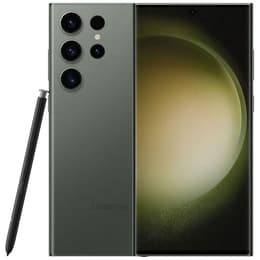
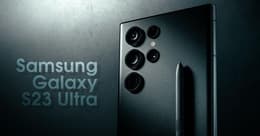
Galaxy S23 Ultra
Galaxy S23 Ultra
Starting at

Refurbished price:£299.00

Versus £1,599.00 new

See options
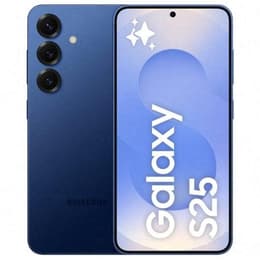
Galaxy S25
Galaxy S25
Starting at

Refurbished price:£435.00

Versus £766.13 new

See options

Ratings

The Samsung Galaxy S23 Ultra, released in February 2023, and the Samsung Galaxy S25, launched in February 2025, represent different approaches within Samsung's flagship smartphone lineup. While the S23 Ultra emphasizes a large display, advanced camera capabilities, and integrated S Pen functionality, the S25 focuses on a more compact design, a newer generation processor, and extended software support. Both devices run on the Android operating system with Samsung's One UI, offering a consistent user experience.

Scores

Durability

When considering the long-term usability of these devices, their release timelines and software support policies are key differentiators.

  • Software Longevity: The Galaxy S25, having been released in 2025, benefits from Samsung's updated software policy, promising seven generations of Android OS upgrades and seven years of security updates, extending its support until approximately 2032. In contrast, the Galaxy S23 Ultra, released in 2023, was initially promised four major OS updates and five years of security updates, meaning its official software support is expected to conclude around 2028. This difference means the S25 will receive new features and security patches for a significantly longer period.
  • Repairability: Both models are designed with modern smartphone construction, featuring glass and aluminum. While specific repairability scores can vary, both devices are generally considered repairable by authorized service centers. The S23 Ultra's integrated S Pen mechanism adds a layer of complexity not present in the S25.
  • Expected Practical Lifespan: Users prioritizing the latest software features and security updates for the longest possible duration will find the Galaxy S25 offers a more extended practical lifespan due to its longer support window. The S23 Ultra, while still a capable device, will reach its end-of-life for major software updates sooner.

Year of Release

2023

2025

OS

Android

Android

Foldable

No

No

Performance

The performance of both the Galaxy S23 Ultra and the Galaxy S25 is robust, designed to handle demanding applications and multitasking with ease, though the newer model benefits from generational advancements.

  • Processing Power: The Galaxy S25 features a newer generation flagship processor, which provides notable performance improvements and enhanced efficiency compared to the S23 Ultra's powerful processor. This translates to smoother operation, faster app loading, and more efficient handling of intensive tasks and gaming on the S25.
  • Multitasking and Responsiveness: Both devices offer ample RAM configurations, with the S25 typically starting with 12GB of RAM across all models, which contributes to fluid multitasking. The S23 Ultra also provides excellent responsiveness, with configurations up to 12GB of RAM. Users of both phones can expect a highly responsive experience in daily use.
  • Battery Behavior: The Galaxy S23 Ultra is equipped with a larger 5000 mAh battery, which generally provides long-lasting power, with many users reporting it comfortably lasts a full day even with heavy use. The Galaxy S25 has a smaller 4000 mAh battery, but its newer, more efficient processor and optimized software contribute to strong battery performance, with some users finding it lasts a full day. However, heavy users of the S25 might find themselves needing to charge more frequently.

Memory (GB)

8 GB

12 GB

Screen quality

Both smartphones offer high-quality displays, but they differ in size, resolution, and peak brightness, catering to different viewing preferences.

  • Display Technology and Clarity: The Galaxy S23 Ultra features a large 6.8-inch Dynamic AMOLED 2X display with a Quad HD+ resolution (1440 x 3088 pixels), providing exceptional sharpness and detail. The Galaxy S25 has a smaller 6.2-inch Dynamic LTPO AMOLED 2X display with a Full HD+ resolution (1080 x 2340 pixels). While both offer vibrant colors and deep blacks characteristic of AMOLED technology, the S23 Ultra provides a larger canvas with higher pixel density.
  • Brightness and Refresh Rate: The S25 boasts a higher peak brightness of 2600 nits, making it exceptionally visible in bright outdoor conditions. The S23 Ultra offers a peak brightness of 1750 nits, which is still very bright for most environments. Both devices feature an adaptive 120Hz refresh rate, ensuring smooth scrolling and fluid animations.
  • Viewing Experience: Users who prioritize an expansive, highly detailed display for media consumption, productivity, or gaming will likely prefer the S23 Ultra. Those who prefer a more compact device with a very bright screen for everyday use and outdoor visibility may find the S25 more suitable.

Resolution

1440 x 3088

1080x2340

Screen type

Dynamic AMOLED 2X

Dynamic LTPO AMOLED 2X

Audiovisual

The camera systems on both devices are capable, but the Galaxy S23 Ultra offers a more versatile and advanced setup, particularly for zoom capabilities.

  • Rear Camera System: The Galaxy S23 Ultra features a quad-camera system with a 200MP main sensor, a 12MP ultrawide lens, a 10MP 3x telephoto lens, and a 10MP 10x periscope telephoto lens. This configuration provides exceptional flexibility, especially for long-range zoom photography, which users praise for its detail. The Galaxy S25 comes with a triple-camera setup, including a 50MP main sensor, a 12MP ultrawide, and a 10MP 3x telephoto lens. While capable of producing good daytime photos, its zoom capabilities are less extensive than the S23 Ultra.
  • Low-Light and Video Performance: The S23 Ultra is noted for its strong low-light photography and video recording quality, including 8K video capture. The S25 also offers good video recording, including 8K, and improved low-light performance over its direct predecessor, but some user feedback suggests its overall camera system, particularly for low-light selfies, might not be as consistently strong as the S23 Ultra.
  • Front Camera: Both devices feature a 12MP front-facing camera. The S23 Ultra's selfie camera was an improvement over its predecessor, offering sharp and colorful results. The S25's front camera performs well in good lighting, but some users have noted a drop in quality in low-light conditions.

Miscellaneous

Beyond core features, several practical elements differentiate the user experience between these two Galaxy smartphones.

  • Physical Design and Handling: The Galaxy S23 Ultra is a larger and heavier device, measuring 163.4 x 78.1 x 8.9 mm and weighing 233g, which can make one-handed use challenging for some. Its design includes slightly curved edges. The Galaxy S25 is significantly more compact and lighter at 146.9 x 70.5 x 7.2 mm and 162g, offering easier one-handed operation and pocketability.
  • Integrated S Pen: A key feature of the S23 Ultra is its integrated S Pen stylus, which offers enhanced productivity for note-taking, drawing, and remote controls. The Galaxy S25 does not include S Pen functionality.
  • Connectivity and Ports: Both devices support 5G connectivity. The S25 benefits from newer wireless standards like Wi-Fi 7 and Bluetooth 5.4, offering potentially faster and more stable connections compared to the S23 Ultra's Wi-Fi 6E and Bluetooth 5.3. Both utilize a USB-C port for charging and data transfer and lack a traditional 3.5mm headphone jack.
  • Biometric Security: Both phones feature ultrasonic in-display fingerprint sensors for secure unlocking.

Weight

234 g

162 g

Screen size (in)

6.8

6.2

Mobile network

5G

5G

SIM card

Dual Physical SIM + eSIM

Physical SIM + eSIM

Carrier compatibility

Unlocked

Unlocked

The Samsung Galaxy S23 Ultra and Galaxy S25 cater to distinct user preferences, reflecting a trade-off between an older, feature-rich 'Ultra' model and a newer, more compact standard flagship. Users frequently praise the S23 Ultra for its exceptional battery life, highly versatile camera system with impressive zoom capabilities, and the integrated S Pen, which enhances productivity. However, some users find its large size cumbersome.

The Galaxy S25, on the other hand, receives commendation for its more compact and lightweight design, making it easier to handle. Its newer processor delivers a noticeable boost in overall performance and efficiency, and its extended software support policy is a significant advantage for long-term use. Criticisms for the S25 sometimes point to its camera system being less groundbreaking than its predecessor, particularly in low-light selfies, and its smaller battery capacity, which may require more frequent charging for heavy users.

Users prioritizing an expansive display, advanced camera zoom, and the unique functionality of an S Pen will find the Galaxy S23 Ultra well-suited to their needs. Conversely, those who value a more compact form factor, the latest processing power, and a longer software support lifespan may lean towards the Galaxy S25. Both devices offer a premium Android experience, and choosing between them often comes down to these specific priorities. For those considering a more sustainable choice, both models are available as quality-assured refurbished options.

See all articles

Our recent comparisons