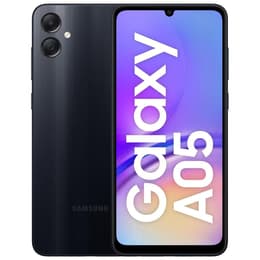


Galaxy A05 Vs Google Pixel 8 Pro

Galaxy A05
Galaxy A05
Starting at

Refurbished price:£89.00

Versus £144.96 new

See options
Google Pixel 8 Pro
Google Pixel 8 Pro
Starting at

Refurbished price:£253.00

Versus £960.91 new

See options

Ratings

The Samsung Galaxy A05 and the Google Pixel 8 Pro are distinct smartphones released in late 2023, catering to different user needs and expectations. The Galaxy A05, launched in October 2023, is designed for essential smartphone functions, while the Google Pixel 8 Pro, also released in October 2023, offers advanced features and a premium experience. A primary difference lies in their software support commitments and overall hardware capabilities.

Scores

Durability

The longevity of a smartphone is influenced by its physical durability and the duration of its software support. These two devices offer different expectations in both areas.

  • Software Updates: The Google Pixel 8 Pro stands out with an extensive commitment to software support, promising seven years of Android OS upgrades, security updates, and regular Feature Drops, extending its software lifespan until 2030. In contrast, the Samsung Galaxy A05, launched with Android 13, is expected to receive two major OS updates, bringing it up to Android 15, and four years of security updates, typically until 2027.
  • Physical Durability: The Pixel 8 Pro features a robust construction with Corning Gorilla Glass Victus 2 on both the front and back, coupled with an aluminum frame, and boasts an IP68 rating for dust and water resistance. The Galaxy A05 utilizes a glass front with a plastic back and frame, and does not carry an official water resistance rating.
  • Repairability: Repairability scores for the Pixel 8 Pro have been mixed, with some assessments indicating a lower score due to strong adhesives and soldered components, while others suggest it is relatively repairable compared to some competitors, partly due to Google providing manuals and parts. Information on the specific repairability score for the Galaxy A05 is less widely available, but its construction typically suggests a more straightforward repair process for common components.

Year of Release

2023

2023

Compatible with latest Update

No

Yes

Foldable

No

No

Performance

Performance varies significantly between these two devices, impacting how smoothly applications run and how efficiently daily tasks are handled.

  • Processing Power: The Google Pixel 8 Pro is equipped with a high-performance processor designed to handle demanding applications, complex multitasking, and advanced computational tasks with ease. This results in fluid navigation, quick app loading, and a responsive experience even with intensive usage. The Samsung Galaxy A05 features an octa-core processor that provides efficient performance for everyday tasks such as browsing, social media, and light gaming.
  • Multitasking and Storage: The Pixel 8 Pro comes with 12GB of RAM, enabling seamless multitasking and quick switching between numerous open applications without slowdowns. It offers various internal storage options, ranging from 128GB up to 1TB, utilizing faster UFS 3.1 storage, though it does not support expandable storage. The Galaxy A05 is available with 4GB or 6GB of RAM, which is suitable for typical daily usage and moderate multitasking. It offers 64GB or 128GB of internal storage, which can be expanded via a microSD card, providing flexibility for users who need more space for media and files.
  • Battery Behavior: The Pixel 8 Pro includes a 5050 mAh battery, designed to provide extended usage, with Google suggesting it can last beyond 24 hours for many users. It supports faster wired charging at 30W and also offers wireless charging capabilities. The Galaxy A05 is powered by a 5000 mAh battery, offering ample power for a full day of use for most users, and supports 25W wired fast charging.

Memory (GB)

4 GB

12 GB

Screen quality

The visual experience on these smartphones differs considerably due to their display technologies and specifications.

  • Display Technology and Clarity: The Google Pixel 8 Pro features a 6.7-inch LTPO OLED display, which delivers deep blacks, vibrant colors, and excellent contrast. Its resolution of 2992 x 1344 pixels results in a very sharp and detailed image, with approximately 490 pixels per inch. The Samsung Galaxy A05 has a 6.7-inch PLS LCD display with a resolution of 720 x 1600 pixels, offering clear visuals for everyday content at approximately 262 pixels per inch.
  • Brightness and Refresh Rate: The Pixel 8 Pro's display can reach a peak brightness of up to 2400 nits, making it highly visible even in bright outdoor conditions. It also features an adaptive refresh rate that can dynamically adjust from 1Hz to 120Hz, providing smooth scrolling and animations while conserving battery life. The Galaxy A05 has a standard 60Hz refresh rate, suitable for general use, and its brightness levels are adequate for indoor and typical outdoor environments.
  • Viewing Experience: The larger screen size on both devices provides an expansive viewing area for media consumption and productivity. The Pixel 8 Pro's higher resolution and OLED technology offer a more immersive and detailed visual experience, particularly for high-definition content and gaming. The Galaxy A05's display is well-suited for general browsing, social media, and video streaming.

Resolution

720 x 1600

1344 x 2992

Screen type

PLS LCD

LTPO OLED

Audiovisual

The camera systems on these devices are designed for different levels of photographic capability and versatility.

  • Rear Camera System: The Google Pixel 8 Pro features a versatile triple-camera setup, including a 50MP main sensor, a 48MP ultrawide lens with a wide field of view, and a 48MP telephoto lens capable of 5x optical zoom and up to 30x digital zoom. This system is known for its advanced computational photography, excelling in various lighting conditions, including low light, and offering detailed images with accurate colors. The Samsung Galaxy A05 is equipped with a dual-camera system on the rear, comprising a 50MP primary camera and a 2MP depth sensor. This setup is capable of capturing clear everyday photos and portraits with background blur.
  • Video Recording and Front Camera: The Pixel 8 Pro can record high-quality video up to 4K resolution at 60 frames per second, offering advanced stabilization and audio capture. Its front-facing camera is 10.5MP, designed for detailed selfies and clear video calls. The Galaxy A05 supports video recording up to 1080p at 30 frames per second from both its rear and 8MP front cameras.
  • Audio Experience: The Pixel 8 Pro provides a rich audio experience for media consumption and calls, benefiting from advanced audio processing. The Galaxy A05 offers a standard audio output suitable for general media playback and communication.

Main camera

50 megapixels

50 megapixels

Front camera

8 megapixels

10.5 megapixels

Miscellaneous

Beyond core features, several practical elements contribute to the overall user experience and connectivity of these smartphones.

  • Connectivity and Ports: The Google Pixel 8 Pro supports advanced connectivity options, including 5G cellular networks and the latest Wi-Fi 6E/7 standards, ensuring fast data speeds and reliable connections. It features a USB Type-C 3.2 port for data transfer and charging, and includes NFC for contactless payments. The device does not have a 3.5mm headphone jack. The Samsung Galaxy A05 supports 4G LTE connectivity and Wi-Fi 802.11 a/b/g/n/ac (dual-band). It includes a USB Type-C 2.0 port and retains a 3.5mm headphone jack, offering traditional audio connectivity. It typically lacks NFC functionality.
  • Sensors and Biometrics: The Pixel 8 Pro incorporates an in-display optical fingerprint sensor and supports secure face recognition for unlocking. It also includes a temperature sensor, alongside standard sensors like accelerometer, gyroscope, and ambient light. The Galaxy A05 includes an accelerometer, proximity sensor, and ambient light sensor. While some models may include a fingerprint sensor, this can vary.
  • Design and Handling: The Pixel 8 Pro measures 162.6 x 76.5 x 8.8 mm and weighs 213 grams, featuring a premium build with glass and aluminum. The Galaxy A05 measures 168.8 x 78.2 x 8.8 mm and weighs 195 grams, with a plastic construction. The Pixel 8 Pro's design emphasizes a more refined and durable feel, while the Galaxy A05 offers a lighter build.

Weight

195 g

213 g

Screen size (in)

6.7

6.7

Mobile network

4G

5G

SIM card

Dual Physical SIM

Physical SIM + eSIM

Carrier compatibility

Unlocked

Unlocked

User feedback for the Google Pixel 8 Pro often highlights its exceptional camera capabilities, particularly its computational photography features that enhance image quality across various scenarios. Users also frequently praise its long-term software support, ensuring the device remains updated and secure for many years. Common criticisms sometimes revolve around its battery life under very heavy usage, despite its large capacity, and some users may find its size and weight substantial.

For the Samsung Galaxy A05, users generally appreciate its large display and reliable battery life for everyday tasks. Its straightforward functionality and expandable storage are often cited as positive aspects. Some common concerns might include the display's resolution and brightness compared to higher-end models, and the more limited software update policy.

Users prioritizing a cutting-edge camera system, extensive software longevity, and a premium, durable build with advanced features like 5G and a high-refresh-rate OLED display will find the Google Pixel 8 Pro well-suited to their needs. This device is ideal for those who engage in demanding tasks, advanced photography, and value long-term support. Conversely, users who primarily need a reliable smartphone for essential communication, social media, media consumption, and light productivity, and who appreciate a larger screen and expandable storage, may lean toward the Samsung Galaxy A05. It serves as a practical choice for those seeking core smartphone functionality without the need for flagship-level performance or advanced camera features.

Both devices, whether new or as a quality-assured refurbished option, offer distinct advantages depending on individual priorities.


See all articles

Our recent comparisons