
Galaxy A04S Vs Motorola Moto E13

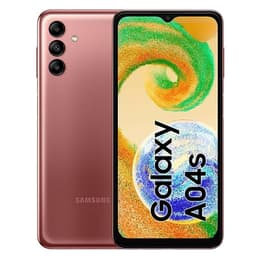
Galaxy A04S
Galaxy A04S
Starting at

Refurbished price:£99.00

Versus £179.00 new

See options
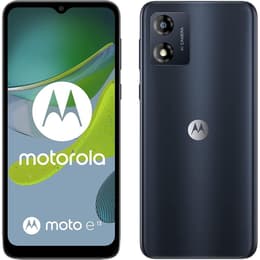
Motorola Moto E13
Motorola Moto E13
Starting at

Refurbished price:£74.00

Versus £83.99 new

See options

Ratings

The Samsung Galaxy A04S, released in September 2022, and the Motorola Moto E13, launched in January 2023, are both entry-level smartphones designed for essential daily use. While sharing a similar focus on core functionalities, key differences emerge in their display technology, camera capabilities, and software approaches. The Galaxy A04S offers a smoother screen refresh rate and a higher-resolution main camera, whereas the Moto E13 features a slightly newer Android version out of the box and a water-repellent design.

Scores

Durability

The practical lifespan of these devices is influenced by their release timelines and software support policies.

  • Release Timeline: The Galaxy A04S was released in September 2022, making it slightly older than the Moto E13, which launched in January 2023. This difference in release date can impact the duration of future software support.
  • Software Longevity: The Galaxy A04S, initially running Android 12, has received updates up to Android 14, and Samsung typically provides security updates for its A-series devices for up to four years, extending its practical software life until late 2026. The Moto E13, launching with Android 13 Go Edition, is expected to receive fewer major OS upgrades and around two years of security patches, potentially limiting its software longevity to early 2025.
  • Build and Protection: Both smartphones feature plastic frames and backs with glass fronts. The Moto E13 includes an IP52 water-repellent design, offering some protection against splashes and dust. The Galaxy A04S does not specify an official IP rating.

Year of Release

2022

2023

Compatible with latest Update

Yes

No

OS

Android

Android

Foldable

No

No

Performance

Both devices are equipped to handle everyday tasks, though their underlying hardware and software optimizations lead to distinct user experiences.

  • Processing Power: The Galaxy A04S is powered by an octa-core processor that manages daily applications and light multitasking. However, users may experience slower performance and occasional delays when running more demanding applications or engaging in heavy multitasking. The Moto E13 also features an octa-core processor, and its Android Go Edition operating system is specifically optimized for devices with lower RAM, contributing to a smoother experience for basic tasks.
  • Memory and Storage: The Galaxy A04S is available with 3GB or 4GB of RAM and storage options up to 128GB. The Moto E13 offers configurations ranging from 2GB to 8GB of RAM and up to 128GB of internal storage. For the Moto E13, the 2GB RAM variant might not provide the smoothest experience, suggesting that higher RAM options are more suitable for consistent performance.
  • Battery Life: Both smartphones are equipped with a 5000 mAh battery, providing substantial power for extended use. Users can generally expect a full day or more of battery life with moderate usage on either device. Charging times for both models are relatively slow, typically taking between two to three hours for a full charge.

Memory (GB)

3 GB

2 GB

Screen quality

The visual experience on these smartphones is shaped by their display technology and refresh rates.

  • Display Technology and Resolution: Both devices feature 6.5-inch HD+ displays with a resolution of 720 x 1600 pixels. The Galaxy A04S uses a PLS LCD panel, while the Moto E13 employs an IPS LCD panel. Both display types offer adequate clarity for typical viewing, though neither provides the deep blacks or high contrast of more advanced display technologies.
  • Refresh Rate and Smoothness: A notable difference is the refresh rate; the Galaxy A04S offers a 90Hz refresh rate, which contributes to a perceptibly smoother scrolling and animation experience. In contrast, the Moto E13 has a standard 60Hz refresh rate.
  • Brightness and Outdoor Visibility: Both screens are described as having mediocre brightness levels, which can make outdoor visibility challenging, especially under direct sunlight. Neither device includes additional scratch protection for the display.

Resolution

720 x 1600

720 x 1600

Screen type

PLS LCD

IPS LCD

Audiovisual

The camera systems on these smartphones are designed for everyday photography, with some distinctions in their capabilities and performance.

  • Rear Camera System: The Galaxy A04S features a triple camera setup, including a 50 MP main sensor, a 2 MP macro lens, and a 2 MP depth sensor. This main sensor is capable of capturing decent daylight photos with good detail and color accuracy. The Moto E13 has a simpler single 13 MP main camera.
  • Front Camera and Video: Both devices are equipped with a 5 MP front-facing camera for selfies and video calls. Both smartphones support video recording at 1080p resolution at 30 frames per second.
  • Performance and Features: User feedback indicates that the Moto E13's camera can be slow to launch and process images, and its dynamic range can be limited. The Galaxy A04S generally performs better in daylight conditions but lacks an ultrawide lens. For audio, the Moto E13 features a single speaker with Dolby Atmos support, aiming to enhance the media consumption experience. The Galaxy A04S also has a single loudspeaker.

Main camera

50 megapixels

13 megapixels

Front camera

5 megapixels

5 megapixels

Miscellaneous

Beyond core features, several practical elements differentiate the user experience of these two smartphones.

  • Connectivity and Ports: Both the Galaxy A04S and Moto E13 support 4G LTE, Wi-Fi 5 (802.11 a/b/g/n/ac), and Bluetooth 5.0 for wireless connectivity. Both devices also include a USB-C 2.0 port for charging and data transfer, and a 3.5mm headphone jack.
  • Biometrics and Other Sensors: The Galaxy A04S features a side-mounted fingerprint sensor for secure unlocking and authentication. The Moto E13 does not include a fingerprint sensor, relying instead on face unlock for biometric security. The Galaxy A04S also supports NFC for contactless payments, a feature absent on the Moto E13.
  • Physical Characteristics: The Galaxy A04S weighs 195g, while the Moto E13 is slightly lighter at 179.5g. The Moto E13 also boasts a water-repellent design (IP52), offering a degree of protection against splashes.

Weight

195 g

181 g

Screen size (in)

6.5

6.5

Mobile network

4G

4G

SIM card

Dual Physical SIM

Dual Physical SIM

Carrier compatibility

Unlocked

Unlocked

The Samsung Galaxy A04S and Motorola Moto E13 both serve as accessible entry points into the smartphone market, each with distinct strengths and trade-offs. User feedback for the Galaxy A04S often highlights its 90Hz display as a significant advantage, providing a smoother visual experience for its category. Its 50 MP main camera is generally praised for decent daylight photography, and the inclusion of a fingerprint sensor and NFC are considered practical benefits. However, some users note that the device can feel slow, particularly with demanding applications or multitasking, and its screen brightness can be a limitation outdoors.

The Motorola Moto E13 is frequently commended for its lightweight and water-repellent design, along with its optimized Android Go Edition software, which helps it run efficiently on its hardware. The inclusion of Dolby Atmos audio is also a positive for media consumption. Conversely, a common criticism is the slow and sometimes inconsistent performance of its camera, and the absence of a fingerprint sensor is a notable omission for some users.

Users prioritizing a smoother display for everyday interactions, a more capable main camera, and the convenience of a fingerprint sensor and NFC may find the Samsung Galaxy A04S better suited to their needs. Conversely, individuals who value a lighter device with a degree of water resistance, an optimized software experience for basic tasks, and enhanced audio for media might lean towards the Motorola Moto E13. Both devices offer a solid foundation for essential smartphone functions, and considering a quality-assured refurbished option for either model can be an eco-friendly alternative for making an informed choice.
See all articles

Our recent comparisons