Galaxy A16 5G Vs Galaxy Z Fold5

Galaxy A16 5G
Galaxy A16 5G
Starting at

Refurbished price:£103.00

Versus £205.87 new

See options
Galaxy Z Fold5
Galaxy Z Fold5
Starting at

Refurbished price:£413.00

Versus £1,770.61 new

See options

Ratings

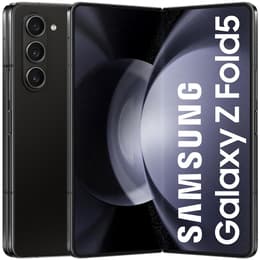
The Samsung Galaxy A16 5G and the Samsung Galaxy Z Fold5 represent distinct approaches within the smartphone market, catering to different user needs and preferences. Released in late 2024, the Galaxy A16 5G is a traditional smartphone designed for everyday use, while the Galaxy Z Fold5, launched in mid-2023, offers a unique foldable design that transforms from a compact phone into a larger tablet-like display. Both devices run on the Android operating system, but they differ significantly in their core capabilities, display technology, and overall user experience.

Scores

Durability

When considering the long-term usability of a smartphone, software support and physical resilience are key factors. The Galaxy A16 5G and Galaxy Z Fold5 offer different longevity profiles.

  • Software Updates: The Galaxy A16 5G stands out with a commitment to six major Android OS upgrades and six years of security updates, extending its software support until October 2030. In contrast, the Galaxy Z Fold5, released earlier, is guaranteed four major Android OS upgrades and five years of security updates. This means the A16 5G will receive software support for a longer duration.
  • Physical Durability: The Galaxy A16 5G features an IP54 rating for dust and splash resistance, along with a glass front and a plastic back and frame. Some users have noted its plastic build can feel slippery, potentially leading to minor cosmetic damage from drops. The Galaxy Z Fold5 boasts an IPX8 water resistance rating, meaning it can withstand submersion in water, but it lacks official dust resistance. Its external display is protected by Gorilla Glass Victus 2, offering good scratch resistance, while the internal foldable screen has a non-replaceable plastic protector that is more susceptible to scratches. The Z Fold5's hinge mechanism is designed for durability, capable of enduring numerous folds.
  • Repairability: The Galaxy A16 5G generally has an average repairability score, with features like pull tabs for battery removal, though adhesive is used for the back cover and battery. The Galaxy Z Fold5 has seen improvements in repairability, including a new pull-pouch system for its batteries, but its complex foldable design can still present challenges for repairs.

Year of Release

2024

2023

Compatible with latest Update

Yes

Yes

OS

Android

Android

Foldable

No

Yes

Performance

The performance capabilities of these two devices are tailored to different user expectations, reflecting their respective market segments.

  • Processing Power: The Galaxy A16 5G is equipped with a processor designed for efficient everyday tasks. It handles basic activities like social media, streaming, and light multitasking smoothly. However, some users have reported occasional stuttering or slowdowns, particularly with variants offering less RAM. The Galaxy Z Fold5 features a high-performance processor, enabling it to manage demanding applications, intensive gaming, and extensive multitasking with ease. This allows for a highly responsive and fluid user experience, even when running multiple applications simultaneously on its larger display.
  • Memory and Storage: The Galaxy A16 5G is available with various RAM options, including 4GB, 6GB, and 8GB, and offers 128GB or 256GB of internal storage, expandable via a microSD card. The Galaxy Z Fold5 comes with a substantial 12GB of RAM and offers larger internal storage options of 256GB, 512GB, or 1TB, utilizing faster storage technology, but it does not include a microSD card slot for expansion.
  • Battery Life: The Galaxy A16 5G houses a 5000mAh battery, providing an entire day of mixed use for many users. The Galaxy Z Fold5 has a 4400mAh battery, which, despite its smaller capacity, is optimized by its efficient processor to last an average full day of use. Both devices support 25W wired charging, but neither includes a charger in the box. The Z Fold5 also supports wireless charging and reverse wireless charging.

Memory (GB)

4 GB

12 GB

Screen quality

The display experience is a primary differentiator between the Galaxy A16 5G and the Galaxy Z Fold5, offering distinct visual environments.

  • Display Technology and Size: The Galaxy A16 5G features a single 6.7-inch Super AMOLED display, providing vibrant colors and deep blacks. The Galaxy Z Fold5 offers a dual-screen setup: a 6.2-inch Dynamic AMOLED 2X cover screen and a large 7.6-inch Dynamic AMOLED 2X main foldable display. The foldable screen allows for a tablet-like viewing experience when unfolded.
  • Resolution and Clarity: The A16 5G's display has a Full HD+ resolution of 1080x2340 pixels, offering clear and sharp visuals for typical viewing. The Z Fold5's main display boasts a higher resolution of 2176x1812 pixels, providing exceptional clarity and detail, particularly beneficial for multitasking and media consumption on its larger canvas. The cover screen also offers a sharp resolution of 904x2316 pixels.
  • Brightness and Refresh Rate: The Galaxy A16 5G achieves a peak brightness of around 800 nits, making it usable outdoors. It has a 90Hz refresh rate for smoother scrolling. The Galaxy Z Fold5's main display reaches a significantly higher peak brightness of up to 1750 nits, ensuring excellent visibility even in bright sunlight. Both its main and cover screens feature a 120Hz adaptive refresh rate, providing a very fluid and responsive visual experience.
  • Unique Characteristics: The Z Fold5's main foldable screen has a visible crease, which is a characteristic of foldable technology, and it is covered by a plastic protector that is less scratch-resistant than glass. The A16 5G does not support HDR content.

Resolution

1080 x 2340

1812 x 2176

Screen type

Super AMOLED

Foldable Dynamic AMOLED 2X

Audiovisual

The camera systems on the Galaxy A16 5G and Galaxy Z Fold5 are designed with different priorities, impacting their photographic and videographic capabilities.

  • Rear Camera Systems: The Galaxy A16 5G features a triple-camera setup with a 50MP main sensor, a 5MP ultrawide lens, and a 2MP macro camera. Its 50MP main camera performs well in good lighting conditions, producing crisp images with vibrant colors. However, its low-light performance is limited, and the ultrawide and macro sensors are generally considered less capable. The Galaxy Z Fold5 offers a more versatile triple-camera system, including a 50MP wide-angle main camera with optical image stabilization (OIS), a 12MP ultrawide camera, and a 10MP telephoto lens with 3x optical zoom and OIS. This setup provides greater flexibility for various shooting scenarios, including zoomed shots and improved stability.
  • Front Cameras and Video: For selfies, the A16 5G has a 13MP front camera. It records video at up to 1080p at 30 frames per second (fps) and lacks optical image stabilization, which can result in shaky handheld footage. The Z Fold5 has two front-facing cameras: a 10MP camera on the cover screen and a 4MP under-display camera on the main foldable screen. While the 10MP cover camera is suitable for selfies, the 4MP under-display camera is generally considered to produce lower-quality images and is best suited for video calls. The Z Fold5 is capable of recording video at up to 8K resolution at 30fps, offering significantly higher detail and more advanced video features.
  • Audio Experience: The Galaxy A16 5G lacks stereo speakers, which can impact the media consumption experience. The Galaxy Z Fold5 features stereo speakers that deliver a rich audio experience, enhancing media playback and calls.

Main camera

50 megapixels

50 megapixels

Front camera

13 megapixels

4 megapixels

Miscellaneous

Beyond core performance and display, several practical elements contribute to the overall user experience of these smartphones.

  • Connectivity: Both devices support 5G connectivity, ensuring access to faster mobile network speeds. They also include modern Wi-Fi standards (802.11 a/b/g/n/ac/ax) and Bluetooth for wireless connections. The Galaxy A16 5G includes NFC for contactless payments.
  • Ports and Biometrics: Both the Galaxy A16 5G and Galaxy Z Fold5 utilize a USB Type-C port for charging and data transfer. Neither device includes a traditional 3.5mm headphone jack. For security, both phones feature a side-mounted fingerprint sensor. The Z Fold5 also offers facial recognition.
  • Design and Handling: The Galaxy A16 5G has a conventional slab design, measuring 164.4 x 77.9 x 7.9 mm and weighing 200g. Its plastic build contributes to its lighter weight but can feel less premium to some users. The Galaxy Z Fold5, with its foldable design, has two distinct forms: folded (154.9 x 67.1 x 13.4 mm) and unfolded (154.9 x 130.1 x 6.1 mm). It weighs 253g, which is heavier than the A16 5G, but its unfolded state provides a larger screen area for productivity and entertainment. The Z Fold5's aluminum frame and Gorilla Glass Victus 2 on the cover screen contribute to a more robust feel.
  • Other Features: The Galaxy A16 5G supports dual SIM cards or a hybrid dual SIM setup. The Galaxy Z Fold5 supports an S Pen (sold separately) for enhanced productivity on its main screen.

Weight

200 g

150 g

Screen size (in)

6.7

7.6

Mobile network

5G

4G

SIM card

Dual Physical SIM

Dual Physical SIM + eSIM

Carrier compatibility

Unlocked

Unlocked

Connector

USB-C

USB-C

The Samsung Galaxy A16 5G and Galaxy Z Fold5 cater to distinct user profiles, each excelling in different areas. User feedback for the Galaxy A16 5G often praises its exceptional software support, with a promise of six years of updates, which is uncommon for its category. Its solid battery life and vibrant display are also frequently highlighted as positive aspects. However, some users express concerns about its performance for more demanding tasks, especially with lower RAM configurations, and the quality of its secondary cameras. The lack of stereo speakers and 4K video recording are also noted limitations.

For the Galaxy Z Fold5, common praise centers on its innovative foldable design, offering a large, immersive display for multitasking and media consumption. Its powerful performance, premium build quality, and versatile main camera system are also highly regarded. Criticisms often point to the visible crease on the main screen, the fragility of the inner screen's plastic protector, and the subpar quality of the under-display camera. The device's weight and thickness when folded are also sometimes mentioned, though it is an improvement over its predecessors.

Users prioritizing long-term software support, a reliable battery, and a clear, large display for everyday communication and media consumption may find the Galaxy A16 5G well-suited to their needs. It offers a practical and enduring smartphone experience. Conversely, users who require a device that can seamlessly transition between a compact phone and a large-screen tablet, demanding top-tier performance for productivity and advanced photography, will likely lean towards the Galaxy Z Fold5. Its unique form factor and powerful internals make it ideal for those seeking a versatile and premium mobile experience.

Both models are available as quality-assured refurbished options, providing an eco-friendly alternative for consumers looking to make informed and sustainable choices.


See all articles

Our recent comparisons