
Compare models

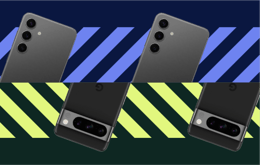
Galaxy S26 Ultra Vs Google Pixel 8a

  • 1-year minimum warranty
  • Free delivery on all items
  • Free 30-day returns
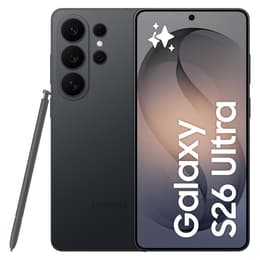
Galaxy S26 Ultra
Starting at

Refurbished price:£809.00

Versus £1,529.00 new

See options
Google Pixel 8a
Starting at

Refurbished price:£201.00

Versus £467.97 new

See options

Differences at a glance

The Samsung Galaxy S26 Ultra (2026) and the Google Pixel 8a (2024) represent different tiers and releases in the smartphone market, catering to distinct consumer needs. While the Galaxy S26 Ultra functions as a large-scale flagship device featuring high-end capabilities, the Google Pixel 8a is structured as a streamlined mid-range alternative focused on everyday utility. Both devices operate on the Android platform, though Samsung employs its custom interface layer over the base software, whereas Google utilizes a streamlined software experience. Key differentiators include their physical scale, hardware tiering, and targeted use cases for daily handling.

Available Models

Colour

Storage

Scores

Durability

When examining longevity and hardware endurance, both devices offer extensive software support windows, though they stem from different release years.

  • Software Support Timeline: Both manufacturers provide multi-year commitments for security patches and operating system upgrades, ensuring prolonged software viability, though the newer Galaxy S26 Ultra extends its support window further into the future.
  • Build Integrity and Repairability: The Galaxy S26 Ultra utilizes reinforced glass and titanium elements designed for structural resilience, while the Pixel 8a employs a composite back and robust frame that handles everyday wear predictably.
  • Expected Practical Lifespan: Both smartphones maintain functional longevity for years of typical use, though high-tier hardware configurations in the Galaxy S26 Ultra offer additional headroom for demanding future applications.

Year of Release

2026

2024

Compatible with latest Update

Yes

Yes

OS

Android

Android

Foldable

No

No

Performance

Performance capabilities vary noticeably due to the generation gap and hardware class differences between these two smartphones.

  • Multitasking and App Execution: The Galaxy S26 Ultra handles resource-heavy applications, intensive gaming, and extensive background tasks smoothly, while the Pixel 8a manages daily browsing, social media, and standard productivity apps reliably without performance friction.
  • Battery Behavior: The larger physical footprint of the Galaxy S26 Ultra allows for a higher-capacity battery that supports extended heavy usage throughout the day, whereas the Pixel 8a requires more frequent recharging during intensive tasks due to its compact battery design.
  • Storage Configurations: Both devices offer multiple internal storage tiers to accommodate varying media libraries and document storage needs without relying heavily on cloud solutions.

Screen quality

Visual output and display technologies differ significantly in scale, peak brightness, and refresh rate behavior.

  • Display Technology and Smoothness: Both devices feature vibrant OLED panels with deep contrast levels, but the Galaxy S26 Ultra incorporates an adaptive high refresh rate for fluid scrolling, compared to the fixed or stepped refresh rate behavior found on the Pixel 8a.
  • Outdoor Visibility: The Galaxy S26 Ultra achieves high peak brightness levels that maintain legibility under direct sunlight, while the Pixel 8a remains clear and functional in standard outdoor lighting conditions.
  • Size and Viewing Area: The Galaxy S26 Ultra provides a broad workspace suitable for media consumption and document editing, whereas the Pixel 8a offers a compact form factor that is easier to manage with a single hand.

Resolution

1440 x 3120

1080 x 2400

Audiovisual

Imaging hardware and audio output profiles reflect the divergent design philosophies of a large flagship versus a mid-range device.

  • Camera System Versatility: The Galaxy S26 Ultra features a multi-lens array including an advanced telephoto zoom lens for distant subjects, while the Pixel 8a relies on a dual-lens setup that excels at processing everyday scenes and portraits naturally.
  • Low-Light and Video Performance: Both models deliver clear low-light photography aided by computational processing, though the Galaxy S26 Ultra captures finer detail in complex dark environments and supports advanced video stabilization modes.
  • Media and Audio Output: Stereo speakers on both devices provide clear sound for calls and casual video playback, with the Galaxy S26 Ultra offering a wider soundstage suitable for media enthusiasts.

Front camera

12.0

13 megapixels

Miscellaneous

Physical handling characteristics and connectivity standards define the practical daily experience of carrying and using each device.

  • Connectivity and Ports: Both models support current wireless standards including 5G and modern Wi-Fi protocols, utilizing USB-C standards for charging and data transfer.
  • Biometrics and Sensors: The Galaxy S26 Ultra utilizes an ultrasonic in-display fingerprint sensor alongside facial recognition, while the Pixel 8a employs an optical fingerprint sensor and secure face unlock.
  • Dimensions and Weight: The Galaxy S26 Ultra is a heavier, substantially sized device requiring two-handed use for comfort, whereas the Pixel 8a features a lightweight, pocket-friendly footprint.

Weight

214 g

188 g

Screen size (in)

6.9

6.1

Mobile network

5G

5G

SIM card

Dual Physical SIM + eSIM

Physical SIM + eSIM

Carrier compatibility

Unlocked

Unlocked

What the community thinks

Users evaluating these devices will find that their choices depend heavily on physical scale and hardware expectations. Users prioritizing expansive display space, advanced zoom capabilities, and maximum processing headroom often lean toward the Galaxy S26 Ultra. Conversely, users seeking a compact form factor, straightforward daily functionality, and a streamlined software experience frequently prefer the Google Pixel 8a. Community discussions often highlight the ease of single-handed operation on the Pixel 8a, while praising the comprehensive capability set of the Galaxy S26 Ultra.

For those interested in sustainable purchasing habits, choosing a quality-assured refurbished option through platforms like Back Market provides an eco-friendly alternative that extends device lifecycles without compromising on performance standards. Evaluating personal usage habits regarding media consumption, photography frequency, and pocket portability will ultimately guide the most practical selection between these two Android smartphones.