

Compare models
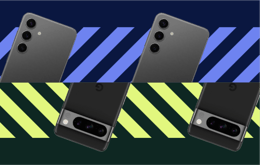
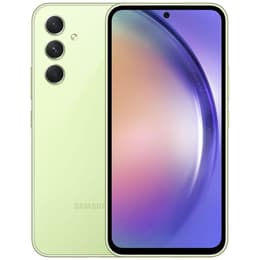
Galaxy A54 Vs Google Pixel 8
- 1-year minimum warranty
- Free delivery on all items
- Free 30-day returns
Differences at a glance
The Samsung Galaxy A54, released in March 2023, and the Google Pixel 8, launched in October 2023, are both Android smartphones offering distinct experiences within their respective segments. While the Galaxy A54 focuses on a balanced feature set with expandable storage, the Pixel 8 emphasizes advanced computational photography and a longer software support commitment. Both devices run on the Android operating system, but they offer different user interfaces and approaches to software updates.
Available Models
Colour
Storage (GB)
Scores
Durability
When considering the long-term usability of a smartphone, software support and physical resilience are key factors. The Galaxy A54 and Pixel 8 present different propositions in these areas.
- Software Longevity: The Google Pixel 8 stands out with an impressive commitment to seven years of OS, security, and Feature Drop updates, starting from its launch with Android 14. This means users can expect their device to receive the latest software features and security patches for an extended period. In contrast, the Samsung Galaxy A54, which launched with Android 13, is promised four major Android OS updates and five years of security updates, extending its support roughly until Android 17.
- Physical Durability: Both devices offer a degree of protection against environmental elements. The Galaxy A54 features Corning Gorilla Glass 5 on both its front and back, paired with an IP67 rating for dust and water resistance. The Pixel 8, on the other hand, uses Gorilla Glass Victus for its display and carries an IP68 rating, indicating slightly better water and dust protection.
- Repairability: The repairability of these devices varies. The Samsung Galaxy A54 has been noted to have a repairability score of around 6.25 out of 10, suggesting it is moderately repairable. The Google Pixel 8 has received a repairability score of 7 out of 10 from some assessments, indicating that self-repairs are possible, though not always recommended for inexperienced users.
Year of Release
2023
2023
Compatible with latest Update
Yes
Yes
OS
Android
Android
Foldable
No
No
Performance
The performance of a smartphone is crucial for daily tasks, from browsing to demanding applications. Both the Galaxy A54 and Pixel 8 deliver capable performance, though with different underlying architectures.
- Everyday Responsiveness: The Google Pixel 8 is powered by a current-generation processor designed by Google, which enables smooth navigation, quick app launches, and efficient handling of multiple applications simultaneously. This hardware is optimized for Google's software, contributing to a fluid user experience. The Samsung Galaxy A54 utilizes an octa-core processor that provides a responsive experience for general use, social media, and moderate gaming.
- Multitasking and Storage: The Pixel 8 comes with 8GB of RAM, which supports efficient multitasking and keeps frequently used apps ready. It offers internal storage options of 128GB or 256GB, utilizing UFS 3.1 technology for faster data access. The Galaxy A54 is available with either 6GB or 8GB of RAM and 128GB or 256GB of internal storage. A notable advantage of the A54 is its expandable storage via a microSD card, allowing users to increase storage up to 1TB.
- Battery Behavior: The Galaxy A54 is equipped with a 5000 mAh battery, which generally provides ample power for a full day of typical use, with some users reporting extended usage. The Pixel 8 features a 4575 mAh battery. User experiences suggest it offers reliable all-day power for most, with adaptive battery features optimizing usage, though heavy users might find themselves needing to charge before the end of a very long day.
Screen quality
The display is a primary interface for any smartphone, and both devices offer vibrant viewing experiences with distinct characteristics.
- Display Technology and Clarity: The Samsung Galaxy A54 features a 6.4-inch Super AMOLED display, known for its vibrant colors and deep blacks, with a resolution of 1080 x 2340 pixels (FHD+). The Google Pixel 8 comes with a slightly smaller 6.2-inch OLED display, referred to as an 'Actua display,' also offering a 2400 x 1080 (FHD+) resolution.
- Brightness and Outdoor Visibility: The Galaxy A54's display can reach a peak brightness of 1000 nits, which contributes to good visibility in various lighting conditions, including outdoors. The Pixel 8 offers higher brightness levels, with up to 1400 nits for HDR content and a peak brightness of 2000 nits, making it exceptionally bright and easy to view even in direct sunlight.
- Refresh Rate and Smoothness: Both smartphones feature a 120Hz refresh rate, which provides a smooth scrolling experience and fluid animations. The Pixel 8's display has a variable refresh rate that can dynamically adjust between 60Hz and 120Hz, optimizing for both smoothness and power efficiency.
Resolution
1080 x 2340
1080 x 2400
Screen type
Super AMOLED
OLED
Audiovisual
Photography and videography capabilities are often a deciding factor for smartphone users, and both the Galaxy A54 and Pixel 8 offer compelling camera systems.
- Rear Camera Systems: The Google Pixel 8 features a dual-camera setup on the rear, including a 50MP main sensor with optical image stabilization (OIS) and a 12MP ultrawide lens. The Samsung Galaxy A54 sports a triple-camera array, consisting of a 50MP main sensor with OIS, a 12MP ultrawide lens, and a 5MP macro camera.
- Photography Performance: The Pixel 8 is known for its computational photography, which enhances image quality, particularly in challenging conditions like low light, and offers advanced features for editing. The Galaxy A54 delivers clear and vibrant photos in good lighting, with its main sensor performing well in everyday scenarios and offering decent low-light capabilities.
- Video and Audio: Both devices are capable of recording video at 4K resolution. The Pixel 8 can record 4K video at up to 60 frames per second, offering smoother footage. The Galaxy A54 records 4K video at 30 frames per second. For audio, both phones include stereo speakers for media consumption.
Main camera
50 megapixels
50 megapixels
Front camera
32 megapixels
10.5 megapixels
Miscellaneous
Beyond the core features, several practical elements contribute to the overall user experience and daily convenience of these smartphones.
- Connectivity and Ports: Both the Galaxy A54 and Pixel 8 support 5G connectivity for fast mobile data. The Pixel 8 is equipped with Wi-Fi 7 and Bluetooth 5.3, offering the latest wireless standards. The Galaxy A54 supports Wi-Fi 6 and Bluetooth 5.3. Both devices utilize a USB-C port for charging and data transfer, though the Pixel 8 features a faster USB 3.2 standard compared to the Galaxy A54's USB 2.0. Neither phone includes a 3.5mm headphone jack.
- Biometric Security: For secure unlocking, both smartphones incorporate in-display fingerprint sensors. The Pixel 8 also offers secure facial recognition for biometric authentication.
- Design and Handling: The Galaxy A54 measures 158.2 x 76.7 x 8.2 mm and weighs 202g, featuring a design with a glass back and a plastic frame. The Pixel 8 is slightly more compact and lighter at 150.5 x 70.8 x 8.9 mm and 187g, with a glass back and a refined design.
Weight
202 g
187 g
Screen size (in)
6.4
6.2
Mobile network
5G
5G
SIM card
Dual Physical SIM
Physical SIM + eSIM
Carrier compatibility
Unlocked
Unlocked
What the community thinks
The Samsung Galaxy A54 and Google Pixel 8 cater to different user priorities, each excelling in specific areas. Users often praise the Galaxy A54 for its vibrant display, reliable battery life, and the flexibility of expandable storage, which is a significant advantage for those who need ample space for media and files. Some common criticisms for the A54 have included its processor performance not always matching higher-end devices and its charging speeds.
The Google Pixel 8 receives frequent acclaim for its exceptional camera capabilities, particularly its computational photography features that enhance image quality across various conditions. Its extended software support is also a major draw for users seeking long-term updates and security. While its battery life is generally considered sufficient for a full day, some heavy users have noted it might not be as long-lasting as some larger Android phones.
Users prioritizing a device with a large, vibrant display and the option to expand storage for extensive media libraries may find the Samsung Galaxy A54 well-suited to their needs. It offers a balanced experience for everyday tasks and social connectivity. Conversely, users who value cutting-edge camera performance, a compact form factor, and the longest possible software support will likely lean towards the Google Pixel 8. Its focus on intelligent software features and a streamlined Android experience makes it appealing for those who appreciate Google's ecosystem.
Both devices represent solid choices within the Android smartphone landscape. For those considering a more sustainable and quality-assured option, exploring refurbished versions of either the Galaxy A54 or Pixel 8 can provide an eco-friendly alternative.