
Compare models
Google Pixel 10 Vs iPhone 17 Pro
- 1-year minimum warranty
- Free delivery on all items
- Free 30-day returns
Differences at a glance
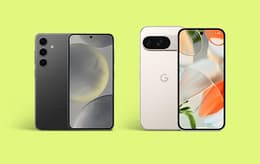
The Google Pixel 10 (2025) and the Apple iPhone 17 Pro (2025) represent two distinct approaches to contemporary smartphone engineering, pairing advanced mobile technology with refined everyday usability. While the Google Pixel 10 runs on Android with deep integration of intelligent automation features, the iPhone 17 Pro operates on iOS, focusing on sustained processing efficiency and a robust ecosystem. These devices differ primarily in their operating systems, hardware architecture, and user interface philosophies, making each suited to different preferences.
Available Models
Colour
Storage (GB)
Scores
Durability
Both smartphones are built to remain functional and secure for many years, though their update lifecycles and physical material approaches differ slightly.
- Software longevity: The Google Pixel 10 benefits from extended operating system support spanning multiple years, while the iPhone 17 Pro follows Apple's long-standing tradition of providing timely system updates for an extended duration.
- Build durability: The iPhone 17 Pro utilizes rigid frame materials and ceramic-shield front glass, whereas the Google Pixel 10 relies on durable composite engineering and reinforced glass to withstand daily wear.
- Repair ecosystem: Both manufacturers provide structured repair pathways and diagnostic tools, helping extend the practical lifespan of each device through component replacements.
Year of Release
2025
2025
Compatible with latest Update
Yes
Yes
OS
Android
iOS
Foldable
No
No
Performance
System responsiveness and everyday utility differ based on how each device manages its internal hardware and memory configurations.
- Multitasking capacity: Both models handle demanding applications, heavy browsing, and background tasks smoothly thanks to generous RAM allocations and optimized system software.
- Battery behavior: The Google Pixel 10 incorporates an energy-efficient cell designed to comfortably sustain moderate to heavy daily usage, while the iPhone 17 Pro optimizes power consumption to preserve battery longevity during intensive media tasks.
- Storage tiers: Storage options begin at spacious baseline capacities on both models, though neither device supports expandable storage via memory cards.
Screen quality
Viewing experiences on both handsets prioritize clarity, color fidelity, and fluid motion for daily media consumption and outdoor readability.
- Display technology: Both devices feature vibrant OLED panels with deep contrast levels and rich color reproduction, housed in manageable 6.3-inch form factors.
- Refresh rate smoothness: Adaptive refresh rates scaling up to high hertz thresholds ensure seamless scrolling and responsive touch interactions across both interfaces.
- Outdoor visibility: High peak brightness capabilities allow both screens to remain legible under direct sunlight or bright ambient lighting conditions.
Resolution
1080x2424
2622x1206
Screen type
OLED
Super Retina XDR
Audiovisual
Imaging hardware and audio reproduction cater to everyday creators, casual photographers, and multimedia enthusiasts alike.
- Lens configurations: Both smartphones feature versatile multi-lens rear camera arrays including main, ultra-wide, and telephoto options to support varied framing needs.
- Computational photography: The Google Pixel 10 leverages advanced on-device processing for detailed low-light shots, while the iPhone 17 Pro excels at balanced video capture and high-fidelity optical zoom.
- Media audio output: Integrated stereo speakers deliver clear dialogue and balanced sound profiles for calls, video playback, and casual gaming.
Front camera
42 megapixels
18 megapixels
Miscellaneous
Connectivity standards, physical dimensions, and security options shape the ergonomic feel of each device in daily use.
- Biometric security: Both handsets offer rapid authentication through secure facial scanning or responsive under-display fingerprint sensors.
- Connectivity suite: Comprehensive 5G compatibility, modern Wi-Fi standards, and Bluetooth support ensure stable network connections and accessories pairing.
- Physical handling: Balanced weight distributions and carefully considered dimensions ensure both models sit comfortably in the hand or pocket during travel or commutes.
Weight
204 g
206 g
Screen size (in)
6.3
6.3
Mobile network
5G
5G
SIM card
Physical SIM + eSIM
Physical SIM + eSIM
Carrier compatibility
Unlocked
Unlocked
Connector
USB-C
USB-C
What the community thinks
User feedback from online communities highlights distinct points of praise for each device. Owners of the Google Pixel 10 frequently commend its clean software interface, reliable voice-to-text accuracy, and versatile photo editing tools. Conversely, iPhone 17 Pro users often praise its dependable video recording quality, consistent app optimization, and fluid ecosystem synergy.
Users prioritizing seamless integration with Apple services and advanced video production tools may prefer the iPhone 17 Pro, while users who value open customization, conversational AI integration, and a streamlined Android experience will find the Google Pixel 10 well-suited to their needs. Exploring a quality-assured refurbished option provides a sustainable choice for acquiring either model without compromising on performance standards. Ultimately, the choice depends on personal preference for operating systems and daily workflow requirements.