
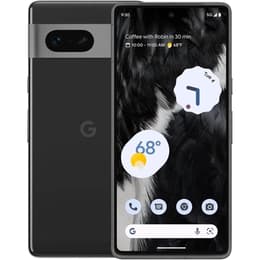
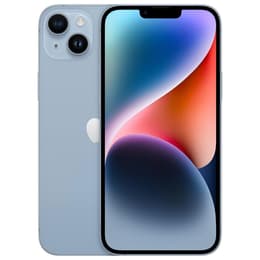

Google Pixel 7 Vs iPhone 14 Plus

Google Pixel 7
Google Pixel 7
Starting at

Refurbished price:£140.99

Versus £649.99 new

See options
iPhone 14 Plus
iPhone 14 Plus
Starting at

Refurbished price:£242.00

Versus £699.00 new

See options

Ratings

The Google Pixel 7, an Android smartphone released in October 2022, and the iPhone 14 Plus, an iOS smartphone launched in October 2022, offer distinct approaches to the modern mobile experience. While both devices provide robust performance and capable camera systems, they differ significantly in their operating systems, display characteristics, and overall design philosophy. This comparison aims to highlight these practical differences to help users make an informed decision.

Scores

Durability

When considering the long-term usability of a smartphone, factors like software support, physical resilience, and ease of repair play a crucial role.

  • Release Timeline and Software Support: Both devices were released in late 2022. The Google Pixel 7 is guaranteed to receive five years of software support, including OS updates until at least October 2025 and security updates until October 2027. The iPhone 14 Plus, running iOS, typically receives major iOS updates for approximately 5-6 years from its release, suggesting a similar or slightly longer period of core OS updates compared to the Pixel 7.
  • Physical Durability: The iPhone 14 Plus features a Ceramic Shield front and an aluminum design, along with an IP68 rating for dust and water resistance. The Pixel 7 also boasts an IP68 rating and is protected by Corning Gorilla Glass Victus on its display. Both offer a good level of protection against everyday elements.
  • Repairability: The Google Pixel 7 has been noted as relatively repairable, though some components like the USB-C port are soldered, and the battery can be challenging to remove. The iPhone 14 Plus, like its standard counterpart, features an internal redesign that makes it easier to fix compared to previous generations.

Year of Release

2022

2022

Compatible with latest Update

Yes

Yes

OS

Android

iOS

Foldable

No

No

Performance

The performance of a smartphone impacts everything from app responsiveness to multitasking capabilities and gaming experiences.

  • Processor Capabilities: The Google Pixel 7 is powered by a processor designed with a strong focus on artificial intelligence and machine learning, enhancing features like camera quality and speech recognition. This results in a smooth overall experience for daily tasks and AI-driven functions. The iPhone 14 Plus features a powerful processor that ensures fluid navigation, quick app loading, and efficient handling of demanding applications and games.
  • Battery Behavior: The iPhone 14 Plus is recognized for its extended battery life, with many users reporting it can comfortably last through a full day of heavy use, and often into a second day, making it a strong contender for users prioritizing longevity between charges. The Google Pixel 7, with its 4355 mAh battery, generally provides reliable all-day power for moderate use, though heavy users might find themselves seeking a charger by late evening.
  • Storage and Multitasking: Both devices offer multiple internal storage configurations, typically ranging from 128GB to 512GB. The iPhone 14 Plus comes with 6GB of RAM, facilitating smooth multitasking. The Pixel 7 features 8GB of RAM, which contributes to its ability to manage numerous applications simultaneously without significant slowdowns.

Memory (GB)

8 GB

6 GB

Screen quality

The display is a primary interface for any smartphone, influencing everything from media consumption to daily interactions.

  • Display Technology and Size: The iPhone 14 Plus features a larger 6.7-inch Super Retina XDR OLED display, offering vibrant colors, deep blacks, and excellent contrast. The Google Pixel 7 has a 6.3-inch AMOLED display, also known for its vibrant colors and deep blacks.
  • Resolution and Clarity: The iPhone 14 Plus provides a resolution of 2778 x 1284 pixels at approximately 458 pixels per inch (ppi), ensuring sharp and clear visuals. The Pixel 7 offers a resolution of 2400 x 1080 pixels at 416 ppi, which is also sufficient for crisp text and detailed images.
  • Brightness and Refresh Rate: The iPhone 14 Plus has a standard 60Hz refresh rate, with typical brightness up to 800 nits and peak brightness up to 1200 nits for HDR content. The Pixel 7 features a 90Hz refresh rate, providing a smoother scrolling experience than a 60Hz display, and can reach up to 1000 nits in normal use, with a peak brightness of 1400 nits.

Resolution

1080 x 2400

1284 x 2778

Screen type

AMOLED

Super Retina XDR OLED

Audiovisual

Both smartphones offer advanced camera systems designed to capture high-quality photos and videos in various conditions.

  • Rear Camera System: The Google Pixel 7 features a dual-camera setup with a 50MP main sensor and a 12MP ultrawide lens. It excels in computational photography, producing brightly exposed photos with ample shadow detail, and strong low-light performance. The iPhone 14 Plus also has a dual-camera system, consisting of a 12MP main camera with sensor-shift optical image stabilization and a 12MP ultrawide camera. Its cameras are noted for producing excellent photos, even in dimmer situations.
  • Front Camera and Video Capabilities: The Pixel 7 includes a 10.8MP ultrawide front camera and supports 4K video recording at up to 60 frames per second (fps), along with features like Cinematic Blur. The iPhone 14 Plus features a 12MP TrueDepth front camera with autofocus and also supports 4K video recording at various frame rates, including a Cinematic mode for video.
  • Photography Experience: The Pixel 7's camera experience is heavily enhanced by its software and AI capabilities, making it easy to capture impressive images without extensive manual adjustments. The iPhone 14 Plus offers a reliable and consistent photography experience, with users appreciating the quality of both standard and ultrawide shots.

Main camera

50 megapixels

12 megapixels

Front camera

10.8 megapixels

12 megapixels

Miscellaneous

Beyond core features, several practical elements contribute to the overall user experience and daily convenience of these devices.

  • Connectivity and Ports: Both the Google Pixel 7 and iPhone 14 Plus support 5G connectivity, ensuring fast mobile data speeds. The Pixel 7 uses a USB-C port for charging and data transfer. The iPhone 14 Plus continues to use Apple's Lightning port.
  • Biometric Security: The Google Pixel 7 incorporates an under-display fingerprint sensor for secure unlocking, alongside face unlock. The iPhone 14 Plus relies on Face ID for biometric authentication, using its advanced TrueDepth camera system.
  • Design and Handling: The Pixel 7 has a distinctive design with a camera bar across the back and a 6.3-inch display, making it comfortable to hold and pocketable. The iPhone 14 Plus, with its 6.7-inch display, offers a larger screen experience in an aluminum and glass design, which some users find easier to handle than the heavier Pro Max models.

Weight

197 g

203 g

Screen size (in)

6.3

6.7

Mobile network

5G

5G

SIM card

Physical SIM + eSIM

Physical SIM + eSIM

Carrier compatibility

Unlocked

Unlocked

The Google Pixel 7 and iPhone 14 Plus, both released in 2022, cater to different user preferences while offering strong smartphone experiences. Users often praise the Pixel 7 for its exceptional camera capabilities, particularly its computational photography features that simplify capturing high-quality images, even in challenging conditions. Its clean Android experience and AI-driven enhancements are also frequently highlighted as positive aspects. Some common criticisms for the Pixel 7 have included its battery life, which, while generally good for a day, might not satisfy the heaviest users. The iPhone 14 Plus is widely lauded for its outstanding battery life, often extending beyond a single day of use, and its large, vibrant display. Users appreciate the expansive screen for media consumption and the consistent performance of the iOS ecosystem. A frequent point of discussion for the iPhone 14 Plus is its standard 60Hz refresh rate, which some users accustomed to higher refresh rates on other devices might notice.

Users prioritizing an intuitive, AI-enhanced camera system and a pure Android experience may find the Google Pixel 7 well-suited to their needs. Those who value an expansive display, industry-leading battery longevity, and the established iOS ecosystem will likely lean towards the iPhone 14 Plus. Both devices represent quality-assured options, and considering a refurbished model can be an eco-friendly alternative to purchasing new, allowing for informed and sustainable choices.

See all articles

Our recent comparisons





