
Compare models

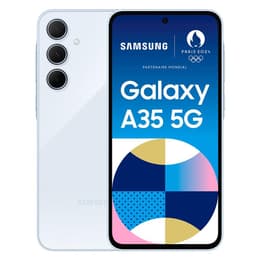
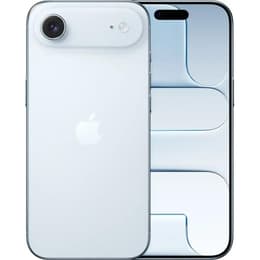
Galaxy A35 Vs iPhone Air

  • 1-year minimum warranty
  • Free delivery on all items
  • Free 30-day returns
Galaxy A35
Starting at

Refurbished price:£151.00

Versus £367.31 new

See options
iPhone Air
Starting at

Refurbished price:£640.00

Versus £1,099.00 new

See options

Differences at a glance

The Samsung Galaxy A35 (2024) and the Apple iPhone Air (2025) represent two distinct approaches to mid-range and premium smartphone design. While the Galaxy A35 focuses on balanced everyday features running on the Android operating system, the iPhone Air prioritizes an ultra-slim profile powered by iOS. These devices cater to different user preferences regarding software ecosystems and physical handling.

Available Models

Colour

Storage (GB)

Scores

Durability

The Galaxy A35 and iPhone Air offer long-term software support frameworks, though they originate from different release years and follow distinct maintenance cycles.

    Software Longevity: Samsung provides multi-year operating system updates for the Galaxy A35, while Apple's device benefits from extended iOS update support backed by robust internal hardware architecture. Build Resilience: The Galaxy A35 features durable glass panels and standard dust and water resistance, whereas the iPhone Air utilizes a rigid titanium frame paired with reinforced display protection. Practical Lifespan: Both models maintain sustained usability over several years, though component replaceability and repair infrastructure differ between the Android and iOS ecosystems.

Year of Release

2024

2025

Performance

System responsiveness and power management vary significantly based on internal hardware configuration and software optimization across both smartphones.

    Multitasking and Speed: The Galaxy A35 handles everyday web browsing, social media applications, and moderate gaming smoothly, whereas the iPhone Air manages heavy multitasking, demanding applications, and advanced graphics effortlessly with its high-tier processor capacity. Storage and Memory: Storage configurations range from standard capacities to expansive tiers, paired with differing RAM allocations that influence background app retention. Battery Behavior: The Galaxy A35 houses a larger battery capacity that comfortably sustains a full day of typical usage, while the slimmer profile of the iPhone Air results in a more compact battery that may require more frequent recharging during intensive workloads.

Screen quality

Display characteristics on both handsets deliver bright and sharp visuals suited for media consumption, reading, and outdoor visibility.

    Display Technology: Both models utilize advanced OLED panel technology, providing deep contrast levels, vibrant colors, and sharp resolutions. Smoothness and Refresh Rate: Each device supports a rapid refresh rate that ensures fluid scrolling through web pages and smooth animation transitions. Brightness and Size: The Galaxy A35 offers a spacious viewing area with reliable outdoor clarity, while the iPhone Air counters with an exceptionally bright panel that adapts dynamically to ambient lighting conditions.

Audiovisual

Camera system layouts and audio output capabilities reflect contrasting design priorities for photography and media playback.

    Camera Configurations: The Galaxy A35 features a versatile multi-lens rear array including a primary sensor, ultra-wide option, and macro lens, whereas the iPhone Air adopts a minimalist single-lens rear camera setup paired with advanced computational photography. Media and Sound: The Galaxy A35 is equipped with stereo speakers for balanced media playback, while the iPhone Air features a streamlined mono speaker arrangement due to its ultra-thin chassis. Video Recording: Both handsets deliver stable, high-resolution video capture suitable for everyday recording needs.

Miscellaneous

Physical dimensions, connectivity standards, and daily handling characteristics set these two devices apart in practical scenarios.

    Dimensions and Handling: The Galaxy A35 features a standard thickness and weight distribution, whereas the iPhone Air is recognized for its remarkably thin profile and lightweight titanium construction. Connectivity and Ports: Both models support rapid 5G cellular networks and modern wireless standards, utilizing universal USB-C ports for charging and data transfer. Security Features: The Galaxy A35 incorporates an under-display fingerprint sensor alongside facial recognition, while the iPhone Air relies exclusively on advanced facial authentication.

Screen size (in)

6.6

6.5

Mobile network

5G

5G

SIM card

Dual Physical SIM

eSIM

Carrier compatibility

Unlocked

Unlocked

Connector

USB-C

USB-C

What the community thinks

User feedback from online communities highlights distinct preferences for each device. Owners of the Galaxy A35 frequently praise its dependable battery life, reliable daily performance, and well-rounded feature set at a mid-range level. Conversely, users of the iPhone Air often emphasize appreciation for its featherlight feel, premium materials, and responsive system navigation, though some note that the slim battery capacity and single rear camera require compromises. Users prioritizing extended battery longevity and expanded camera versatility may prefer the Galaxy A35, while those valuing an ultra-lightweight build, top-tier processing power, and the iOS ecosystem will lean toward the iPhone Air. For consumers exploring sustainable technology alternatives, a quality-assured refurbished option provides a reliable and eco-friendly path to acquiring either device.