
iPhones
Compare models
Differences at a glance
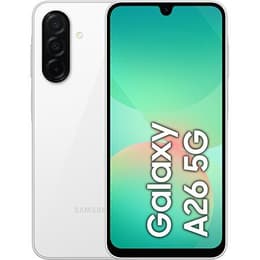
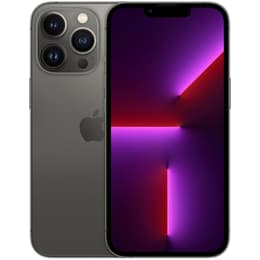
The Samsung Galaxy A26 5G, released in March 2025, and the Apple iPhone 13 Pro, launched in September 2021, represent different approaches to smartphone design and functionality. While the Galaxy A26 5G focuses on extended software support and a large display, the iPhone 13 Pro emphasizes premium performance and advanced camera capabilities. Both devices operate on distinct ecosystems, Android and iOS respectively, offering varied user experiences.
Colour
Storage
When considering the practical lifespan of these devices, their release timelines and software support policies are key differentiators. The iPhone 13 Pro, released in September 2021, has already received several major iOS updates and is expected to continue receiving software support for a total of 5-6 years from its launch. This means it is currently running on iOS 26. The Galaxy A26 5G, a newer device from March 2025, is notable for its commitment to six major OS upgrades and six years of security updates, extending its support until 2031. This extended support policy suggests a longer software longevity from its release date compared to many Android devices.
Year of Release
Compatible with latest Update
OS
Foldable
The performance of a smartphone is crucial for daily tasks, from app usage to demanding games. The iPhone 13 Pro, powered by its custom-designed processor, delivers top-level performance, handling demanding applications and multitasking smoothly. Users report that it runs every app with ease and provides a smooth gaming experience. The Galaxy A26 5G utilizes a Samsung Exynos 1380 processor, which offers reliable performance for everyday use and general purposes. However, some users have noted occasional lag during intensive multitasking or within settings, and hardcore gamers might seek more sustained power.
The display is a primary interface for smartphone interaction, and both devices offer distinct visual experiences. The iPhone 13 Pro features a 6.1-inch Super Retina XDR OLED display, known for its deep blacks, vibrant colors, and high resolution of 2532 × 1170 pixels. It also boasts ProMotion technology, offering an adaptive refresh rate that can scale from 10 Hz to 120 Hz for smooth scrolling and responsiveness. The Galaxy A26 5G provides a larger 6.7-inch Super AMOLED display with a resolution of 1080 x 2340 pixels, also featuring a 120Hz refresh rate for fluid visuals.
Resolution
Screen type
For many users, camera capabilities are a deciding factor. The iPhone 13 Pro features a versatile triple 12MP camera system, including Wide (f/1.5), Ultra Wide (f/1.8), and Telephoto (f/2.8 with 3x optical zoom) lenses. It is praised for its low-light performance, macro photography, and Cinematic mode for video. The Galaxy A26 5G comes with a triple camera setup featuring a 50 MP main sensor with OIS, an 8 MP ultrawide, and a 2 MP macro lens. Its front camera is 13 MP, while the iPhone 13 Pro has a 12 MP TrueDepth camera.
Front camera
Beyond core features, several practical elements contribute to the overall user experience. The iPhone 13 Pro, with its 146.7 x 71.5 x 7.65 mm dimensions and 204 grams weight, offers a premium feel with its stainless steel frame and matte glass back. It relies on a Lightning port for charging and data transfer. The Galaxy A26 5G measures 164 x 77.5 x 7.7 mm and features a plastic frame with Gorilla Glass Victus+ on the front and back. It uses a USB Type-C 2.0 port.
Weight
Screen size (in)
Mobile network
SIM card
Carrier compatibility
Connector
Choosing between the Samsung Galaxy A26 5G and the iPhone 13 Pro depends heavily on individual priorities and ecosystem preference. Users prioritizing a longer software support window from the purchase date, a larger display for media consumption, and expandable storage may find the Galaxy A26 5G well-suited to their needs. Its robust battery and modern design make it a practical choice for everyday use, especially for those who appreciate the Android ecosystem and its customization options.
Conversely, users who value a highly refined user experience, consistently strong performance across demanding applications, and a sophisticated camera system with advanced video capabilities will likely lean towards the iPhone 13 Pro. Its premium build quality and the seamless integration within the Apple ecosystem are significant advantages for those already invested in iOS.
While the iPhone 13 Pro is an older model, its performance and camera capabilities remain competitive. The Galaxy A26 5G, being newer, offers a fresh take on mid-range features with an impressive commitment to software updates. Both devices offer compelling features for different user profiles. For consumers looking for quality-assured refurbished options, both the iPhone 13 Pro and, in time, the Galaxy A26 5G can be considered as eco-friendly alternatives, providing access to these technologies sustainably.