
Compare models

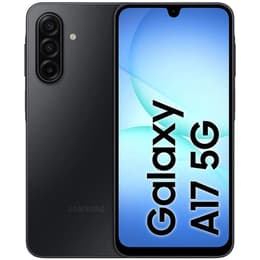
Galaxy A17 Vs iPhone 17 Pro

  • 1-year minimum warranty
  • Free delivery on all items
  • Free 30-day returns
Galaxy A17
Starting at

Refurbished price:£133.00

Versus £243.85 new

See options
iPhone 17 Pro
Starting at

Refurbished price:£811.00

Versus £1,099.00 new

See options

Differences at a glance

The Samsung Galaxy A17 (2025) and the Apple iPhone 17 Pro (2025) occupy entirely different segments of the modern smartphone market, catering to distinct user expectations and operating ecosystems. While the Galaxy A17 focuses on practical everyday essentials within the Android platform, the iPhone 17 Pro delivers high-end hardware capabilities running on Apple's iOS. A primary differentiator between the two models lies in their intended design philosophy, separating an accessibility-focused device from a feature-heavy flagship.

Available Models

Colour

Storage

Scores

Durability

Evaluating the long-term viability of these devices involves examining their software support timelines, build integrity, and expected hardware endurance over years of daily use.

  • Software support timeline: The Galaxy A17 receives an extensive multi-year commitment for major operating system upgrades, whereas the iPhone 17 Pro benefits from Apple's traditional long-term software update schedule spanning many years.
  • Repairability and build: The iPhone 17 Pro utilizes robust frame materials and sophisticated internal cooling, while the Galaxy A17 offers straightforward maintenance and reliable everyday structural durability.
  • Expected lifespan: Both models maintain sustained functionality over time, though flagship internal components give the iPhone 17 Pro additional headroom for intensive future software demands.

Year of Release

2025

2025

OS

Android

iOS

Foldable

No

No

Performance

Underneath the surface, these smartphones manage multitasking, application loading, and power consumption differently based on their internal architecture.

  • System responsiveness: The iPhone 17 Pro handles demanding games and intensive background tasks with maximum fluidity, while the Galaxy A17 smoothly manages standard daily applications like messaging, web browsing, and media streaming.
  • Multitasking capacity: Generous memory configurations on the iPhone 17 Pro allow seamless switching between heavy professional applications, whereas the Galaxy A17 efficiently handles routine day-to-day multitasking.
  • Battery behavior: The Galaxy A17 features a large battery capacity that easily spans a full day of typical usage, while the iPhone 17 Pro balances high-performance output with efficient power management for consistent daily endurance.

Screen quality

Visual output and display responsiveness define the primary interaction point for media consumption, reading, and navigation.

  • Display technology: The Galaxy A17 utilizes a vibrant AMOLED panel with deep contrast levels, while the iPhone 17 Pro incorporates advanced adaptive refresh rate technology for ultra-smooth scrolling and viewing.
  • Outdoor visibility: Both screens reach high peak brightness levels to maintain clear legibility under direct sunlight.
  • Size and immersion: The Galaxy A17 provides a broad viewing area ideal for reading and watching videos, while the iPhone 17 Pro offers a compact, highly detailed panel suited for precise visual tasks.

Resolution

1080x2340

2622x1206

Audiovisual

Capturing photos, recording video, and handling audio output highlight notable engineering differences between a general-use camera setup and a professional-grade array.

  • Camera versatility: The iPhone 17 Pro includes a sophisticated multi-lens setup featuring high-resolution sensors and extended optical zoom capabilities, whereas the Galaxy A17 provides a reliable main and supporting lens configuration for casual everyday photography.
  • Video and low light: The iPhone 17 Pro excels in detailed low-light captures and advanced video recording formats, while the Galaxy A17 delivers clear, balanced shots for social sharing in normal lighting conditions.
  • Audio output: Stereo speakers on both devices provide clear sound quality for hands-free calls and media playback, supported by crisp microphone arrays.

Front camera

13MP

18 megapixels

Miscellaneous

Practical daily usability elements, including connectivity standards, physical handling, and biometric security, shape the overall user experience.

  • Connectivity and ports: The iPhone 17 Pro utilizes modern universal USB-C connectivity alongside advanced wireless and satellite communication standards, whereas the Galaxy A17 supports standard 5G connectivity and fast cellular data networks.
  • Biometric security: Apple relies on advanced facial recognition, while Samsung implements a responsive fingerprint sensor integrated directly into the physical layout.
  • Physical handling: The Galaxy A17 features a lightweight plastic and glass construction profile, contrasting with the denser, metallic finish of the iPhone 17 Pro.

Weight

192 g

206 g

Screen size (in)

6.7

6.3

Mobile network

5G

5G

SIM card

Dual Physical SIM

Physical SIM + eSIM

Carrier compatibility

Unlocked

Unlocked

Connector

USB-C

USB-C

What the community thinks

User discussions across public forums often highlight the Galaxy A17 for its reliable daily battery endurance and extended software update policy within an accessible category. Conversely, community feedback frequently praises the iPhone 17 Pro for its robust processing power, premium display fluidity, and advanced camera versatility. Users prioritizing straightforward daily communication, reliable battery life, and long-term software backing will find the Galaxy A17 well-suited to their needs. On the other hand, users focusing on heavy gaming, professional content creation, and advanced photography will naturally lean toward the iPhone 17 Pro.

For those exploring sustainable alternatives, choosing a quality-assured refurbished option through Back Market offers a reliable path to acquiring either device while supporting eco-friendly consumption habits. Ultimately, the right choice depends on balancing daily functional requirements against operating system preferences without overcomplicating the decision process.