
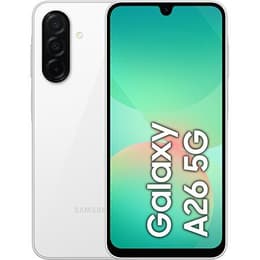
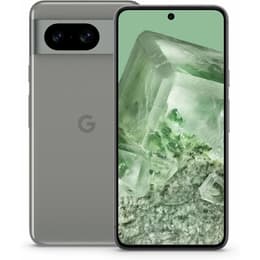

Galaxy A26 Vs Google Pixel 8

Galaxy A26
Galaxy A26
Starting at

Refurbished price:£152.00

Versus £419.55 new

See options
Google Pixel 8
Google Pixel 8
Starting at

Refurbished price:£189.00

Versus £699.99 new

See options

Ratings

The Samsung Galaxy A26, released in March 2025, and the Google Pixel 8, launched in October 2023, represent distinct approaches to the smartphone experience. While the Galaxy A26 focuses on delivering a robust mid-range offering with extended software support, the Pixel 8 emphasizes advanced computational photography and a premium software experience. Both devices operate on the Android platform, with the Galaxy A26 shipping with Android 15 and the Pixel 8 having received updates to Android 15 since its launch.

Scores

Durability

When considering the long-term usability of a smartphone, software support and physical resilience are key factors.

  • Software Longevity: The Google Pixel 8 stands out with an impressive commitment of seven years of full software updates, ensuring it remains current with the latest Android features and security patches for an extended period. The Samsung Galaxy A26 also offers substantial support, with six years of OS upgrades and security updates, making both devices excellent choices for users who prefer to keep their phones for many years.
  • Physical Durability: The Galaxy A26 features Gorilla Glass Victus+ on both its front and back, providing enhanced scratch and drop resistance, a notable upgrade for a device in its category. It also carries an IP67 rating for dust and water resistance, offering protection against splashes and submersion. The Pixel 8, while also featuring a glass body, boasts an IP68 rating, indicating a slightly higher level of water and dust protection.
  • Expected Practical Lifespan: Both phones are designed for extended use, with their respective software support policies being among the best available. The Pixel 8's longer update promise gives it a slight edge in theoretical software longevity, while the Galaxy A26's robust physical build with Gorilla Glass Victus+ on both sides contributes to its practical lifespan.

Year of Release

2024

2023

Compatible with latest Update

Yes

Yes

OS

Android

Android

Foldable

No

No

Performance

The performance of these two smartphones caters to different user expectations, primarily due to their underlying hardware.

  • Processing Power: The Google Pixel 8 is equipped with a current-generation processor designed for flagship performance, excelling in demanding applications, complex multitasking, and advanced AI-driven features like enhanced image processing and clearer voice calls. The Samsung Galaxy A26 utilizes a mid-range processor, which provides smooth operation for everyday tasks and general use, including casual gaming. However, some users may experience occasional minor delays when opening or switching between multiple applications.
  • Multitasking and Storage: The Pixel 8 comes with 8GB of RAM, facilitating efficient multitasking and smooth transitions between apps. It offers storage options of 128GB or 256GB. The Galaxy A26 is available with either 6GB or 8GB of RAM and 128GB or 256GB of internal storage, with the added benefit of expandable storage via a microSD card, which the Pixel 8 does not offer.
  • Battery Behavior: The Galaxy A26 houses a larger 5000 mAh battery, generally providing over a day of moderate use, with some reports indicating around 6 hours of screen-on time. The Pixel 8 features a 4575 mAh battery, and its adaptive battery features contribute to a reliable all-day experience for most users, often achieving 8-10 hours of screen time with mixed usage. Some users of the Galaxy A26 have reported mixed experiences with battery performance, including instances of overheating.

Memory (GB)

8 GB

8 GB

Screen quality

Both devices offer vibrant displays, but with differences in size, brightness, and underlying technology that impact the viewing experience.

  • Display Technology and Clarity: Both the Galaxy A26 and the Pixel 8 feature Super AMOLED and OLED displays, respectively, known for their deep blacks and vibrant colors. Both screens offer Full HD+ resolution, ensuring sharp and clear visuals for everyday content consumption.
  • Size and Brightness: The Galaxy A26 provides a larger 6.7-inch display, offering more screen real estate for media and browsing. It can reach a peak brightness of 1000 nits, though lab tests suggest average brightness around 550-731 nits, making it generally usable outdoors. The Pixel 8 has a more compact 6.2-inch display but boasts a significantly higher peak brightness of 2000 nits, enhancing visibility in bright sunlight.
  • Refresh Rate and Smoothness: Both phones feature a 120Hz refresh rate, contributing to smoother scrolling and more fluid animations. The Pixel 8's refresh rate is variable between 60Hz and 120Hz, while the Galaxy A26 can switch between 60Hz and 120Hz.

Resolution

1080 x 2340

1080 x 2400

Audiovisual

The camera systems on the Galaxy A26 and Pixel 8 cater to different photographic priorities, with the Pixel 8 leveraging advanced computational photography.

  • Rear Camera Capabilities: The Google Pixel 8 features a dual-camera setup with a 50MP main sensor and a 12MP ultrawide lens, known for producing excellent photos with balanced tones, good detail, and strong low-light performance due to its computational photography. The Galaxy A26 offers a triple-camera system, including a 50MP main sensor with optical image stabilization (OIS), an 8MP ultrawide, and a 2MP macro lens. Its main camera performs well in daylight, capturing decent detail and colors, but the ultrawide and macro lenses are more limited.
  • Video Recording and Front Camera: The Pixel 8 supports 4K video recording at up to 60 frames per second (fps) from its main camera, along with strong stabilization and clear audio. Its 10.5MP front camera delivers good results with flattering detail and accurate portrait mode. The Galaxy A26 can record 4K video at 30fps with its main rear camera and features a 13MP front camera that captures good selfies with natural colors and preserved textures.
  • Special Features: The Pixel 8 integrates advanced AI features for photo editing and enhancement, allowing for significant post-capture adjustments. The Galaxy A26 also includes AI-powered enhancements for scene optimization and improved low-light performance, though its overall camera versatility is more aligned with its mid-range positioning.

Front camera

13 megapixels

10.5 megapixels

Miscellaneous

Beyond core specifications, several practical elements differentiate the user experience of these two devices.

  • Connectivity and Ports: Both phones support 5G connectivity. The Pixel 8 offers Wi-Fi 6E for faster wireless speeds, while the Galaxy A26 supports Wi-Fi 5. Both include Bluetooth (5.3 on A26) and NFC for contactless payments. The Pixel 8 uses a USB Type-C port, which is also present on the Galaxy A26.
  • Biometric Security and Sensors: The Pixel 8 features an in-display fingerprint sensor for convenient unlocking. The Galaxy A26 opts for a side-mounted fingerprint sensor, which is often praised for its speed and reliability. Both devices include standard sensors like accelerometers, gyroscopes, and compasses.
  • Design and Handling: The Pixel 8 is more compact and lighter, measuring 150.5 x 70.8 x 8.9 mm and weighing 187g, making it easier for one-handed use. The Galaxy A26 is larger at 164 x 77.5 x 7.7 mm and weighs 200g. The Galaxy A26 features a single bottom-firing speaker, whereas the Pixel 8 typically offers a more immersive audio experience with stereo speakers. The Galaxy A26 does not include a 3.5mm headphone jack.

Weight

197 g

187 g

Screen size (in)

6.5

6.2

Mobile network

5G

5G

SIM card

Dual Physical SIM

Physical SIM + eSIM

Carrier compatibility

Unlocked

Unlocked

User sentiment for the Samsung Galaxy A26 often highlights its strong software support policy, vibrant AMOLED display, and solid main camera performance in good lighting conditions. Many appreciate its robust build quality, including Gorilla Glass Victus+ and IP67 rating, for a device in its segment. However, some users have noted that its performance can experience occasional hiccups with demanding tasks, and the auxiliary cameras (ultrawide and macro) are not as capable as the main sensor. There have also been mixed reports regarding battery performance and potential overheating for some users.

The Google Pixel 8 is frequently praised for its exceptional camera system, particularly its computational photography capabilities that deliver consistent results across various lighting conditions, including impressive low-light performance. Its long-term software update commitment is a significant draw, ensuring extended relevance and security. Users also appreciate its compact size and premium software experience with unique AI features. Criticisms sometimes point to its battery life being good but not outstanding compared to some larger phones, and its processor, while optimized for AI, may not always match the raw power of other flagship chipsets in synthetic benchmarks.

Users prioritizing a compact device with a top-tier camera, advanced AI features, and the longest possible software support will find the Google Pixel 8 well-suited to their needs. Its performance is optimized for a smooth and intelligent user experience. Conversely, individuals seeking a larger display, expandable storage, and robust physical durability with excellent software longevity, who primarily engage in everyday tasks and casual photography, may lean toward the Samsung Galaxy A26. Both devices offer compelling packages, and considering a quality-assured refurbished option for either model can be a sustainable choice for consumers.


See all articles

Our recent comparisons






