Compare models

Galaxy A14 Vs iPhone Air

  • 1-year minimum warranty
  • Free delivery on all items
  • Free 30-day returns
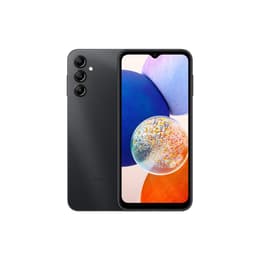
Galaxy A14
Starting at

Refurbished price:£90.00

Versus £269.00 new

See options
iPhone Air
Starting at

Refurbished price:£613.00

Versus £1,099.00 new

See options

Differences at a glance

The Samsung Galaxy A14 (2023) and the Apple iPhone Air (2025) represent very different approaches to smartphone design, catering to distinct segments of the mobile market. While the Galaxy A14 focuses on accessible, everyday functionality within the Android ecosystem, the iPhone Air prioritizes an ultra-thin profile and high-end capabilities running iOS. These devices differ significantly in their release timelines, operating systems, and core hardware philosophies.

Available Models

Colour

Storage

Scores

Durability

When evaluating the long-term potential of these two devices, differences in their release timelines and software support policies shape expectations for daily use.

  • Software Support: The iPhone Air benefits from a more recent release year, ensuring platform updates for a longer duration compared to the earlier-released Galaxy A14.
  • Build Longevity: The iPhone Air utilizes titanium and reinforced glass materials designed for structural rigidity, whereas the Galaxy A14 relies on a standard plastic build and frame.
  • Repairability: Both manufacturers provide structured repair pathways, though users seeking a quality-assured refurbished option often find reliable support for both ecosystems through sustainable channels like Back Market.

Year of Release

2023

2025

Compatible with latest Update

No

Yes

OS

Android

iOS

Foldable

No

No

Performance

Day-to-day speed, multitasking, and battery endurance vary substantially based on the internal hardware architecture of each smartphone.

  • System Responsiveness: The iPhone Air handles demanding multi-app workflows, complex rendering, and intensive mobile gaming smoothly, while the Galaxy A14 is optimized for standard daily tasks like web browsing and messaging.
  • Multitasking Capacity: Generous memory allocation on the iPhone Air ensures seamless background app switching, whereas the Galaxy A14 suits lighter, sequential multitasking routines.
  • Battery Behavior: The Galaxy A14 features a larger physical battery capacity suited for extended baseline endurance, while the iPhone Air balances power efficiency with a much slimmer physical footprint.

Screen quality

Visual output and display responsiveness differ greatly between the two models, influencing media consumption and outdoor usability.

  • Display Technology: The iPhone Air employs advanced OLED technology with deep contrast levels and rich color reproduction, while the Galaxy A14 uses a standard LCD panel.
  • Refresh Rate: The iPhone Air supports high refresh rate capabilities for fluid scrolling and animations, compared to the standard refresh rate on the Galaxy A14.
  • Outdoor Visibility: Peak brightness levels on the iPhone Air allow for clear viewing under direct sunlight, whereas the Galaxy A14 requires shadded conditions for optimal legibility.

Resolution

1080 x 2408

2736x1260

Screen type

PLS LCD

Super Retina XDR

Audiovisual

Photography and audio capabilities reflect the distinct market positioning and hardware configurations of both smartphones.

  • Camera Systems: The iPhone Air features a high-resolution single rear lens backed by advanced computational processing, while the Galaxy A14 adopts a multi-lens budget array including a main and auxiliary sensors.
  • Media and Audio: The iPhone Air delivers balanced media playback and clear voice capture, whereas the Galaxy A14 provides standard mono speaker output adequate for casual listening.
  • Low-Light Performance: Advanced sensor technology on the iPhone Air preserves detail in dim environments more effectively than the entry-level hardware on the Galaxy A14.

Main camera

50 megapixels

48 megapixels

Front camera

13 megapixels

18 megapixels

Miscellaneous

Physical dimensions, connectivity standards, and practical interface options define the daily handling experience of each device.

  • Design and Dimensions: The iPhone Air stands out for its exceptionally slim profile and lightweight titanium chassis, whereas the Galaxy A14 features a thicker, traditional plastic construction.
  • Connectivity: The iPhone Air supports modern wireless standards including advanced Wi-Fi and 5G networks, matching the baseline 5G or LTE connectivity configurations found across variants of the Galaxy A14.
  • Biometrics and Ports: Both models utilize secure authentication methods alongside standard reversible charging ports for accessory connection.

Weight

201 g

165 g

Screen size (in)

6.6

6.5

Mobile network

4G

5G

SIM card

Dual Physical SIM

eSIM

Carrier compatibility

Unlocked

Unlocked

What the community thinks

User discussions across community forums highlight distinct sentiments regarding both devices. Owners of the Galaxy A14 frequently praise its straightforward reliability for essential tasks and accessible nature, though some note limitations in heavy multitasking and screen brightness under bright sunlight. Conversely, users of the iPhone Air highlight its remarkable thinness, premium display quality, and fluid system performance, while observing that the slim battery profile requires mindful recharging during intensive usage days.

Users prioritizing an exceptionally lightweight build, advanced display technology, and high-end processing power may prefer the iPhone Air, while users focusing on essential daily communication tools and straightforward functionality often lean toward the Galaxy A14. Exploring a quality-assured refurbished option can also provide a sustainable alternative for acquiring either device without compromising on performance expectations. Ultimately, the choice depends on matching individual workflow needs and design preferences with the appropriate hardware profile.