
Compare models

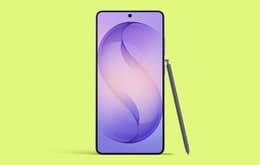
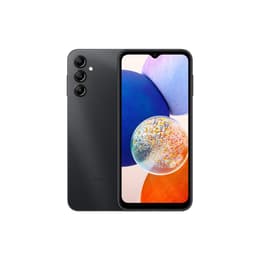
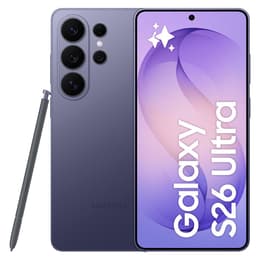
Galaxy A14 Vs Galaxy S26 Ultra

  • 1-year minimum warranty
  • Free delivery on all items
  • Free returns until Jan 31
Galaxy A14
Starting at

Refurbished price:£93.99

Versus £269.00 new

See options
Galaxy S26 Ultra
Starting at

Refurbished price:£789.00

Versus £1,529.00 new

See options

Differences at a glance

The Samsung Galaxy A14 (2023) and the Samsung Galaxy S26 Ultra (2026) represent vastly different tiers and eras within Samsung's smartphone lineup, catering to entirely separate user expectations. While the Galaxy A14 focuses on essential daily communication features for everyday tasks, the Galaxy S26 Ultra functions as an advanced mobile powerhouse equipped with cutting-edge capabilities and premium design elements. Operating on evolving versions of the Android operating system, these two devices offer distinct approaches to modern mobile technology.

Available Models

Colour

Storage

Scores

Durability

When examining hardware longevity and software support, both devices handle routine aging differently based on their respective release schedules and tier positioning.

  • Release timeline and support: The Galaxy S26 Ultra benefits from an extended software update commitment spanning multiple years, whereas the Galaxy A14 features a shorter support lifecycle due to its earlier launch.
  • Build and repairability: The Galaxy S26 Ultra incorporates reinforced glass and advanced framing materials for enhanced physical protection, while the Galaxy A14 relies on straightforward plastic construction that facilitates basic component repairs.
  • Expected practical lifespan: Users requiring sustained multi-year software updates and robust long-term durability will find the Galaxy S26 Ultra better equipped for prolonged daily usage.

Year of Release

2023

2026

Compatible with latest Update

No

Yes

OS

Android

Android

Foldable

No

No

Performance

Daily operation, multitasking responsiveness, and hardware capabilities vary significantly between these two models, impacting how apps and system processes run.

  • Storage and memory configurations: The Galaxy S26 Ultra provides substantial internal memory and expansive storage capacities for heavy file management, while the Galaxy A14 offers modest baseline storage with microSD card expansion support.
  • System responsiveness: The Galaxy S26 Ultra handles intensive multitasking, demanding 3D games, and complex creative applications smoothly, whereas the Galaxy A14 is optimized for standard web browsing, messaging, and light productivity apps.
  • Battery behavior: Both devices house large capacity batteries, but hardware efficiency differences mean the Galaxy S26 Ultra maintains endurance more effectively during intensive mixed usage.

Screen quality

Display performance shapes the core visual experience for media consumption, outdoor legibility, and everyday navigation.

  • Display technology: The Galaxy S26 Ultra features an advanced vibrant panel with deep contrast levels and adaptive refresh rates, while the Galaxy A14 utilizes a standard liquid crystal display panel with fixed refresh rates.
  • Outdoor visibility: High peak brightness capabilities on the Galaxy S26 Ultra ensure clear legibility under direct sunlight, whereas the Galaxy A14 requires manual brightness adjustments in bright outdoor environments.
  • Viewing smoothness: Fast refresh rate support on the Galaxy S26 Ultra allows for fluid scrolling animations, contrasting with the standard refresh rate found on the Galaxy A14.

Resolution

1080 x 2408

1440 x 3120

Audiovisual

Photography, video recording, and audio output capabilities differ extensively to suit casual creators versus advanced multimedia users.

  • Camera versatility: The Galaxy S26 Ultra incorporates a multi-lens system featuring high-resolution primary sensors and dedicated telephoto optical zoom capabilities, while the Galaxy A14 relies on a basic multi-lens setup focused on standard wide and macro shots.
  • Low-light performance: Advanced image processing and larger sensors on the Galaxy S26 Ultra capture clear details in dim conditions, whereas the Galaxy A14 produces more visible noise in low light.
  • Media and audio output: Stereo speakers on the Galaxy S26 Ultra deliver balanced sound for videos and calls, compared to the single loudspeaker configuration on the Galaxy A14.

Front camera

13 megapixels

12.0

Miscellaneous

Physical dimensions, connectivity standards, and practical hardware additions dictate handling comfort and everyday utility.

  • Connectivity standards: The Galaxy S26 Ultra supports modern wireless communication standards and rapid data transfer protocols, while the Galaxy A14 provides standard cellular and Wi-Fi connectivity options.
  • Biometric security: The Galaxy S26 Ultra utilizes sophisticated biometric authentication methods alongside facial recognition, whereas the Galaxy A14 features a side-mounted fingerprint sensor integrated into the power button.
  • Handling and dimensions: Despite larger screen real estate, the Galaxy S26 Ultra maintains a refined profile, while the Galaxy A14 features a slightly thicker plastic chassis that impacts overall hand feel.

Weight

201 g

214 g

Screen size (in)

6.6

6.9

Mobile network

4G

5G

SIM card

Dual Physical SIM

Physical SIM + eSIM

Carrier compatibility

Unlocked

Unlocked

What the community thinks

User feedback and community discussions indicate that the Galaxy A14 receives praise for its straightforward reliability and expandable storage, though users frequently note limitations in screen brightness and processing speeds for demanding tasks. Conversely, the Galaxy S26 Ultra earns widespread recognition for its exceptional display quality, versatile camera array, and robust performance, with occasional notes regarding its substantial physical footprint.

Users prioritizing long-term software support, advanced photography tools, and peak processing power will find the Galaxy S26 Ultra well-suited to their needs. On the other hand, users seeking a straightforward, essential communication tool for basic daily tasks may prefer the Galaxy A14. For those interested in sustainable technology acquisition, choosing a quality-assured refurbished option provides an eco-friendly alternative that extends device lifecycles without compromising performance standards.