Compare models

Galaxy S23 Ultra Vs Galaxy S26 Ultra

  • 1-year minimum warranty
  • Free delivery on all items
  • Free 30-day returns
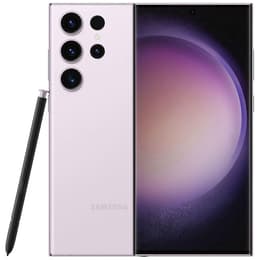
Galaxy S23 Ultra
Starting at

Refurbished price:£336.00

Versus £1,599.00 new

See options
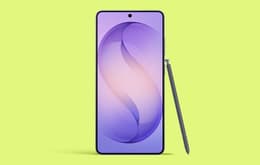
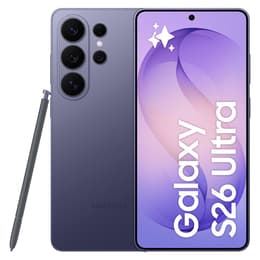
Galaxy S26 Ultra
Starting at

Refurbished price:£887.00

Versus £1,449.00 new

See options

Differences at a glance

The Samsung Galaxy S23 Ultra (2023) and the Samsung Galaxy S26 Ultra (2026) represent multiple generations of innovation within the high-end smartphone market. Both devices feature large form factors and stylus integration, but they differ significantly in internal processing capabilities, display technology refinements, and long-term software support. Operating on the Android platform with Samsung's custom interface, these models cater to users seeking expansive screens and advanced mobile productivity features while showcasing how hardware has evolved over a three-year span.

Available Models

Colour

Storage (GB)

Scores

Durability

When evaluating durability and software longevity, release timeline and update support are key differentiators between these two generations.

  • Software longevity and update timeline: The newer model benefits from an extended software support window, ensuring current operating system updates and security patches for several more years than its predecessor.
  • Build materials and repairability: Both models utilize robust glass and metal construction, though the newer generation incorporates enhanced drop resistance and refined internal layouts that influence structural resilience over time.
  • Expected practical lifespan: Users choosing the quality-assured refurbished option of the Galaxy S23 Ultra will find a device that handles everyday tasks reliably, while the Galaxy S26 Ultra offers a longer overall active support lifecycle.

Year of Release

2023

2026

Compatible with latest Update

Yes

Yes

OS

Android

Android

Foldable

No

No

Performance

Performance capabilities vary noticeably due to architectural advancements, impacting everyday multitasking, app loading times, and thermal management.

  • Processing speed and system responsiveness: The Galaxy S26 Ultra delivers faster instruction execution and improved energy efficiency, resulting in smoother switching between demanding applications compared to the Galaxy S23 Ultra.
  • Memory and storage configurations: Both models provide generous baseline RAM allocations for seamless multitasking, though memory bandwidth and storage read speeds are upgraded in the newer release.
  • Battery behavior and thermal efficiency: The newer processor design optimizes power draw during prolonged media playback and gaming sessions, reducing heat generation relative to the older model.

Screen quality

Display characteristics across both generations offer immersive viewing experiences, though optical technologies have seen subtle refinements.

  • Panel technology and outdoor visibility: Both feature high-resolution organic light-emitting diode displays with deep contrast levels, but the Galaxy S26 Ultra achieves higher peak outdoor brightness for improved legibility under direct sunlight.
  • Refresh rate and interaction smoothness: Adaptive refresh rate technology ensures fluid scrolling and responsive touch tracking on both devices, scaling down during static content to conserve battery life.
  • Coating and glare reduction: The newer model introduces advanced anti-reflective glass treatments that significantly minimize surface glare compared to the standard glass finish on the older generation.

Resolution

1440 x 3088

1440 x 3120

Audiovisual

Imaging hardware and computational photography features dictate how each device handles diverse lighting conditions and media creation tasks.

  • Main and telephoto lens systems: While both include versatile multi-lens arrays featuring high-resolution main sensors and optical zoom capabilities, the Galaxy S26 Ultra benefits from refined image processing algorithms for enhanced detail capture.
  • Low-light and video performance: Low-light photography yields brighter exposures and reduced noise on the newer model, which also offers improved stabilization features for handheld video recording.
  • Audio recording and media output: Built-in multi-microphone arrays capture clear directional sound during video capture, complemented by balanced stereo speakers that deliver immersive audio playback for streaming and gaming.

Front camera

12 megapixels

12.0

Miscellaneous

Practical daily usability elements, connectivity standards, and physical design nuances shape the overall handling experience of each smartphone.

  • Connectivity and wireless standards: The Galaxy S26 Ultra integrates newer wireless networking protocols for faster data transmission speeds and more stable connections in crowded environments.
  • Physical dimensions and ergonomics: Both devices share a substantial footprint designed to accommodate large display panels and integrated styluses, with minor weight reductions in the newer model improving long-term handling comfort.
  • Sensors and authentication: Ultrasonic in-display fingerprint scanners and facial recognition features provide secure, responsive biometric unlocking on both devices.

Weight

233 g

214 g

Screen size (in)

6.8

6.9

Mobile network

5G

5G

SIM card

Dual Physical SIM + eSIM

Dual Physical SIM + eSIM

Carrier compatibility

Unlocked

Unlocked

Connector

USB-C

USB-C

What the community thinks

User sentiment indicates that the Galaxy S23 Ultra remains a capable and reliable device for daily productivity, praised for its solid build quality and versatile camera system, though some users note that battery degradation is common in older units. Conversely, the Galaxy S26 Ultra receives positive feedback for its enhanced peak display brightness, refined processing speed, and extended software lifespan, though users occasionally point out its large physical footprint. Choosing between them depends on individual workflow priorities and how long you intend to keep the device.

Users prioritizing maximum software longevity, peak outdoor screen visibility, and faster processing speeds for demanding applications may prefer the Galaxy S26 Ultra. Meanwhile, users focusing on core productivity features and a high-end smartphone experience without the latest generation overhead will find the sustainable choice of a refurbished Galaxy S23 Ultra well-suited to their needs.