Galaxy A13 Vs Galaxy Z Fold7

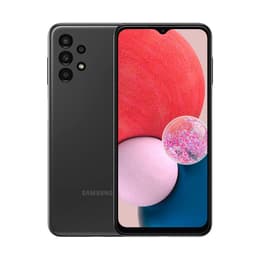
Galaxy A13
Galaxy A13
Starting at

Refurbished price:£73.00

Versus £249.00 new

See options
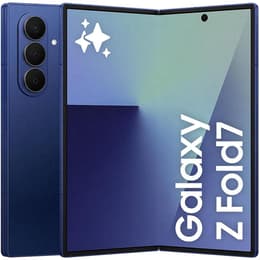
Galaxy Z Fold7
Galaxy Z Fold7
Starting at

Refurbished price:£916.00

Versus £1,799.00 new

See options

Ratings

The Samsung Galaxy A13, released in March 2022, is a traditional slab-style smartphone designed for everyday use, focusing on core functionalities. In contrast, the Samsung Galaxy Z Fold7, launched in July 2025, represents a premium foldable device that transforms from a compact smartphone into a larger tablet-like experience. These two devices cater to vastly different user needs, primarily distinguished by their form factor, processing power, and display technology.

Scores

Durability

The expected practical lifespan of a smartphone is influenced by its build quality, software support, and repairability. These aspects vary significantly between the Galaxy A13 and the Galaxy Z Fold7.

  • Software Longevity: The Galaxy A13, launched with Android 12, received its last major OS update as Android 14 (One UI 6.1) and is expected to receive security updates until the end of 2025. The Galaxy Z Fold7, however, launched with Android 16 (One UI 8) and is promised seven years of OS updates and security patches, extending its support until around 2032 or 2033.
  • Build Materials and Durability: The Galaxy A13 features a plastic frame and back with a Gorilla Glass 5 front, offering a practical level of durability for its category. The Galaxy Z Fold7 utilizes premium materials like Armor Aluminum for its frame and Gorilla Glass Ceramic 2 for its cover display, alongside an IPX8 water resistance rating, indicating a robust construction for a foldable device.
  • Repairability: The Galaxy A13 has a repairability score of 8 out of 10, suggesting it is relatively straightforward to repair. Conversely, the Galaxy Z Fold7 received a low repairability score of 3 out of 10 from iFixit, citing challenges due to extensive adhesives, the delicate nature of the inner foldable screen, and limited availability of repair manuals and parts.

Year of Release

2022

2025

Compatible with latest Update

No

Yes

OS

Android

Android

Foldable

No

Yes

Performance

The performance capabilities of these two devices are tailored to their respective market segments, impacting how smoothly they handle various tasks.

  • Everyday Task Handling: The Galaxy A13 is equipped with an Exynos 850 processor (or MediaTek Dimensity 700 for the 5G variant), which provides adequate performance for basic smartphone functions like web browsing, social media, and light applications. Users may experience occasional slowdowns with more demanding apps or extensive multitasking. The Galaxy Z Fold7, powered by the Snapdragon 8 Elite for Galaxy processor, offers flagship-level performance, ensuring demanding applications, intensive gaming, and seamless multitasking run without noticeable delays.
  • Multitasking and Responsiveness: With RAM options typically ranging from 3GB to 6GB, the Galaxy A13 can manage a few applications concurrently, but heavy multitasking might lead to slower transitions. The Galaxy Z Fold7, featuring 12GB or 16GB of RAM, is designed for robust multitasking, allowing users to run multiple applications simultaneously on its large internal display with smooth transitions and sustained responsiveness.
  • Storage Options: The Galaxy A13 offers internal storage options from 32GB to 128GB, with the flexibility to expand up to 1TB via a microSD card. The Galaxy Z Fold7 provides faster UFS 4.0 internal storage options of 256GB, 512GB, or 1TB, but it does not support expandable storage.

Memory (GB)

4 GB

12 GB

Screen quality

The visual experience offered by the Galaxy A13 and Galaxy Z Fold7 differs significantly due to their display technologies and form factors.

  • Display Technology and Clarity: The Galaxy A13 features a 6.6-inch PLS LCD with a 1080 x 2408 (FHD+) resolution, providing clear and sharp visuals for everyday content. The Galaxy Z Fold7 boasts two Dynamic AMOLED 2X displays: an 8.0-inch foldable main screen with a 2184 x 1968 (QXGA+) resolution and a 6.5-inch cover screen with a 2520 x 1080 (FHD+) resolution. These AMOLED panels deliver deep blacks, vibrant colors, and high contrast.
  • Brightness and Refresh Rate: The Galaxy A13's display operates at a standard 60Hz refresh rate, suitable for general use, and offers adequate brightness for indoor viewing. The Galaxy Z Fold7's displays feature an adaptive 120Hz refresh rate, ensuring smoother scrolling and more fluid animations. Its high peak brightness levels make both screens easily viewable even in bright outdoor conditions.
  • Screen Size and Viewing Experience: The Galaxy A13 provides a conventional large smartphone screen experience. The Galaxy Z Fold7 offers a versatile viewing experience, functioning as a compact smartphone when folded and expanding into a large, immersive tablet-like display when unfolded, ideal for media consumption and productivity.

Resolution

1080 x 2408

1968 x 2184

Audiovisual

The camera systems on the Galaxy A13 and Galaxy Z Fold7 are designed for different levels of photographic capability and user expectations.

  • Rear Camera Capabilities: The Galaxy A13 features a quad-camera setup on its LTE variant, including a 50 MP wide-angle main sensor, a 5 MP ultrawide, and two 2 MP sensors for macro and depth. This system is capable of capturing decent images in good lighting conditions. The Galaxy Z Fold7 is equipped with a high-end triple rear camera system, comprising a 200 MP wide-angle sensor, a 12 MP ultrawide lens, and a 10 MP telephoto lens with 3x optical zoom, designed for detailed and versatile photography across various scenarios.
  • Low-Light and Video Performance: The Galaxy A13 may struggle in dim lighting conditions due to the absence of a dedicated low-light mode, and video recording is limited to 1080p at 30 frames per second. The Galaxy Z Fold7's advanced camera system, supported by image processing, delivers improved performance in low-light situations and offers video recording capabilities up to 8K at 30 frames per second.
  • Front Cameras and Audio: The Galaxy A13 has an 8 MP front camera (LTE variant) suitable for basic selfies and video calls. The Galaxy Z Fold7 features a 10 MP cover camera and a 10 MP under-display camera on the main screen, providing high-quality options for selfies and video conferencing. Both devices offer standard speaker output for media consumption, with the Z Fold7 typically providing a more premium audio experience due to its flagship nature.

Miscellaneous

Beyond core features, several practical elements contribute to the overall user experience of these smartphones.

  • Connectivity and Ports: The Galaxy A13 supports 4G/5G connectivity (depending on variant), Wi-Fi 802.11 a/b/g/n/ac, Bluetooth 5.0, and includes a USB-C 2.0 port along with a 3.5mm headphone jack. The Galaxy Z Fold7 offers advanced 5G capabilities, Wi-Fi 6E/7 (802.11ax/be), Bluetooth 5.4, and a USB-C port, reflecting its modern connectivity standards. It does not feature a 3.5mm headphone jack.
  • Biometric Security: The Galaxy A13 typically features a side-mounted fingerprint sensor for secure unlocking. The Galaxy Z Fold7 incorporates advanced biometric options, including a fingerprint sensor and potentially enhanced facial recognition, leveraging its front cameras.
  • Physical Design and Handling: The Galaxy A13 has dimensions of 165.1 x 76.4 x 8.8 mm and weighs 195g, offering a conventional smartphone feel. The Galaxy Z Fold7, while heavier at 215g, presents a unique form factor: it measures 158.4 x 72.8 x 8.9 mm when folded and expands to 158.4 x 143.2 x 4.2 mm when unfolded, providing a larger screen in a relatively thin profile.

Weight

195 g

187 g

Screen size (in)

6.6

8

Mobile network

4G

5G

SIM card

Dual Physical SIM

Dual Physical SIM + eSIM

Carrier compatibility

Unlocked

Unlocked

The Samsung Galaxy A13 and Galaxy Z Fold7 cater to distinct user demographics, offering experiences that align with different priorities and usage patterns. User feedback for the Galaxy A13 often praises its robust battery life and acceptable performance for its intended basic use, making it a practical choice for those seeking essential smartphone functions. However, common criticisms include its display quality, which some users find less vibrant, and the limitations of its secondary cameras.

For the Galaxy Z Fold7, users frequently highlight its innovative foldable design, the immersive large internal display, and its powerful performance for demanding tasks and multitasking. The advanced camera system and extended software support are also noted as significant advantages. Conversely, common concerns revolve around its repairability, which is notably challenging, and the inherent considerations of a foldable device's durability.

Users prioritizing a straightforward, reliable smartphone for communication, light browsing, and media consumption, with a focus on practical longevity through repairability, may find the Galaxy A13 well-suited to their needs. Those who require cutting-edge technology, a versatile large screen for productivity and entertainment, and top-tier performance, and who value extended software support, will likely lean towards the Galaxy Z Fold7. Both devices, whether new or as quality-assured refurbished options, provide pathways to informed and sustainable choices in mobile technology.

See all articles

Our recent comparisons