Galaxy A13 Vs Galaxy Z Flip5

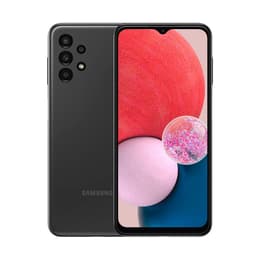
Galaxy A13
Galaxy A13
Starting at

Refurbished price:£73.00

Versus £249.00 new

See options
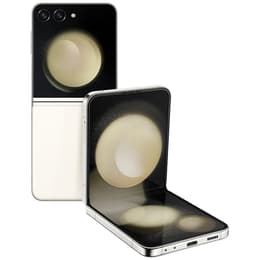
Galaxy Z Flip5
Galaxy Z Flip5
Starting at

Refurbished price:£266.76

Versus £1,145.61 new

See options

Ratings

The Samsung Galaxy A13, released in March 2022, and the Samsung Galaxy Z Flip5, launched in August 2023, represent distinct approaches within the Android smartphone market. While both operate on the Android platform, they cater to different user needs through their design, capabilities, and overall user experience. The Galaxy A13 focuses on essential smartphone functions in a traditional form factor, whereas the Galaxy Z Flip5 offers a compact, foldable design with advanced features and a more powerful internal architecture.

Scores

Durability

The expected practical lifespan and software support differ significantly between these two devices, primarily due to their release timelines and market positioning.

  • Release Timeline and Age: The Galaxy A13 was released in March 2022, making it an older model compared to the Galaxy Z Flip5, which launched in August 2023. This difference in release date inherently means the Galaxy Z Flip5 will receive software updates for a longer period.
  • OS Support and Longevity: The Galaxy Z Flip5 is expected to receive four years of major Android operating system updates and five years of security patches, offering extended software longevity. The Galaxy A13, having launched with Android 12, will have a shorter update cycle remaining.
  • Build and Durability: The Galaxy A13 features a plastic build with Gorilla Glass 5 protection on its display, but it lacks an official IP rating for water and dust resistance. In contrast, the Galaxy Z Flip5 boasts an Armor Aluminum frame, Gorilla Glass Victus 2 on its cover screen and back, and an IPX8 water resistance rating, though it is not officially dustproof. Its foldable display, while more durable than previous iterations, is made of a softer material than traditional smartphone screens.

Year of Release

2022

2023

Compatible with latest Update

No

Yes

OS

Android

Android

Foldable

No

Yes

Performance

The performance capabilities of the Galaxy A13 and Galaxy Z Flip5 are tailored for different usage intensities, reflecting their respective hardware configurations.

  • Everyday Task Handling: The Galaxy A13 is suitable for basic daily tasks such as calling, messaging, web browsing, and light social media use. However, users have reported that it can become slow and laggy with more demanding applications or over time. The Galaxy Z Flip5, equipped with a current-generation processor, delivers excellent performance, handling demanding apps, multitasking, and graphic-intensive games smoothly and efficiently.
  • Multitasking and Responsiveness: The Galaxy A13 typically comes with 3GB, 4GB, or 6GB of RAM, which can limit its multitasking capabilities, leading to occasional stutters or app freezes. The Galaxy Z Flip5 features 8GB of RAM, providing ample capacity for seamless multitasking and a highly responsive user experience.
  • Storage Options: The Galaxy A13 offers internal storage options of 32GB, 64GB, or 128GB, with expandable storage via a microSD card. The Galaxy Z Flip5 provides faster internal storage options of 256GB or 512GB, but it does not support expandable storage.

Memory (GB)

4 GB

8 GB

Screen quality

The display technologies and viewing experiences offered by the Galaxy A13 and Galaxy Z Flip5 present notable differences, particularly in terms of visual fidelity and form factor.

  • Display Technology and Clarity: The Galaxy A13 features a 6.6-inch PLS LCD display with a resolution of 1080 x 2408 pixels, offering decent sharpness for everyday viewing. The Galaxy Z Flip5 boasts a 6.7-inch Foldable Dynamic AMOLED 2X main display with a resolution of 1080 x 2640 pixels, providing vibrant colors, deep blacks, and excellent clarity.
  • Refresh Rate and Smoothness: The Galaxy A13 has a standard 60Hz refresh rate, which is adequate for general use but may not offer the smoothest scrolling experience. The Galaxy Z Flip5's main display features an adaptive refresh rate ranging from 1Hz to 120Hz, contributing to a fluid and responsive visual experience, especially during scrolling and gaming.
  • Brightness and Outdoor Visibility: The Galaxy A13's display offers solid brightness for typical use, with peak brightness levels that are generally sufficient for outdoor visibility, though viewing angles can impact this. The Galaxy Z Flip5's main screen is bright and crisp, with its cover screen reaching even higher peak brightness levels, ensuring good visibility in various lighting conditions.
  • Unique Form Factor: A key differentiator for the Galaxy Z Flip5 is its foldable design, which allows a large screen to fold into a compact form. It also includes a 3.4-inch Super AMOLED cover screen that provides quick access to information and widgets without unfolding the device. The main foldable screen does have a visible crease, though it is less noticeable in most scenarios.

Resolution

1080 x 2408

1080 x 2640

Screen type

PLS LCD

Foldable Dynamic AMOLED 2X

Audiovisual

The camera systems on the Galaxy A13 and Galaxy Z Flip5 are designed with different priorities, impacting their photographic and videographic capabilities.

  • Rear Camera Setup: The Galaxy A13 features a quad-camera array with a 50MP main sensor, a 5MP ultrawide, a 2MP macro, and a 2MP depth sensor. The Galaxy Z Flip5 has a dual-camera system on the rear, consisting of a 12MP main sensor with optical image stabilization (OIS) and Dual Pixel autofocus, alongside a 12MP ultrawide sensor.
  • Photography Performance: The Galaxy A13's main camera can capture decent images in good lighting, but its ultrawide sensor is considered to be of lower quality, and low-light performance is limited with no dedicated night mode. The Galaxy Z Flip5's main camera delivers sharp details, vibrant colors, and good dynamic range, performing well in various conditions, including low light with sufficient ambient light. Its ultrawide camera also produces good images, though it lacks autofocus.
  • Video Recording and Features: Both devices support video recording up to 1080p at 30 frames per second with their main cameras. The Galaxy A13 lacks advanced video features like 4K recording, slow motion, or night mode. The Galaxy Z Flip5 offers good video stabilization and can leverage its foldable design for unique shooting angles and hands-free recording.
  • Front Camera and Selfies: The Galaxy A13 has an 8MP front-facing camera that covers basic selfie needs. The Galaxy Z Flip5 features a 10MP front camera, but its large cover screen allows users to utilize the higher-quality rear cameras for selfies, offering more versatility and better image quality for self-portraits.

Main camera

50 megapixels

12 megapixels

Front camera

8 megapixels

10 megapixels

Miscellaneous

Beyond core functionalities, several practical elements differentiate the Galaxy A13 and Galaxy Z Flip5, influencing their overall user experience and suitability for various lifestyles.

  • Connectivity Standards: The Galaxy A13 supports 4G LTE, with a separate variant offering 5G connectivity, and includes Wi-Fi 5 and Bluetooth 5.0. The Galaxy Z Flip5 supports 5G connectivity, Wi-Fi 6E, and Bluetooth 5.3, offering faster and more robust wireless connections.
  • Ports and Sensors: The Galaxy A13 includes a USB-C port for charging and data transfer, and notably retains a 3.5mm headphone jack. It features a side-mounted fingerprint sensor. The Galaxy Z Flip5 uses a USB-C port and also has a side-mounted fingerprint sensor, along with face recognition for biometric security. It does not include a 3.5mm headphone jack.
  • Physical Design and Handling: The Galaxy A13 has a traditional smartphone form factor, measuring approximately 165.1 x 76.4 x 8.8 mm and weighing around 195g. Its plastic build is generally lightweight. The Galaxy Z Flip5's unique foldable design allows it to be compact when closed (85.1 x 71.9 x 15.1 mm) and a standard smartphone size when unfolded (165.1 x 71.9 x 6.9 mm), weighing 187g. This makes it highly portable when folded.

Weight

195 g

187 g

Screen size (in)

6.6

6.7 /3.4

Mobile network

4G

5G

SIM card

Dual Physical SIM

Physical SIM + eSIM

Carrier compatibility

Unlocked

Unlocked

The Samsung Galaxy A13 and Galaxy Z Flip5 cater to distinct user needs, with user feedback highlighting their respective strengths and limitations. The Galaxy A13 is often praised for its large screen and substantial battery capacity, making it a practical choice for users who prioritize basic functionality and extended usage between charges. However, common criticisms point to its sluggish performance, particularly after a few months of use, and a camera system that, while adequate for the price, struggles in challenging conditions like low light or with its ultrawide lens.

Conversely, the Galaxy Z Flip5 receives acclaim for its innovative foldable design, which offers a large screen experience in a highly compact form factor. Users appreciate its powerful performance, vibrant displays (both main and cover screens), and the versatility of its camera system, especially for creative angles and high-quality selfies using the main sensors. Frequent concerns revolve around its battery life, which some users find to be merely average, and the absence of a telephoto lens.

Users prioritizing a straightforward, large-screen device for essential communication and media consumption, and who are mindful of their budget, may find the Galaxy A13 suitable. Those who value cutting-edge design, high performance for demanding applications, and a compact, portable form factor, along with advanced camera features and longer software support, will likely lean towards the Galaxy Z Flip5. For consumers considering either device, exploring quality-assured refurbished options can provide an eco-friendly alternative to new purchases.

See all articles

Our recent comparisons