Galaxy S21 FE 5G Vs iPhone 15 Plus

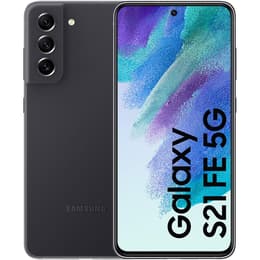
Galaxy S21 FE 5G
Galaxy S21 FE 5G
Starting at

Refurbished price:£122.00

Versus £759.00 new

See options
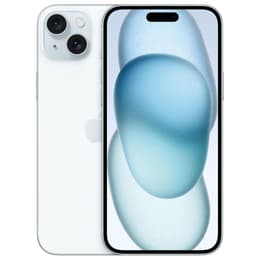
iPhone 15 Plus
iPhone 15 Plus
Starting at

Refurbished price:£344.00

Versus £799.00 new

See options

Ratings

The Samsung Galaxy S21 FE 5G, released in early 2022, and the Apple iPhone 15 Plus, launched in late 2023, represent two distinct approaches to the large-screen smartphone experience. While both devices offer robust performance and capable camera systems, the iPhone 15 Plus benefits from a more recent release, bringing updated internal components and a refined design, whereas the Galaxy S21 FE provides a strong Android alternative with a focus on display fluidity. They operate on different ecosystems, with the Galaxy S21 FE running Android and the iPhone 15 Plus running iOS.

Scores

Durability

When considering the longevity of a smartphone, factors such as release timeline, software support, and repairability play a significant role. The iPhone 15 Plus, being a newer device, generally offers a longer expected period of software updates compared to the Galaxy S21 FE.

  • Release Timeline: The Galaxy S21 FE 5G was released in January 2022, while the iPhone 15 Plus followed in September 2023. This difference in launch dates means the iPhone 15 Plus inherently has a longer potential lifespan for receiving the latest software features and security patches.
  • Software Support: The Galaxy S21 FE 5G launched with Android 12 and is expected to receive up to four major Android OS updates, with security patches extending until at least late 2025 or early 2027. The iPhone 15 Plus, launching with iOS 17, is guaranteed a minimum of five years of software updates from its release date, with Apple often providing security updates for a longer duration.
  • Repairability: The Galaxy S21 FE has a repairability score of 7.5 out of 10, indicating it is relatively straightforward to repair, though the battery is tightly glued. The iPhone 15 Plus has also seen improvements in repairability, with models in its series receiving scores around 7 out of 10, making it more accessible for component replacement than previous iPhone generations.

Year of Release

2022

2023

Compatible with latest Update

Yes

Yes

OS

Android

iOS

Foldable

No

No

Performance

Both devices offer capable performance for daily tasks, but the difference in their release cycles and underlying hardware leads to varying levels of responsiveness, particularly with demanding applications.

  • Everyday Responsiveness: The iPhone 15 Plus handles demanding applications, intensive multitasking, and graphic-heavy games with notable smoothness and speed, thanks to its current-generation processor. The Galaxy S21 FE also delivers a responsive experience for daily tasks, app switching, and most mobile games, though it may show slight differences in peak performance compared to the newer iPhone model.
  • Storage and Multitasking: Both devices offer various internal storage configurations, allowing users to choose based on their needs for apps, photos, and videos. The iPhone 15 Plus typically comes with 6GB of RAM, while the Galaxy S21 FE offers configurations with either 6GB or 8GB of RAM, which can influence the number of applications that can be kept active in the background.
  • Battery Behavior: The iPhone 15 Plus is frequently praised for its excellent battery life, often lasting a full day or more even with heavy usage. The Galaxy S21 FE, equipped with a 4500 mAh battery, also offers good battery life, with many users reporting it can last through a full day.

Memory (GB)

8 GB

6 GB

Screen quality

The visual experience on both smartphones is vibrant, though they employ different display technologies and refresh rates that cater to slightly different user preferences.

  • Display Technology and Clarity: The iPhone 15 Plus features a 6.7-inch Super Retina XDR OLED display, known for its deep blacks, high contrast, and excellent color accuracy, with a resolution of 2796x1290 pixels. The Galaxy S21 FE comes with a 6.4-inch Dynamic AMOLED 2X display, which also provides vibrant colors and deep blacks, offering a resolution of 1080 x 2400 pixels.
  • Refresh Rate and Smoothness: A key difference is the refresh rate; the Galaxy S21 FE offers a 120Hz refresh rate, resulting in noticeably smoother scrolling and animations. The iPhone 15 Plus maintains a standard 60Hz refresh rate, which provides a fluid experience but does not offer the same level of visual smoothness as a higher refresh rate panel.
  • Brightness and Viewing Experience: The iPhone 15 Plus offers higher peak brightness levels, reaching up to 2000 nits for outdoor use, making it very readable in direct sunlight. The Galaxy S21 FE also provides good brightness, with a maximum of over 1000 cd/m² in certain conditions, ensuring comfortable viewing in various lighting environments.

Resolution

1080 x 2340

1290 x 2796

Screen type

Dynamic AMOLED 2X

Super Retina XDR OLED

Audiovisual

Both devices are equipped with capable camera systems designed to capture high-quality images and videos, though they differ in their sensor configurations and photographic strengths.

  • Rear Camera Systems: The iPhone 15 Plus features a dual-camera setup with a 48-megapixel main sensor (f/1.6) and a 12-megapixel ultrawide sensor (f/2.4), offering 2x optical zoom equivalent through its main sensor. The Galaxy S21 FE 5G has a triple-camera system, including a 12-megapixel wide lens (f/1.8), an 8-megapixel telephoto lens (f/2.4) with 3x optical zoom, and a 12-megapixel ultrawide lens (f/2.2).
  • Photography Performance: The iPhone 15 Plus is noted for consistent, high-quality photos with reliable color reproduction across varied settings and lighting conditions, and its portrait mode is highly regarded. The Galaxy S21 FE performs well in daylight, producing rich in detail and color images, though its telephoto lens can be less reliable in low-light situations.
  • Video and Audio: Video recording on the iPhone 15 Plus is exceptional and very smooth, a consistent strength of Apple devices. Both phones offer good microphone quality for calls and recording, and stereo speakers provide a satisfactory media consumption experience.

Main camera

12 megapixels

48 megapixels

Front camera

32 megapixels

12 megapixels

Miscellaneous

Beyond the core features, several practical elements distinguish these two devices, influencing daily usability and connectivity.

  • Connectivity and Ports: Both the Galaxy S21 FE 5G and the iPhone 15 Plus support 5G cellular connectivity. The iPhone 15 Plus has transitioned to a USB-C port, aligning with industry standards and offering broader compatibility with chargers and accessories. The Galaxy S21 FE also uses a USB Type-C port and supports Wi-Fi 6 and Bluetooth 5.0, while the iPhone 15 Plus supports Wi-Fi 6 and Bluetooth 5.3.
  • Biometric Security and Design: The Galaxy S21 FE features an optical in-display fingerprint reader for secure unlocking. The iPhone 15 Plus relies on Face ID for biometric authentication. The iPhone 15 Plus also incorporates the Dynamic Island, a feature that integrates alerts and background activities into an interactive area around the front camera cutout.
  • Build Materials and Handling: The Galaxy S21 FE features a glass front (Gorilla Glass Victus), a plastic back, and an aluminum frame, weighing 177g. The iPhone 15 Plus has a Ceramic Shield front cover, a glass back, and an aluminum frame, weighing 201g. The iPhone 15 Plus is slightly larger and heavier, measuring 160.9 x 77.8 x 7.8 mm compared to the S21 FE's 155.7 x 74.5 x 7.9 mm.

Weight

177 g

201 g

Screen size (in)

6.4

6.7

Mobile network

5G

5G

SIM card

Physical SIM

Physical SIM + eSIM

Carrier compatibility

Unlocked

Unlocked

The Samsung Galaxy S21 FE 5G and the iPhone 15 Plus each offer compelling features, catering to different user preferences and ecosystem loyalties. Users often praise the Galaxy S21 FE for its vibrant 120Hz AMOLED display and its overall responsive performance for an Android device. Its camera system is generally well-regarded for daylight photography, and its repairability score is considered decent. Some common criticisms include its design being perceived as plain and the battery performance sometimes struggling with the processor, though many users still report good battery life.

On the other hand, the iPhone 15 Plus receives frequent acclaim for its exceptional battery life, brisk performance, and very capable camera system that delivers consistent, high-quality results, especially in video. The inclusion of the Dynamic Island and the shift to USB-C are also often highlighted as significant improvements. Criticisms sometimes point to the standard 60Hz refresh rate, which some users find less smooth than higher refresh rate displays on competing devices, and the absence of a dedicated telephoto lens for optical zoom beyond 2x.

Users prioritizing a high refresh rate display and the Android ecosystem may find the Galaxy S21 FE 5G well-suited to their needs. Conversely, users who value extended software support, a larger and brighter OLED display, and a highly optimized camera for both photos and videos, along with the iOS ecosystem, may lean toward the iPhone 15 Plus. Both devices offer a robust smartphone experience, and for those looking for a quality-assured refurbished option, both models are available, providing a sustainable choice for consumers.

See all articles

Our recent comparisons