Compare models
Galaxy A06 Vs Galaxy S26 Ultra
- 1-year minimum warranty
- Free delivery on all items
- Free 30-day returns
Differences at a glance
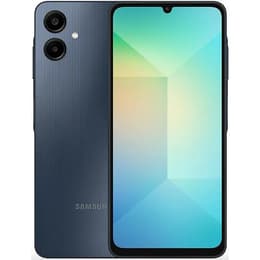
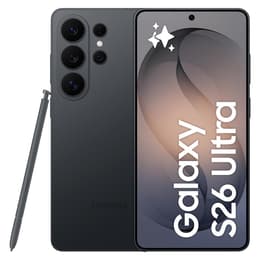
The Samsung Galaxy A06 (2024) and the Samsung Galaxy S26 Ultra (2026) sit at opposite ends of the smartphone spectrum, representing an entry-level device and a cutting-edge flagship respectively. While both run on Google's Android operating system utilizing Samsung's user interface, they cater to entirely different user priorities. The main differentiators lie in their processing architecture, material build, and overall system capabilities.
Available Models
Colour
Storage
Scores
Durability
When examining longevity, these two smartphones offer drastically different timelines based on their market positioning and hardware architecture.
- Release timeline and support: The Galaxy A06 debuted in late 2024 with a standard software support cycle, whereas the Galaxy S26 Ultra launched in early 2026 with an extended multi-year update commitment ensuring long-term security patches.
- Software longevity and hardware endurance: The flagship model provides robust processing headroom for future software demands, while the entry-level model suits users with modest, everyday connectivity requirements.
- Repairability and build maintenance: Both devices follow standard modern assembly practices, though replacement parts for entry-level models are typically more straightforward to source independently over time.
Year of Release
2024
2026
Compatible with latest Update
Yes
Yes
OS
Android
Android
Foldable
No
No
Performance
System responsiveness and day-to-day operation vary significantly due to the internal components powering each device.
- Multitasking and daily tasks: The Galaxy A06 handles basic communication apps, web browsing, and media streaming reliably, while the Galaxy S26 Ultra manages demanding 3D gaming and heavy background multitasking effortlessly without thermal throttling.
- Storage capacity: The entry-level model offers modest onboard storage paired with expandable memory support, whereas the flagship provides extensive internal storage configurations without expandable slots.
- Battery behavior: Both devices house large capacity batteries, but efficient power management in the flagship balances high-resolution demands compared to the simpler hardware configuration of the entry-level alternative.
Screen quality
Display technology defines the visual interaction, presenting contrasting viewing experiences across both form factors.
- Display technology: The Galaxy A06 utilizes a standard liquid crystal display providing clear text and media for everyday viewing, while the Galaxy S26 Ultra features an advanced organic light-emitting diode panel with deep contrast and vibrant color reproduction.
- Brightness and outdoor visibility: Peak brightness levels on the flagship allow for comfortable outdoor legibility under direct sunlight, whereas the entry-level screen is optimized for indoor or shaded environments.
- Refresh rate and smoothness: The flagship incorporates adaptive high refresh rate technology for fluid scrolling, while the entry-level display operates at a standard refresh rate.
Resolution
720 x 1600
1440 x 3120
Audiovisual
Multimedia capture and audio output capabilities reflect the distinct design philosophies of each smartphone line.
- Camera systems: The Galaxy A06 features a functional dual-lens setup suitable for casual daylight snapshots, whereas the Galaxy S26 Ultra employs a versatile multi-lens array including ultra-wide and telephoto capabilities for detailed zoom photography.
- Low-light performance: Advanced image processing sensors on the flagship capture clear details in dim environments, while the entry-level option performs best in well-lit settings.
- Audio and media consumption: Built-in speakers on the flagship deliver rich stereo sound for media playback, contrasted by the standard single speaker or basic setup found on the entry-level variant.
Front camera
8 megapixels
12.0
Miscellaneous
Physical construction and connectivity standards influence daily handling and ecosystem compatibility.
- Connectivity options: The flagship supports advanced wireless standards and rapid data transfer protocols, while the entry-level model covers essential 4G connectivity and standard Bluetooth pairing.
- Physical dimensions and weight: The Galaxy S26 Ultra utilizes durable titanium and reinforced glass frames resulting in a heavier build, whereas the Galaxy A06 relies on a lighter plastic construction for effortless one-handed handling.
- Biometric security: The entry-level device uses a side-mounted fingerprint scanner, while the flagship integrates an advanced ultrasonic under-display sensor alongside secure facial recognition.
Weight
189 g
214 g
Screen size (in)
6.7
6.9
Mobile network
4G
5G
SIM card
Dual Physical SIM
Physical SIM + eSIM
Carrier compatibility
Unlocked
Unlocked
Connector
USB-C + Jack 3.5mm
USB-C
What the community thinks
User discussions across online communities highlight distinct preferences for each device depending on daily requirements. Owners of the Galaxy A06 frequently praise its dependable battery endurance, lightweight frame, and straightforward functionality for calling and messaging. Conversely, users of the Galaxy S26 Ultra consistently commend its expansive display clarity, versatile camera array, and smooth multitasking performance. Frequent criticisms for the entry-level model focus on its limitations with demanding games and slow charging speeds, while flagship discussions often note its heavier physical footprint and premium complexity.
Users prioritizing simple daily communication, lightweight handling, and foundational smartphone features will find the Galaxy A06 well-suited to their needs. Meanwhile, users prioritizing advanced photography, maximum processing power, and a high-end viewing experience may lean toward the Galaxy S26 Ultra. For those seeking an eco-friendly alternative, exploring a quality-assured refurbished option provides a sustainable path to acquiring advanced mobile technology without compromising on performance standards.