
Google Pixel 8 Pro Vs iPhone 16 Plus

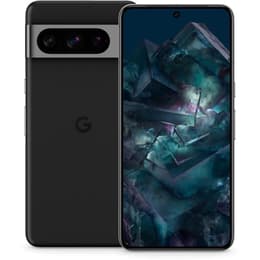
Google Pixel 8 Pro
Google Pixel 8 Pro
Starting at

Refurbished price:£253.00

Versus £960.91 new

See options
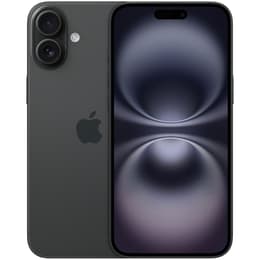
iPhone 16 Plus
iPhone 16 Plus
Starting at

Refurbished price:£502.00

Versus £799.00 new

See options

Ratings

The Google Pixel 8 Pro, released in October 2023, and the iPhone 16 Plus, launched in September 2024, represent distinct approaches to the premium smartphone experience. While both offer robust performance and advanced camera systems, they cater to different user preferences through their respective operating systems and unique feature sets. The Pixel 8 Pro runs on Android, emphasizing Google's AI capabilities and a versatile camera, whereas the iPhone 16 Plus operates on iOS, focusing on a streamlined user experience, strong ecosystem integration, and enhanced durability.

Scores

Durability

When considering the long-term viability of these devices, both the Pixel 8 Pro and the iPhone 16 Plus offer substantial software support and physical resilience.

  • Software Longevity: The Google Pixel 8 Pro stands out with a commitment to seven years of operating system updates, ensuring a prolonged period of access to the latest Android features and security patches. The iPhone 16 Plus, running iOS, typically receives major iOS updates for five to seven years, with security updates often extending beyond that timeframe.
  • Physical Durability: Both smartphones feature an IP68 rating for dust and water resistance, indicating protection against immersion. The iPhone 16 Plus incorporates a Ceramic Shield front cover, designed for enhanced drop performance, while the Pixel 8 Pro utilizes a frosted glass back and a polished aluminum frame.
  • Repairability: The iPhone 16 Plus has seen significant improvements in repairability, achieving a score of 7 out of 10 from iFixit, a notable increase from its predecessor. Information regarding the Pixel 8 Pro's repairability score is less prominent, but Google has generally made efforts to improve repair access for its devices.

Year of Release

2023

2024

Compatible with latest Update

Yes

Yes

Foldable

No

No

Performance

Both devices deliver smooth and responsive performance for daily tasks, though their underlying architectures differ.

  • System Responsiveness: The iPhone 16 Plus is powered by Apple's A18 chip, which provides swift app loading, fluid navigation, and efficient handling of demanding applications and multitasking. The Pixel 8 Pro, featuring Google's Tensor G3 processor, is optimized for AI-driven tasks and offers a generally smooth user experience, though some benchmarks suggest it may not match the raw processing power of its Apple counterpart.
  • Battery Behavior: The iPhone 16 Plus is noted for its exceptional battery life, with users often reporting it can last for 1.5 days of typical use, making it a strong choice for those prioritizing endurance. The Pixel 8 Pro, equipped with a 5050 mAh battery, generally provides a full day of mixed use, though some users find its battery performance to be average compared to other flagship devices.
  • Storage Options: Both models offer various internal storage configurations, typically starting from 128GB and extending to 512GB, providing ample space for apps, photos, and media. Neither device supports expandable storage via microSD cards.

Memory (GB)

12 GB

8 GB

Screen quality

The visual experience on both the Pixel 8 Pro and the iPhone 16 Plus is characterized by vibrant colors and high clarity, though with some key distinctions.

  • Display Technology and Clarity: The Google Pixel 8 Pro features a 6.7-inch Super Actua OLED display with a resolution of 1344 x 2992 pixels, resulting in a pixel density of approximately 489 pixels per inch (ppi). The iPhone 16 Plus also sports a 6.7-inch Super Retina XDR OLED display, offering a resolution of 2796 x 1290 pixels at approximately 460 ppi. Both displays provide deep blacks and excellent contrast.
  • Brightness and Refresh Rate: The Pixel 8 Pro's display boasts an adaptive refresh rate that can scale from 1Hz to 120Hz, contributing to smoother scrolling and more fluid animations, and can reach a peak brightness of 2400 nits. In contrast, the iPhone 16 Plus maintains a standard 60Hz refresh rate, which some users may find less fluid for fast-paced content, but it offers a peak outdoor brightness of 2000 nits.
  • Design Elements: The Pixel 8 Pro features a perfectly flat display, which some users prefer for usability. The iPhone 16 Plus includes the Dynamic Island, an interactive area at the top of the display that adapts to show alerts and background activities.

Resolution

1344 x 2992

1290 x 2796

Screen type

LTPO OLED

Super Retina XDR OLED

Audiovisual

Both smartphones offer advanced camera systems, leveraging computational photography to produce high-quality images and videos, but with different hardware configurations and features.

  • Rear Camera Systems: The Google Pixel 8 Pro is equipped with a versatile triple-camera setup, including a 50MP main sensor, a 48MP ultrawide lens with autofocus and macro capabilities, and a 48MP telephoto lens offering 5x optical zoom. This allows for detailed shots across various focal lengths. The iPhone 16 Plus features an advanced dual-camera system with a 48MP Fusion Main camera that can achieve a 2x optical quality telephoto effect by cropping the sensor, and a 12MP ultrawide camera.
  • Photography Features: The Pixel 8 Pro offers 'Pro controls' for manual adjustments of settings like ISO and shutter speed, appealing to users who desire more creative control. It also excels in low-light performance and computational photography features like Magic Editor. The iPhone 16 Plus introduces a new Camera Control button for quick access to camera tools and supports Spatial Capture for 3D photos and videos, designed for viewing on compatible headsets.
  • Video and Front Camera: Both devices are capable of high-quality video recording, with the iPhone 16 Plus supporting 4K Dolby Vision video. The Pixel 8 Pro has a 10.5MP front camera with autofocus, while the iPhone 16 Plus features a 12MP front camera, also with autofocus, suitable for clear selfies and video calls.

Main camera

50 megapixels

48 megapixels

Front camera

10.5 megapixels

12 megapixels

Miscellaneous

Beyond core performance and display, several practical elements differentiate these two devices in terms of user interaction and connectivity.

  • Connectivity Standards: Both the Pixel 8 Pro and the iPhone 16 Plus support 5G cellular connectivity and the latest Wi-Fi 7 standard, ensuring fast wireless data speeds. They also feature Bluetooth 5.3 for efficient accessory pairing. The iPhone 16 Plus includes Apple's Ultra Wideband chip and Thread networking technology for enhanced spatial awareness and smart home integration.
  • Ports and Buttons: The iPhone 16 Plus has adopted a USB-C port for charging and data transfer, replacing the older Lightning connector. It also features an Action button, which is customizable to perform various functions, and a dedicated Camera Control button. The Pixel 8 Pro also uses a USB-C port and includes an in-display fingerprint sensor, alongside an improved face unlock system.
  • Physical Characteristics and Sensors: The iPhone 16 Plus is slightly lighter at 199 grams compared to the Pixel 8 Pro's 213 grams. The Pixel 8 Pro uniquely includes a temperature sensor. Both devices incorporate essential sensors like accelerometers, gyroscopes, and ambient light sensors for various functionalities.

Weight

213 g

199 g

Screen size (in)

6.7

6.7

Mobile network

5G

5G

SIM card

Physical SIM + eSIM

Physical SIM + eSIM

Carrier compatibility

Unlocked

Unlocked

The Google Pixel 8 Pro and the iPhone 16 Plus each present a compelling package, tailored to different user priorities. Users often praise the Pixel 8 Pro for its exceptional camera capabilities, particularly its versatile zoom and advanced computational photography features, making it a strong contender for photography enthusiasts. Its long-term software support commitment is also a significant advantage for those who keep their devices for many years. However, some users have noted that its battery life, while good, might not always match the endurance of some competitors, and its processor performance, while sufficient for most tasks, may not always lead in raw benchmarks.

Conversely, the iPhone 16 Plus is frequently lauded for its outstanding battery life, providing extended usage on a single charge, and its seamless integration within the Apple ecosystem. Its improved repairability is also a welcome change for users concerned about device longevity. Criticisms often revolve around its 60Hz display, which can feel less fluid compared to higher refresh rate screens on other premium smartphones, and the absence of a dedicated telephoto lens, relying instead on digital zoom from its main sensor.

Users prioritizing a highly capable and versatile camera system with extensive manual controls and a long software update promise will likely find the Google Pixel 8 Pro well-suited to their needs. Those who value exceptional battery life, a highly polished user experience, robust ecosystem integration, and improved repairability may lean towards the iPhone 16 Plus. Both devices offer quality-assured refurbished options, providing an eco-friendly alternative for consumers seeking to make a sustainable choice.

See all articles

Our recent comparisons