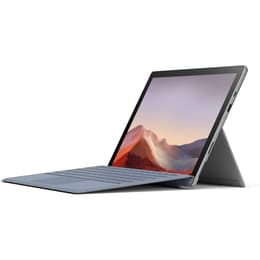
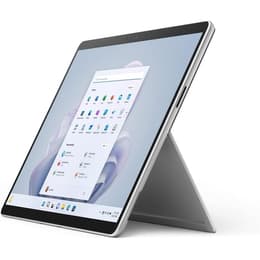

Microsoft Surface Pro 7 12" Vs Microsoft Surface Pro 9 13"

Microsoft Surface Pro 7 12"
Starting at

Refurbished price:£184.00

Versus £1,509.25 new

See options
Microsoft Surface Pro 9 13"
Starting at

Refurbished price:£813.00

Versus £1,579.00 new

See options

The Microsoft Surface Pro 7, released in October 2019, and the Microsoft Surface Pro 9, launched in October 2022, represent different generations of Microsoft's versatile 2-in-1 detachable tablet line. While both devices offer the flexibility of a tablet and the functionality of a laptop, the Surface Pro 9 introduces significant advancements in internal components, display technology, and repairability. Both models operate on the Windows platform, with the Pro 7 initially running Windows 10 and the Pro 9 shipping with Windows 11.

Scores

Durability

The expected practical lifespan of a device is influenced by its release timeline, software support, and ease of repair. The Surface Pro 7 and Surface Pro 9 show notable differences in these areas.

  • Release Timeline and OS Support: The Surface Pro 7, being an older model, originally shipped with Windows 10, which reached its end of support on October 14, 2025. While it can be upgraded to Windows 11, its overall software support window will be shorter than the Surface Pro 9, which was released with Windows 11 and benefits from a longer update cycle.
  • Repairability: The Surface Pro 7 received a low repairability score of 1 out of 10 from iFixit, indicating significant challenges in repair due to extensive use of glue and soldered components, making repairs difficult and costly. In contrast, the Surface Pro 9 marks a substantial improvement with a provisional iFixit score of 7 out of 10. This is attributed to design changes like a screw-secured battery and an easily accessible SSD hatch, with Microsoft also committing to providing repair guides and spare parts.
  • Software Longevity: Users of the Surface Pro 9 can expect extended software longevity due to its newer release and native support for Windows 11, which receives ongoing feature and security updates. The Surface Pro 7's reliance on an older operating system means its active support period is concluding, potentially impacting its long-term usability for those requiring the latest software features and security patches.

Year of Release

2019

2022

Last Os Compatibility

Yes

Yes

OS

Windows 11

Windows 11

Performance

Performance is a key differentiator between these two generations, impacting everything from daily tasks to more demanding applications. The Surface Pro 9 offers a more robust experience across various usage scenarios.

  • Processor Capabilities: The Surface Pro 7 is equipped with a 10th-generation processor, which capably handles everyday computing tasks such as web browsing, document editing, and video streaming. The Surface Pro 9, featuring a 12th-generation processor (or the Microsoft SQ3 for 5G models), delivers a significantly more responsive experience, excelling in multitasking, running demanding applications, and handling complex workflows with greater efficiency.
  • System Responsiveness and RAM: The Surface Pro 9 benefits from newer, faster LPDDR5 RAM options (up to 32GB for Intel models), contributing to smoother transitions between applications and more efficient handling of multiple programs simultaneously. The Surface Pro 7 uses LPDDR4x RAM (up to 16GB), which is suitable for general use but may show limitations with heavy multitasking or resource-intensive software.
  • Storage and Battery Behavior: Both devices offer various SSD storage options up to 1TB. The Surface Pro 9 features a removable SSD, offering more flexibility for upgrades or data recovery. In terms of battery, the Surface Pro 9 (Intel models) offers up to 15.5 hours of typical use, with the SQ3 variant extending this to up to 19 hours, though real-world usage often results in around 5-6 hours for Intel models. The Surface Pro 7 typically provides around 10.5 hours of advertised battery life, with users reporting closer to 6 hours in practical use.

Memory (GB)

8 GB

8 GB

Processor

Core i5 - Gen 10 (G4)

Core i5-1235U

Graphic card

Integrated Graphics

Integrated Graphics

Screen quality

The visual experience is a significant aspect of a 2-in-1 device, and the Surface Pro 9 introduces notable enhancements to its display compared to its predecessor.

  • Display Technology and Clarity: Both the Surface Pro 7 and Surface Pro 9 feature PixelSense displays with a 3:2 aspect ratio, providing ample vertical screen real estate suitable for productivity tasks. The Surface Pro 7 has a 12.3-inch display with a resolution of 2736 x 1824 pixels. The Surface Pro 9 upgrades to a slightly larger 13-inch PixelSense Flow display with a resolution of 2880 x 1920 pixels, maintaining a similar pixel density for clear visuals.
  • Refresh Rate and Smoothness: A key improvement in the Surface Pro 9 is its dynamic refresh rate, which can go up to 120Hz, providing a noticeably smoother scrolling experience and more fluid animations compared to the Surface Pro 7's standard 60Hz refresh rate. This difference is particularly apparent during fast-paced content or pen input.
  • Brightness and Durability: The Surface Pro 9's display is protected by Corning Gorilla Glass 5, offering enhanced durability against scratches and minor impacts. While both displays offer good brightness for indoor use, the Surface Pro 9's display, with its improved contrast ratio and adaptive color features, generally provides a more vibrant viewing experience, especially in varying lighting conditions.

Resolution

2736 x 1824

2880 x 1920

Screen type

IPS

LED

Audiovisual

For communication and content capture, both Surface Pro models include integrated cameras and audio capabilities, with the Surface Pro 9 offering updated specifications.

  • Camera System Capabilities: The Surface Pro 7 features a 5-megapixel front-facing camera and an 8-megapixel rear-facing camera, both capable of 1080p video recording, suitable for video calls and basic photography. The Surface Pro 9 enhances this with a 1080p front webcam and a 10-megapixel rear camera that supports 4K video recording, providing clearer images and more detailed video capture.
  • Microphone and Speaker Quality: Both devices incorporate dual far-field studio microphones designed to capture clear audio during calls and recordings, even in noisy environments. The Surface Pro 9 also integrates Windows Studio features, enabled by its Neural Processing Unit (NPU) in SQ3 models, which can enhance video calls with features like auto-framing and background blur.
  • Media Consumption Experience: Both models offer integrated speakers for media consumption. While the Surface Pro 7 provides adequate sound, the Surface Pro 9 generally offers a more refined audio experience, contributing to a better overall media consumption experience.

Miscellaneous

Beyond core performance and display, several practical elements differentiate the Surface Pro 7 and Surface Pro 9, influencing daily usability and connectivity.

  • Connectivity and Ports: The Surface Pro 7 includes one USB-C port, one traditional USB-A port, a 3.5mm headphone jack, and a microSD card reader, alongside the Surface Connect port. It supports Wi-Fi 6 and Bluetooth 5.0. The Surface Pro 9 features two USB-C ports (Thunderbolt 4 for Intel models, USB 3.2 for SQ3 models) and the Surface Connect port. It notably omits the 3.5mm headphone jack and microSD card slot. The SQ3 variant also offers 5G connectivity, while Intel models support Wi-Fi 6E and Bluetooth 5.1.
  • Weight, Dimensions, and Build Materials: The Surface Pro 7 has a magnesium chassis and weighs approximately 796g to 805g, with dimensions of 11.5 x 7.9 x 0.33 inches. The Surface Pro 9 features an aluminum chassis and is slightly heavier, ranging from 879g to 907g, with dimensions of 11.3 x 8.23 x 0.37 inches. While the Pro 7 is marginally thinner and lighter, the Pro 9's aluminum build offers a different tactile feel.
  • Sensors and Security: Both devices include sensors like accelerometers, magnetometers, and gyroscopes. For security, both support Windows Hello facial recognition. The Surface Pro 9 also incorporates a TPM 2.0 chip and Windows 11 Secure-core PC standards, enhancing its security features.

Weight

775 g

883 g

Screen size

12

13

The Microsoft Surface Pro 7 and Surface Pro 9 cater to different user needs, largely due to the generational gap in their technology and design philosophy. User feedback for the Surface Pro 7 often praises its familiar design, the inclusion of a USB-A port, a 3.5mm headphone jack, and a microSD card slot, which many found convenient. However, common criticisms include its limited battery life in real-world usage and its challenging repairability.

The Surface Pro 9, on the other hand, is frequently lauded for its significantly improved performance, the smoother 120Hz display, and a much-improved repairability score, making it a more sustainable choice for long-term use. Users appreciate the option for 5G connectivity in the SQ3 models and the overall modern feel. Criticisms often revolve around the removal of the headphone jack and microSD card slot, and some users note that the advertised battery life can be optimistic in practice.

Users prioritizing traditional connectivity options, including USB-A and expandable storage via microSD, might find the Surface Pro 7 better suited to their existing accessories and workflows. It remains a capable device for general productivity and media consumption. However, for those who require a device with more robust performance for demanding applications, a smoother visual experience, and a longer software support lifespan, the Surface Pro 9 presents a compelling option. Its enhanced repairability also makes it a more practical choice for users considering the longevity of their device. Both models, especially when considering quality-assured refurbished options, offer an eco-friendly alternative to purchasing new, allowing users to make informed decisions that align with both their needs and environmental considerations.

See all articles

Our recent comparisons