
iPad Air 6 (2024, M2 series) Vs iPad Air 7 (2025, M3 series)

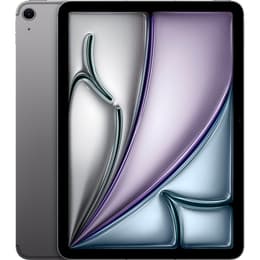
iPad Air 6 (2024, M2 series)
Starting at

Refurbished price:£404.00

Versus £599.00 new

See options
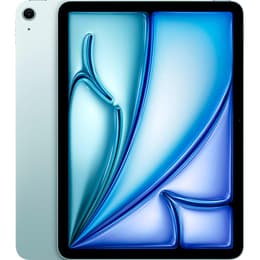
iPad Air 7 (2025, M3 series)
Starting at

Refurbished price:£456.00

Versus £599.00 new

See options

Ratings

The iPad Air M2 Series, released in May 2024, and the iPad Air M3 Series, launched in March 2025, represent consecutive generations of Apple's mid-range tablet line. While both devices share a similar design philosophy and core functionalities, the M3 model introduces an updated internal processor and enhanced software capabilities, building upon the foundation laid by its predecessor. Both tablets operate on Apple's iPadOS, offering a consistent user experience across the ecosystem.

Scores

Durability

When considering the practical lifespan of these tablets, several factors come into play, primarily their release dates and subsequent software support.

  • Release Timeline: The iPad Air M2 Series was released in May 2024, while the iPad Air M3 Series followed in March 2025. The M2 model was discontinued in March 2025, whereas the M3 model was discontinued in March 2026.
  • OS Support Duration: Both devices receive regular iPadOS updates, which typically extend for several years from their release. The iPad Air M2 shipped with iPadOS 17.5, and the M3 model launched with iPadOS 18. Given the M3's later release, it is expected to receive software updates for approximately one year longer than the M2, offering extended access to new features and security enhancements.
  • Repairability: Both generations of iPad Air maintain a similar construction, suggesting comparable repairability. Users can expect a practical lifespan influenced by software longevity and the availability of parts for potential repairs.

Year of Release

2024

2025

Compatible with latest Update

Yes

Yes

OS

iPadOS

iPadOS

Maximum Operating System supported

iPadOS 18

iPadOS 18

Performance

The performance of the iPad Air models is largely defined by their internal processing units, impacting how smoothly they handle various tasks from everyday browsing to demanding applications.

  • Processor Capabilities: The iPad Air M2 Series is powered by a capable processor that handles multitasking and graphically intensive applications efficiently. The iPad Air M3 Series features a newer generation processor, which offers improved performance, particularly in multi-threaded CPU workflows and graphics processing. This translates to a more responsive experience for complex tasks like 3D rendering and high-end gaming.
  • System Responsiveness: Both tablets provide a fluid user experience for general navigation and app usage. However, the M3 model's enhanced processing power means it can manage more intensive workloads with greater ease, potentially offering a smoother experience when running multiple demanding applications simultaneously or engaging with advanced AI features.
  • Storage Options: Both the M2 and M3 iPad Air models offer a range of storage configurations, starting from 128GB and extending up to 1TB, providing ample space for applications, media, and documents. Both models come with 8GB of unified memory, which supports efficient multitasking.

Memory (GB)

8 GB

8 GB

Processor

Apple M2

Apple M3

Screen quality

The visual experience on both iPad Air models is delivered through their Liquid Retina displays, offering clarity and vibrant colors for various content types.

  • Display Technology: Both the iPad Air M2 and M3 Series feature Liquid Retina displays, which are LED-backlit Multi-Touch displays with IPS technology. These displays offer P3 wide color support and True Tone technology, which adjusts the screen's white balance to match the ambient light.
  • Resolution and Brightness: Both generations are available in 11-inch and 13-inch sizes. The 11-inch models have a resolution of 2360x1640 pixels at 264 pixels per inch (ppi) and a brightness of 500 nits. The 13-inch models feature a 2732x2048 pixel resolution at 264 ppi and a brightness of 600 nits.
  • Refresh Rate: Both the M2 and M3 iPad Air models maintain a standard 60Hz refresh rate, which provides a consistent viewing experience for most users, though it is not as fluid as higher refresh rate displays found on some other devices.

Resolution

2360 x 1640

2360 x 1640

True Tone

Yes

Yes

Pro-Motion

No

No

Screen type

Liquid Retina display

Liquid Retina display

Pixel density

264ppp

264ppp

Brightness

500 nits brightness

500 nits brightness

Sound quality

Speakers

Stereo speakers (landscape)

Stereo speakers (landscape)

Audiovisual

The camera systems on both iPad Air models are designed for everyday photography, video calls, and document scanning, with a focus on practical utility.

  • Camera System Capabilities: Both the iPad Air M2 and M3 Series are equipped with a 12-megapixel Wide camera on the rear, capable of recording 4K video. The front-facing camera on both models is a 12-megapixel Ultra Wide camera, positioned on the landscape edge, and features Center Stage, which automatically keeps subjects in view during video calls.
  • Photography Performance: These cameras perform well in various lighting conditions for general photography and document capture. The Center Stage feature on the front camera enhances video conferencing by dynamically adjusting the frame to include participants.
  • Audio Experience: Both models feature landscape stereo speakers, providing an immersive audio experience for media consumption. They also include dual microphones for clear audio input during calls and recordings.

Miscellaneous

Beyond core performance and display, several practical features contribute to the overall user experience and versatility of these iPad Air models.

  • Connectivity Options: Both the iPad Air M2 and M3 Series support Wi-Fi 6E for fast wireless networking and Bluetooth 5.3 for connecting accessories. Cellular models of both generations also offer 5G connectivity. The M3 model specifically highlights advanced eSIM technology.
  • Port Types: Both tablets feature a USB-C port, which supports charging, DisplayPort for external displays, and data transfer speeds of up to 10Gb/s (USB 3).
  • Physical Characteristics: The dimensions and weight are largely consistent between the M2 and M3 generations for corresponding screen sizes. The 11-inch models weigh approximately 461-462 grams, and the 13-inch models weigh around 616-618 grams, making them portable for their respective sizes. Both models incorporate Touch ID in the top button for secure authentication.

Weight

462 g

460 g

Width

17.8 cm

178.5 cm

Height

24 cm

247.6 cm

Depth

0.61 cm

6.1 cm

Screen size (in)

11

11

Network

Wi-Fi

Wi-Fi

Carrier compatibility

Without SIM Port

Without SIM Port

Wi-Fi technology

Wi-Fi 6E 802.11ax

Wi-Fi 6 802.11ax

Bluetooth Version

Bluetooth 5.3

Bluetooth 5.3

Face ID

No

No

Touch ID

Yes

Yes

Connector

USB Type-C

USB Type-C

The iPad Air M2 and M3 Series both offer compelling tablet experiences, catering to different user needs based on their priorities. Users generally praise both models for their sleek design, robust build quality, and the versatility offered by iPadOS. Common positive feedback often highlights the bright and clear Liquid Retina displays, making them suitable for content consumption and creative tasks. The inclusion of the landscape-oriented front camera with Center Stage is also a well-received feature for video calls. Some users, however, have noted the continued use of a 60Hz refresh rate on the display as a point of criticism, especially when compared to devices with smoother, higher refresh rate screens. The M2 model, having been discontinued, may be a consideration for those seeking a quality-assured refurbished option.

Users prioritizing a balance of performance and cost-effectiveness for everyday tasks, media consumption, and light productivity will find the iPad Air M2 Series to be a highly capable device. Its processing power remains sufficient for a wide range of applications, and its slightly older release date might make it an attractive eco-friendly alternative. For users who require the latest processing power for more demanding applications, advanced AI features, or who desire the longest possible software support timeline, the iPad Air M3 Series presents a more future-proof option. Its enhanced processor and newer software capabilities are particularly beneficial for professionals or students engaged in intensive creative work or complex multitasking. Ultimately, the choice between these two generations depends on the individual's specific usage patterns and their emphasis on cutting-edge performance versus established capability.

See all articles

Our recent comparisons