
Google Pixel 9a Vs Motorola Moto G13

Google Pixel 9a
Google Pixel 9a
Starting at

Refurbished price:£319.00

Versus £499.00 new

See options
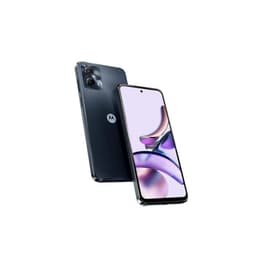
Motorola Moto G13
Motorola Moto G13
Starting at

Refurbished price:£99.00

Versus £166.76 new

See options

Ratings

The Google Pixel 9a, released in April 2025, and the Motorola Moto G13, launched in January 2023, are both Android smartphones designed for different segments of the market. While the Pixel 9a focuses on advanced computational photography and a long software support window, the Moto G13 offers a straightforward Android experience with a strong emphasis on battery longevity. Both devices run on the Android operating system, but they differ significantly in their hardware capabilities and expected lifespan.

Scores

Durability

The practical lifespan of a smartphone is heavily influenced by its release date and the manufacturer's commitment to software updates and security patches. These factors determine how long a device remains functional, secure, and compatible with new applications.

  • Release Timeline: The Google Pixel 9a was released in April 2025, making it a more recent device compared to the Motorola Moto G13, which launched in January 2023. This age difference inherently provides the Pixel 9a with a longer runway for future relevance.
  • Software Longevity: Google offers an extensive software support policy for the Pixel 9a, promising seven years of OS and security updates, extending its support until at least March 2032. In contrast, the Motorola Moto G13 launched with Android 13 and was promised one major OS upgrade to Android 14 and three years of security patches, with support ending around January 2026. This means the Pixel 9a will receive significantly more updates, ensuring compatibility with newer apps and features for a much longer period.
  • Durability Features: The Pixel 9a features an IP68 rating for dust and water resistance, offering robust protection against environmental elements. The Moto G13 has a water-repellent design with an IP52 rating, providing basic splash resistance. Both devices use glass for screen protection, with the Pixel 9a featuring Corning Gorilla Glass 3 and the Moto G13 using Panda Glass.

Year of Release

2025

2023

Compatible with latest Update

Yes

No

OS

Android

Android

Foldable

No

No

Performance

Performance in smartphones is about how smoothly the device handles daily tasks, from opening applications to managing multiple processes simultaneously. The underlying hardware plays a crucial role in this experience.

  • Processor Capabilities: The Google Pixel 9a is equipped with a current-generation processor, enabling it to handle demanding applications and multitasking with notable smoothness. This allows for efficient execution of complex tasks and AI-powered features. The Motorola Moto G13 uses a processor designed for everyday tasks, providing adequate performance for general use and casual gaming.
  • System Responsiveness: Users of the Pixel 9a generally report a fast and fluid operating system experience, with quick app loading and smooth transitions. The Moto G13 offers a clean Android interface, contributing to a responsive feel for its class, though some users might notice occasional minor delays during intensive use.
  • Storage and Multitasking: The Pixel 9a comes with 8GB of RAM and storage options of 128GB or 256GB, providing ample space for applications and data, and supporting efficient multitasking. The Moto G13 typically offers 4GB of RAM and 64GB or 128GB of internal storage, which is expandable via a microSD card, allowing users to increase storage capacity for media and files.

Memory (GB)

8 GB

4 GB

Screen quality

The display is a primary interface for smartphone interaction, and its quality significantly impacts the viewing experience for everything from browsing to media consumption.

  • Display Technology and Clarity: The Google Pixel 9a features a 6.3-inch OLED display, which delivers deep blacks, vibrant colors, and excellent contrast. Its FHD+ resolution (1080x2424 pixels) results in sharp and clear visuals. The Motorola Moto G13 has a 6.5-inch IPS LCD screen with an HD+ resolution (720x1600 pixels). This display provides acceptable clarity for general use, though it may not offer the same level of detail or color richness as an OLED panel.
  • Brightness and Outdoor Visibility: The Pixel 9a's display offers high brightness levels, reaching up to 1800 nits for HDR content and a peak of 2700 nits, making it highly visible even in bright outdoor conditions. The Moto G13's display has acceptable brightness for indoor use, but outdoor visibility can be challenging under direct sunlight.
  • Refresh Rate and Smoothness: The Pixel 9a supports a variable refresh rate of 60-120Hz, contributing to smoother scrolling and a more fluid user experience. The Moto G13 features a 90Hz refresh rate, which provides a smoother visual experience compared to standard 60Hz displays, enhancing the perception of fluidity during navigation.

Resolution

2424 x 1080

720 x 1600

Audiovisual

Camera performance is a key consideration for many users, encompassing the quality of photos and videos, as well as the overall media consumption experience.

  • Photography Capabilities: The Google Pixel 9a is known for its advanced camera system, featuring a 48MP main camera with optical image stabilization (OIS) and a 13MP ultrawide lens. It excels in various lighting conditions, producing detailed images with accurate colors and strong low-light performance, often enhanced by Google's computational photography. The Motorola Moto G13 includes a 50MP main camera, complemented by 2MP macro and 2MP depth sensors. It delivers decent photos in good lighting, with immersive colors and fine contrast, but its performance in low-light scenarios is more modest.
  • Video Recording and Stability: The Pixel 9a supports 4K video recording at both 30 and 60 frames per second on its main camera, with good stability and dynamic range, while the ultrawide and front cameras record at 4K 30fps. The Moto G13 records video at 1080p at 30 frames per second.
  • Audio Experience: The Pixel 9a provides clear audio for calls and media playback. The Moto G13 features stereo speakers with Dolby Atmos support, offering loud and clear audio output, which is a notable feature for its category. It also retains a 3.5mm headphone jack.

Front camera

13 megapixels

8 megapixels

Miscellaneous

Beyond the core features, several practical elements contribute to the overall usability and convenience of a smartphone, from connectivity to physical design.

  • Connectivity and Ports: The Google Pixel 9a supports 5G connectivity and Wi-Fi 6E, offering faster wireless speeds and improved network performance. It features a USB Type-C port for charging and data transfer. The Motorola Moto G13 supports 4G LTE, dual-band Wi-Fi 5 (802.11 a/b/g/n/ac), and Bluetooth 5.1. It also includes a USB Type-C port and a 3.5mm headphone jack, which is a convenient addition for wired audio.
  • Biometric Security: The Pixel 9a incorporates an optical under-display fingerprint scanner for secure and convenient unlocking. The Moto G13 features a side-mounted fingerprint sensor, integrated into the power button, and also supports face unlock.
  • Design and Handling: The Pixel 9a has a 6.3-inch display, offering a comfortable grip, though some users note it can be slippery. It features an IP68 rating for enhanced durability. The Moto G13, with its 6.5-inch display, maintains a comfortable and lightweight design, weighing approximately 183.45 grams, and has a water-repellent build.

Weight

186 g

183 g

Screen size (in)

6.3

6.5

Mobile network

5G

4G

SIM card

Physical SIM + eSIM

Dual Physical SIM

Carrier compatibility

Unlocked

Unlocked

The Google Pixel 9a and Motorola Moto G13 cater to different user needs and expectations, largely due to their distinct release timelines and feature sets. The Pixel 9a, being a more recent device, benefits from a powerful processor, a vibrant OLED display, and a highly capable camera system, often praised for its computational photography and AI features. Users frequently commend its long-term software support and overall smooth performance. However, some early users noted occasional software bugs and slower charging speeds compared to some rivals.

The Motorola Moto G13, while an older model, is often lauded for its robust battery life, clean Android user interface, and the inclusion of features like a 90Hz display and stereo speakers with Dolby Atmos, which are appreciated in its category. Common criticisms include its more modest camera performance, slower charging, and the presence of some pre-installed applications despite its generally clean software.

Users prioritizing cutting-edge camera technology, extended software longevity, and a powerful, responsive experience for demanding applications will find the Google Pixel 9a well-suited to their needs. Its 5G connectivity and high-resolution OLED screen also make it a strong choice for media consumption and staying current with mobile technology. Conversely, individuals seeking a reliable device for essential daily tasks, with excellent battery endurance and a straightforward Android experience, may lean towards the Motorola Moto G13. Its expandable storage and traditional headphone jack also appeal to users who value these practical features.

For those considering either device, exploring quality-assured refurbished options can provide an eco-friendly alternative, offering access to these technologies while supporting sustainable consumption.


See all articles

Our recent comparisons