
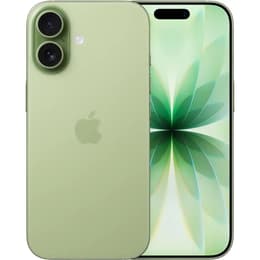

Google Pixel 9 Vs iPhone 17

Google Pixel 9
Google Pixel 9
Starting at

Refurbished price:£330.00

Versus £892.46 new

See options
iPhone 17
iPhone 17
Starting at

Refurbished price:£688.00

Versus £799.00 new

See options

Ratings

The Google Pixel 9, released in August 2024, and the iPhone 17, launched in September 2025, represent distinct approaches to the modern smartphone experience. While both devices offer premium features, they cater to different user preferences through their respective operating systems and hardware philosophies. The Pixel 9 operates on Android, emphasizing Google's AI integration, while the iPhone 17 runs on iOS, focusing on a cohesive ecosystem and refined user experience. Key differentiators include their release timelines, display technologies, and camera systems.

Scores

Durability

When considering the long-term usability of a smartphone, factors like software support, physical resilience, and repairability are crucial.

  • Release Timeline: The iPhone 17, released in September 2025, benefits from being a full year newer than the Google Pixel 9, which launched in August 2024. This difference inherently provides the iPhone 17 with a longer period of anticipated software updates and overall support from its manufacturer.
  • Software Longevity: Google has committed to providing seven years of OS, security, and Pixel Drop updates for the Pixel 9 series, ensuring extended software relevance. Apple typically offers 5-6 years of major iOS updates for its devices, meaning the iPhone 17 will likely receive support for a comparable, if not slightly longer, duration due to its later release.
  • Physical Durability: The Pixel 9 features Corning Gorilla Glass Victus 2 on both its front and back, along with an IP68 rating for water and dust resistance. Apple's iPhone 17 incorporates Ceramic Shield 2 on its front display, which is noted for enhanced scratch resistance, and also carries an IP68 rating for water and dust protection, rated for submersion up to 6 meters for 30 minutes. While both offer robust protection, some user reports suggest the iPhone 17's aluminum frame might show cosmetic wear more readily than previous titanium models.

Year of Release

2024

2025

Compatible with latest Update

Yes

Yes

OS

Android

iOS

Foldable

No

No

Performance

The performance of a smartphone is largely determined by its internal processing capabilities and how efficiently it manages tasks and power.

  • Processing Power: The Google Pixel 9 is powered by the Google Tensor G4, designed to handle demanding applications and integrate advanced AI features smoothly. The iPhone 17 features the Apple A19 SoC, which delivers fast performance and power efficiency, supporting a fluid user experience across iOS applications.
  • Multitasking and Responsiveness: The Pixel 9 comes with 12GB of RAM, facilitating efficient multitasking and quick app switching. The iPhone 17 is equipped with 8GB of RAM, optimized by iOS to maintain smooth performance even with multiple applications running simultaneously.
  • Battery Behavior: The Pixel 9 houses a 4700 mAh battery, with real-world usage often providing a full day of power, particularly when connected to Wi-Fi. The iPhone 17 has a 3692 mAh battery, which in tests has shown to last around 12 hours and 47 minutes, and up to 18-20 hours with moderate use. Both devices support fast charging, with the Pixel 9 offering 27W wired charging and the iPhone 17 capable of reaching 50% charge in approximately 30 minutes.

Memory (GB)

12 GB

8 GB

Screen quality

The display is a primary interface for smartphone interaction, and both devices offer high-quality visual experiences with distinct characteristics.

  • Display Technology and Clarity: Both the Google Pixel 9 and the iPhone 17 feature OLED displays, known for deep blacks and vibrant colors. The Pixel 9 has a 6.3-inch OLED screen with a 1080x2424 pixel resolution, resulting in 422 pixels per inch (ppi). The iPhone 17 also has a 6.3-inch OLED display, but with a higher resolution of 2622x1206 pixels, yielding approximately 460 ppi, which provides a slightly sharper image.
  • Refresh Rate and Smoothness: The Pixel 9 offers a refresh rate that dynamically adjusts between 60Hz and 120Hz, contributing to smooth scrolling and responsive interactions. The iPhone 17 introduces ProMotion technology to its standard model, providing an adaptive refresh rate from 1Hz up to 120Hz, which enhances fluidity and can also contribute to power efficiency.
  • Brightness for Visibility: For outdoor visibility, the Pixel 9 can reach a peak brightness of up to 2700 nits. The iPhone 17 offers a higher peak brightness of up to 3000 nits, which can improve readability in bright sunlight.

Resolution

1080 x 2424

2622x1206

Screen type

OLED

Super Retina XDR

Audiovisual

The camera systems on both the Google Pixel 9 and the iPhone 17 are designed to capture high-quality images and videos, each with its own strengths.

  • Rear Camera Systems: The Pixel 9 features a dual-camera setup on the rear, consisting of a 50-megapixel wide-angle lens with an f/1.68 aperture and a 48-megapixel ultrawide lens with an f/1.7 aperture. The iPhone 17 also comes with a dual-camera system, referred to as a Dual Fusion camera system, featuring a 48-megapixel main lens with an f/1.6 aperture and a 48-megapixel ultrawide lens with an f/2.2 aperture.
  • Photography Performance: The Pixel 9 leverages Google's computational photography for enhanced image processing, often excelling in various lighting conditions. The iPhone 17's Fusion camera system is designed for detailed photos, with its main lens also capable of 2x optical-quality telephoto shots.
  • Front Camera and Video Capabilities: For selfies and video calls, the Pixel 9 includes a 10.5-megapixel ultrawide front camera. The iPhone 17 features an 18-megapixel Center Stage front camera, which offers features like Dual Capture video and intelligent framing. Both devices support 4K video recording, with the iPhone 17 offering additional features like Cinematic mode and Action mode for more creative video capture.

Main camera

50 megapixels

48 megapixels

Front camera

10.5 megapixels

18 megapixels

Miscellaneous

Beyond core features, several practical elements contribute to the overall user experience and device utility.

  • Connectivity and Ports: Both smartphones support modern connectivity standards. The Pixel 9 includes Wi-Fi 7 and Bluetooth 5.3, alongside a USB-C 3.2 port. The iPhone 17 also supports Wi-Fi 7 and features Bluetooth 6.0, transitioning to a USB-C port for charging and data transfer.
  • Biometric Security: The Pixel 9 utilizes an in-display fingerprint sensor for secure unlocking. The iPhone 17 continues to rely on Face ID for biometric authentication, integrated within its Dynamic Island.
  • Design and Handling: The Pixel 9 has dimensions of 152.8 x 72.0 x 8.5 mm and weighs 198g. The iPhone 17 is slightly more compact and lighter, measuring 149.6 x 71.5 x 7.95 mm. Both devices feature aluminum frames, contributing to a solid build.

Weight

198 g

177 g

Screen size (in)

6.3

6.3

Mobile network

5G

5G

SIM card

Physical SIM + eSIM

Physical SIM + eSIM

Carrier compatibility

Unlocked

Unlocked

Connector

USB-C

USB-C

The Google Pixel 9 and iPhone 17 each present compelling options for smartphone users, with their strengths aligning with different priorities. Users frequently praise the Pixel 9 for its deep integration of Google's AI features and its commitment to seven years of software updates, which offers significant long-term value. Some users, however, might find its display resolution slightly lower than some competitors. The iPhone 17 is often lauded for its refined iOS ecosystem, the introduction of ProMotion to the standard model's display, and its advanced camera capabilities, particularly the Center Stage front camera. Criticisms sometimes point to the battery life, which, while improved, may not always match the endurance of some Android flagships.

Users prioritizing an extensive software support period and a device deeply integrated with artificial intelligence may find the Google Pixel 9 well-suited to their needs. Conversely, those who value a highly polished user experience, a slightly sharper display, and advanced video features might lean toward the iPhone 17. Both devices offer robust durability features, ensuring they can withstand daily use. For consumers looking for a more sustainable choice, considering a quality-assured refurbished option for either of these models can provide an eco-friendly alternative without compromising on performance or features.
See all articles

Our recent comparisons