
Smartphones
Compare models
Differences at a glance
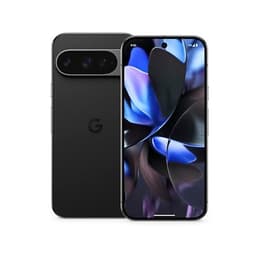
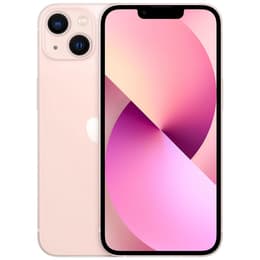
The Google Pixel 9 Pro, released in 2024, represents a modern Android flagship, while the iPhone 13, launched in 2021, is an established Apple iOS device. These smartphones offer distinct experiences, primarily differing in their operating systems, camera capabilities, and overall hardware generation. The Pixel 9 Pro brings Google's latest advancements in AI and photography, whereas the iPhone 13 provides a reliable and familiar iOS ecosystem.
Colour
Storage
When considering longevity, the Google Pixel 9 Pro, released in 2024, benefits from a more extended software support window, typically receiving major Android updates and security patches for up to seven years from its launch. The iPhone 13, from 2021, is nearing the end of its major iOS update cycle by 2026, though it will continue to receive security updates for some time. Both devices feature an IP68 rating for dust and water resistance, and robust build materials like Gorilla Glass or Ceramic Shield on their front displays. Users prioritizing the longest possible software support and access to the latest OS features will find the Pixel 9 Pro offers a longer practical lifespan.
Year of Release
Compatible with latest Update
OS
Foldable
Performance differences between these two devices are notable due to their generational gap. The Pixel 9 Pro, with its advanced processor, handles demanding applications, complex AI tasks, and intensive multitasking with ease, providing a consistently smooth and responsive user experience. The iPhone 13, powered by a capable processor from 2021, still delivers strong performance for everyday apps, gaming, and general use, though it may show its age when running the most resource-intensive tasks or future applications. Both models offer various storage configurations to suit different user needs.
The display experience varies between these two smartphones. The Google Pixel 9 Pro features a vibrant OLED display with a higher resolution and a smoother 120Hz refresh rate, which makes scrolling and animations appear fluid. It also typically offers higher peak brightness, improving visibility in bright outdoor conditions. The iPhone 13 also uses an excellent OLED display, providing deep blacks and accurate colors, but it operates at a standard 60Hz refresh rate and has a slightly lower resolution. Both screens offer a clear and immersive viewing experience for media consumption.
Resolution
Screen type
Camera capabilities are a significant differentiator. The Google Pixel 9 Pro boasts a more advanced multi-lens camera system, leveraging Google's latest computational photography and AI enhancements to deliver exceptional detail, dynamic range, and low-light performance across its main, ultrawide, and telephoto lenses. Its video recording also benefits from newer stabilization and processing. The iPhone 13 features a dual-lens system that captures high-quality photos and videos in most conditions, with reliable color accuracy and good low-light performance for its generation, including features like Cinematic Mode. Both devices offer capable stereo speakers for media playback and clear microphone quality for calls.
Main camera
Front camera
Several practical elements distinguish these two devices. The Google Pixel 9 Pro features a universal USB-C port for charging and data transfer, along with support for newer connectivity standards like Wi-Fi 7 and Bluetooth 5.4, offering faster and more reliable wireless connections. It also integrates advanced AI-driven sensors for various smart features. The iPhone 13 uses Apple's proprietary Lightning port and supports Wi-Fi 6 and Bluetooth 5.0. Both phones offer secure biometric authentication, with the Pixel 9 Pro typically using an in-display fingerprint sensor and the iPhone 13 relying on Face ID. The Pixel 9 Pro is generally a larger and potentially heavier device, while the iPhone 13 offers a more compact form factor.
Weight
Screen size (in)
Mobile network
SIM card
Carrier compatibility
Connector
User sentiment often highlights the Google Pixel 9 Pro for its exceptional camera capabilities, advanced AI features, and the promise of extended software support, making it a strong contender for those seeking the latest in smartphone technology and computational photography. Some users might note its potentially larger size or specific design aesthetics. The iPhone 13 is frequently praised for its consistent performance, the robust and user-friendly iOS ecosystem, and its reliable camera system, even several years after its release. Common observations for the iPhone 13 include its 60Hz display, which feels less fluid compared to newer devices, and its approaching end-of-life for major iOS updates.
Users prioritizing cutting-edge camera technology, long-term software support, and Google's AI innovations will find the Pixel 9 Pro well-suited to their needs. Conversely, individuals who value the established Apple ecosystem, a compact form factor, and a consistently smooth iOS experience may lean towards the iPhone 13. Both devices, especially when considering quality-assured refurbished options, offer excellent value. Choosing a refurbished model is an eco-friendly alternative that allows consumers to access premium technology while making a sustainable choice.