Google Pixel 6A Vs iPhone 17

Google Pixel 6A
Google Pixel 6A
Starting at

Refurbished price:£107.00

Versus £459.00 new

See options
iPhone 17
iPhone 17
Starting at

Refurbished price:£676.00

Versus £799.00 new

See options

Ratings

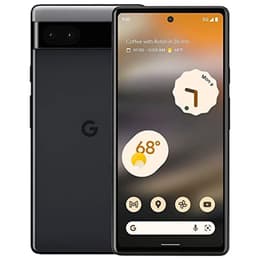
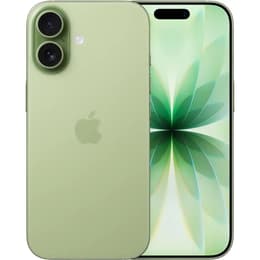
The Google Pixel 6a, released in July 2022, is an Android smartphone known for its computational photography and Google's Tensor chip. The iPhone 17, launched in September 2025, represents a newer generation of Apple's flagship devices, featuring advancements in processing power, display technology, and camera capabilities. This comparison will highlight the practical differences between these two devices, helping users understand which model aligns best with their needs.

Scores

Durability

When considering the longevity of a smartphone, both software support and physical durability play significant roles.

  • Software Longevity: The Google Pixel 6a, initially launched with Android 12, is expected to receive OS updates until at least July 2025 and security updates until at least July 2027. This provides a solid period of software support for an Android device. The iPhone 17, being a more recent release, benefits from Apple's typically longer software support, generally receiving iOS updates for 5-6 years from its launch in September 2025.
  • Physical Durability: The Pixel 6a features a plastic back, an aluminum frame, and Corning Gorilla Glass 3 on the front. It also has an IP67 water and dust resistance rating. The iPhone 17 incorporates Ceramic Shield 2 for enhanced scratch resistance on its display and is expected to have an aluminum frame and glass back, along with improved water and dust resistance.
  • Expected Practical Lifespan: Users prioritizing extended software updates will find the iPhone 17 offers a longer guaranteed period of new features and security patches. For physical resilience, both devices offer good protection against everyday elements, though the iPhone 17's Ceramic Shield 2 suggests a more robust screen.

Year of Release

2022

2025

Compatible with latest Update

Yes

Yes

OS

Android

iOS

Foldable

No

No

Performance

The performance of a smartphone is crucial for daily tasks, from browsing to demanding applications.

  • Processing Capabilities: The Google Pixel 6a is powered by Google's first-generation Tensor chip, which provides efficient performance for everyday use, including photo editing and web browsing. The iPhone 17 features a significantly newer A-series chip (e.g., A19 Bionic), which delivers substantial boosts in CPU and GPU performance, leading to faster app launches, smoother multitasking, and enhanced gaming experiences.
  • System Responsiveness: Users of the Pixel 6a generally report snappy performance for most applications, with the Tensor chip excelling in AI-driven tasks. The iPhone 17, with its advanced processor, offers a highly responsive user experience, handling intensive applications and complex graphics with ease, ensuring a fluid interaction across the operating system.
  • Battery Behavior: The Pixel 6a has a 4410 mAh battery, providing a full day of typical use and up to a day and a half with regular usage. The iPhone 17, while not having a significantly larger battery capacity in its base model compared to its predecessor, benefits from a more efficient chip and optimized iOS power management, allowing most users to comfortably get through a full day of typical activity.

Memory (GB)

6 GB

8 GB

Screen quality

The display is a primary interface for smartphone interaction, and its quality significantly impacts the user experience.

  • Display Technology and Resolution: The Google Pixel 6a features a 6.1-inch OLED display with a resolution of 2400 x 1080 pixels, offering vibrant colors and deep blacks. The iPhone 17 comes with a 6.3-inch Super Retina XDR OLED display, also known for its deep blacks and vibrant colors, with a higher resolution and improved brightness.
  • Refresh Rate and Smoothness: The Pixel 6a has a standard 60Hz refresh rate, which provides a smooth experience for most users but can feel less fluid compared to higher refresh rate displays. The iPhone 17 brings ProMotion display technology to the base model, supporting adaptive refresh rates up to 120Hz, resulting in noticeably smoother scrolling, animations, and overall responsiveness.
  • Brightness and Viewing Experience: The Pixel 6a offers good brightness levels, making it suitable for indoor and outdoor use, though it might require manual adjustment in very bright sunlight. The iPhone 17's display is expected to offer superior peak brightness, enhancing visibility in various lighting conditions and providing a more immersive viewing experience for media consumption.

Resolution

1080 x 2400

2622x1206

Screen type

OLED

Super Retina XDR

Audiovisual

Camera capabilities are a key differentiator for many smartphone users, influencing how they capture and share moments.

  • Camera System: The Google Pixel 6a features a dual-camera system with a 12.2 MP main sensor and a 12 MP ultrawide sensor. The iPhone 17 is equipped with an advanced multi-lens camera system, including a main, ultrawide, and potentially a telephoto lens, with significant hardware and software enhancements.
  • Photography Performance: The Pixel 6a leverages Google's computational photography to produce high-quality photos, especially in everyday scenarios and with features like Night Sight for low-light conditions. The iPhone 17 offers enhanced low-light performance, improved detail, and more advanced computational photography features, providing superior image quality across a wider range of conditions.
  • Video Recording and Audio: The Pixel 6a is capable of recording 4K video at 30 or 60 frames per second. The iPhone 17 offers advanced video recording capabilities, including higher resolution and frame rate options, improved stabilization, and new professional video features, alongside high-quality microphone performance for clear audio capture.

Main camera

12.2 megapixels

48 megapixels

Front camera

8 megapixels

18 megapixels

Miscellaneous

Beyond core features, several practical elements contribute to the overall usability and experience of a smartphone.

  • Connectivity and Ports: The Google Pixel 6a supports 5G, Wi-Fi 6E, and Bluetooth 5.2, and features a USB-C 3.1 port. The iPhone 17 supports the latest 5G standards, Wi-Fi 7, and Bluetooth 6.0, and includes a USB-C port, with Pro models potentially offering Thunderbolt speeds.
  • Biometric Security: The Pixel 6a utilizes an under-display optical fingerprint sensor for secure unlocking. The iPhone 17 relies on Face ID for biometric authentication, with expectations of continued advancements in its speed and reliability, and potentially under-display Face ID for Pro models.
  • Design and Handling: The Pixel 6a has dimensions of 152.2 x 71.8 x 8.9 mm and weighs 178g, offering a comfortable in-hand feel. The iPhone 17, with a 6.3-inch display, is slightly larger than previous base models but maintains a refined design with an aluminum frame and frosted glass back.

Weight

250 g

177 g

Screen size (in)

6.1

6.3

Mobile network

5G

5G

SIM card

Physical SIM + eSIM

Physical SIM + eSIM

Carrier compatibility

Unlocked

Unlocked

Connector

USB-C

USB-C

The Google Pixel 6a and iPhone 17 cater to different user expectations and priorities, largely due to their respective release timelines and ecosystems. The Pixel 6a, released in 2022, is praised by users for its exceptional camera performance, particularly its computational photography features that deliver impressive results in various conditions. Users also appreciate its clean Android experience and the efficiency of its Tensor chip for everyday tasks. However, some common criticisms include its 60Hz display, which can feel less fluid compared to higher refresh rate screens, and its charging speeds.

The iPhone 17, a 2025 release, garners praise for its significant advancements in processing power, offering a highly responsive and future-proof experience for demanding applications and gaming. Its ProMotion display, with adaptive refresh rates up to 120Hz, is a highlight for smooth visual interactions. User sentiment often points to Apple's consistent software support and ecosystem integration as strong advantages. While specific criticisms for the iPhone 17 are still emerging, general iPhone feedback sometimes notes the closed nature of its ecosystem compared to Android.

Users prioritizing a strong camera experience with excellent computational photography and a pure Android interface may find the Google Pixel 6a well-suited to their needs. It remains a capable device for daily use and offers a quality-assured refurbished option for those seeking an eco-friendly alternative. Conversely, users who prioritize cutting-edge performance, a high refresh rate display, and a longer period of software updates will likely lean towards the iPhone 17. Both devices offer distinct advantages, and choosing between them depends on individual preferences for operating system, performance demands, and camera priorities. Opting for a refurbished model of either device can be a sustainable choice, providing access to advanced technology while minimizing environmental impact.


See all articles

Our recent comparisons