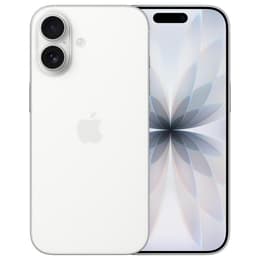

Compare models
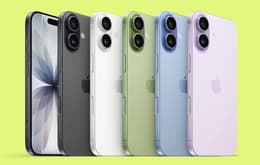
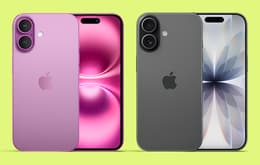
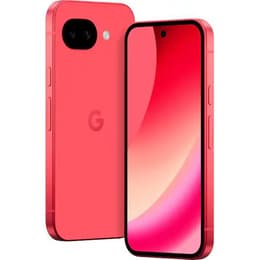
Google Pixel 10a Vs iPhone 17
- 1-year minimum warranty
- Free delivery on all items
- Free 30-day returns
Differences at a glance
The Google Pixel 10a (2026) and the Apple iPhone 17 (2025) represent two different approaches to modern smartphone design, operating on Android and iOS respectively. While both devices offer high-resolution dual camera systems and capable everyday performance, they cater to distinct software ecosystems and hardware preferences.
Available Models
Colour
Storage (GB)
Scores
Durability
When evaluating hardware longevity and software support, both the Google Pixel 10a and the iPhone 17 are built to remain functional for many years, though they utilize different update frameworks.
- Software longevity: The Google Pixel 10a provides long-term support with multiple years of major operating system updates, matching the extended software lifecycle expected from contemporary flagship-tier devices. Similarly, the iPhone 17 receives prolonged iOS updates, ensuring security and feature continuity for an extended period.
- Build resilience and repairability: Both models incorporate robust water and dust resistance alongside reinforced glass fronts, helping them withstand daily wear. Standard maintenance and repairs are well-supported through official and independent channels for both manufacturers.
Year of Release
2026
2025
Performance
Day-to-day operation relies on efficient internal hardware configurations designed to handle demanding applications, multitasking, and media consumption without noticeable stuttering.
- System responsiveness: Both devices handle rapid app launching, split-screen multitasking, and graphic-intensive mobile gaming smoothly. Their current-generation processors and ample memory allocation ensure that standard workloads run without friction.
- Battery behaviour: The Google Pixel 10a features a high-capacity battery that easily sustains a full day of mixed usage, paired with modern wired charging speeds. The iPhone 17 optimizes power consumption efficiently through its internal architecture, delivering reliable daily battery longevity under typical workloads.
Screen quality
Visual output is handled by vibrant OLED panels on both models, delivering sharp text reproduction and deep contrast levels for media viewing.
- Display technology: Both phones feature bright, responsive screens equipped with high refresh rates that make scrolling through web pages and animations fluid. Outdoor visibility is strong on both devices, allowing content to remain legible under direct sunlight.
- Dimensions and viewing: The Google Pixel 10a offers a flat 6.3-inch display, while the iPhone 17 utilizes a similarly sized 6.3-inch panel with slim bezels and an integrated notification interface cutout, creating immersive viewing spaces for videos and photos.
Audiovisual
Photography and video recording capabilities are driven by versatile dual-lens setups on the rear panels of both smartphones.
- Imaging performance: Both the Google Pixel 10a and the iPhone 17 capture detailed high-resolution images across main and ultra-wide lenses. Computational photography features on both models help balance challenging lighting conditions and preserve detail in low-light environments.
- Video and audio output: Video recording is stable and sharp on both devices, supported by advanced optical stabilization features. Stereo speakers deliver clear audio output for hands-free calls, video playback, and casual media consumption.
Miscellaneous
Practical physical and connectivity attributes shape how each device fits into daily routines, including networking standards and physical handling.
- Connectivity and ports: Both smartphones support modern 5G cellular networks, Wi-Fi connectivity standards, and Bluetooth pairing. The Google Pixel 10a uses a standard USB-C port, while the iPhone 17 also relies on USB-C connectivity for charging and data transfer.
- Design and handling: Measuring with balanced dimensions and manageable weights, both devices sit comfortably in hand. The Google Pixel 10a features a streamlined rear finish without a protruding camera bump, while the iPhone 17 utilizes an aluminum frame paired with durable glass construction. Exploring a quality-assured refurbished option provides an eco-friendly alternative for acquiring either model while reducing electronic waste.
Screen size (in)
6.3
6.3
Mobile network
5G
5G
SIM card
Physical SIM + eSIM
eSIM
Carrier compatibility
Unlocked
Unlocked
Connector
USB-C
USB-C
What the community thinks
Choosing between the Google Pixel 10a and the iPhone 17 ultimately depends on individual software preferences and ecosystem habits. Users prioritizing the customizability and open nature of the Android operating system often lean toward the Google Pixel 10a. Conversely, users who are deeply integrated into the Apple ecosystem and prefer the streamlined interface of iOS typically gravitate toward the iPhone 17.
Common praise for the Google Pixel 10a centers around its clean software interface, reliable battery capacity, and streamlined back panel design, though some users note that raw processing benchmarks lean toward heavier flagship tiers. Meanwhile, the iPhone 17 receives frequent praise for its fluid display performance and refined build quality, though some users mention a preference for alternative file-transfer workflows. For buyers seeking a sustainable choice, opting for a quality-assured refurbished model from Back Market offers a reliable pathway to owning either device while supporting circular economy principles.