
Galaxy S25+ Vs iPhone 16 Pro

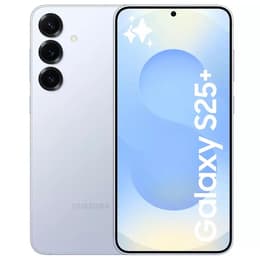
Galaxy S25+
Galaxy S25+
Starting at

Refurbished price:£575.00

Versus £958.39 new

See options
iPhone 16 Pro
iPhone 16 Pro
Starting at

Refurbished price:£564.00

Versus £999.00 new

See options

Ratings

The Samsung Galaxy S25 Plus, released in early 2025, and the Apple iPhone 16 Pro, launched in late 2024, represent high-end offerings from their respective manufacturers. While both devices deliver premium smartphone experiences, they differ in their operating systems and specific hardware philosophies. The Galaxy S25 Plus runs on Android, emphasizing customization and a robust feature set, whereas the iPhone 16 Pro operates on iOS, known for its integrated ecosystem and streamlined user experience.

Scores

Durability

When considering the long-term usability of these devices, both offer substantial software support and durable construction, though their release timelines place them in slightly different positions.

  • Software Longevity: The Samsung Galaxy S25 Plus is notable for its commitment to extended software support, promising seven years of OS and security updates, with support expected to continue until 2032. The iPhone 16 Pro, while discontinued in September 2025 following the release of its successor, is still expected to receive iOS updates for many years, typically 5-6 years from its initial release.
  • Physical Durability: The Galaxy S25 Plus features an Armor Aluminum frame and Corning Gorilla Glass Victus 2 on both the front and back, providing a robust build. It also carries an IP68 rating for dust and water resistance. The iPhone 16 Pro utilizes a titanium frame and Apple's Ceramic Shield on the front, also boasting an IP68 rating for water and dust resistance, allowing submersion up to 6 meters for 30 minutes. Early drop tests for the iPhone 16 Pro indicated a potential vulnerability with its thinner bezels, though subsequent testing suggested improved overall strength of the Ceramic Shield.
  • Practical Lifespan: Both devices are built to last, with users generally expecting 3-5 years of practical use from either smartphone, assuming proper care. The longer software commitment from Samsung could offer a slight edge in terms of continued feature updates and security patches over a more extended period.

Year of Release

2025

2024

Foldable

No

No

Performance

Both smartphones are equipped with powerful internal components designed to handle demanding applications and multitasking with ease, though they approach performance from different architectural standpoints.

  • Processing Capabilities: The Galaxy S25 Plus is powered by a current-generation processor, which contributes to smooth operation across various tasks, from everyday browsing to intensive gaming. This processor is noted for significant improvements in CPU and GPU performance, as well as enhanced power efficiency. The iPhone 16 Pro features Apple's latest Pro-series processor, engineered for high performance and efficiency, ensuring applications launch quickly and run fluidly.
  • Multitasking and Responsiveness: With 12GB of RAM, the Galaxy S25 Plus is well-suited for extensive multitasking, allowing users to switch between numerous applications without experiencing slowdowns. The iPhone 16 Pro, typically featuring 8GB of RAM, is optimized by its operating system to manage memory efficiently, providing a responsive experience even with multiple apps open.
  • Storage Options: The Galaxy S25 Plus offers storage configurations of 256GB and 512GB. The iPhone 16 Pro provides a wider range of storage capacities, including 128GB, 256GB, 512GB, and 1TB, catering to users with varying storage needs.
  • Battery Behavior: The Galaxy S25 Plus houses a 4900 mAh battery, delivering a full day of mixed usage and up to 30 hours of video playback. The iPhone 16 Pro, with its 3582 mAh battery, is rated for up to 27 hours of video playback, with many users reporting 8-10 hours of screen-on time with moderate use. Both devices are designed for efficient power consumption, ensuring reliable daily performance.

Memory (GB)

12 GB

8 GB

Screen quality

Both smartphones offer high-quality displays that provide vibrant visuals and smooth interactions, though they present slight differences in size and specific display technologies.

  • Display Technology and Clarity: The Samsung Galaxy S25 Plus features a 6.7-inch Dynamic AMOLED 2X display with a QHD+ resolution (3120x1440 pixels), resulting in a sharp and detailed viewing experience. The iPhone 16 Pro comes with a 6.3-inch Super Retina XDR OLED display, offering a resolution of 2622x1206 pixels (460 ppi), known for its deep blacks and accurate color reproduction.
  • Brightness and Refresh Rate: The Galaxy S25 Plus can reach a peak brightness of 2600 nits and features an adaptive refresh rate that ranges from 1Hz to 120Hz, ensuring smooth scrolling and responsiveness while conserving power. The iPhone 16 Pro also offers an adaptive ProMotion refresh rate up to 120Hz and can achieve a peak brightness of 2000 nits, with a typical SDR brightness of 1200 nits, making it suitable for outdoor visibility.
  • Viewing Experience: The Galaxy S25 Plus includes a feature called ProScaler, which uses AI to upscale lower-resolution content, aiming to minimize artifacts and enhance viewing quality. The iPhone 16 Pro features thinner display borders, maximizing the screen-to-body ratio for an immersive viewing experience. Both displays support HDR content, providing enhanced contrast and color.

Resolution

1440x3120

1206 x 2622

Audiovisual

Both devices are equipped with advanced camera systems designed to capture high-quality photos and videos in various conditions, each with its own set of strengths and features.

  • Rear Camera Systems: The Samsung Galaxy S25 Plus features a versatile triple-camera setup, including a 50 MP wide-angle main camera with optical image stabilization (OIS), a 12 MP ultra-wide camera with a 120-degree field of view, and a 10 MP telephoto lens offering 3x optical zoom with OIS. The iPhone 16 Pro also has a professional-grade triple camera system, comprising a 48 MP wide main camera with second-generation sensor-shift OIS, a 48 MP ultra-wide camera, and a 12 MP telephoto camera with 5x optical zoom and a tetraprism design.
  • Photography Performance: The Galaxy S25 Plus benefits from Samsung's Pro Visual Engine and Galaxy AI features, which enhance image processing, object recognition, and color reproduction, particularly in low-light conditions. The iPhone 16 Pro's larger sensors and advanced computational photography, including features like Photonic Engine and Smart HDR, contribute to detailed images across different lighting scenarios. The iPhone 16 Pro also introduces a dedicated Camera Control button for quick access and operation.
  • Video Recording Capabilities: The Galaxy S25 Plus supports video recording up to 8K resolution at 30 frames per second (fps) with its main camera, and 4K from other lenses. It also offers various video modes like slow motion and hyperlapse. The iPhone 16 Pro excels in video, offering 4K Dolby Vision recording at up to 120 fps, ProRes video recording up to 4K at 120 fps with external recording, and Cinematic mode for depth-of-field effects. It also supports Spatial video recording.
  • Audio and Media: Both devices provide a good media consumption experience. The iPhone 16 Pro supports Spatial Audio playback and features improved audio recording capabilities with wind reduction.

Miscellaneous

Beyond core performance and camera capabilities, several practical elements differentiate the user experience of these two smartphones.

  • Connectivity: Both devices offer modern connectivity options. The Samsung Galaxy S25 Plus supports 5G networks and current Wi-Fi standards. The iPhone 16 Pro includes support for Wi-Fi 7, offering potentially faster and more reliable wireless connections, alongside 5G capabilities.
  • Ports and Biometrics: The Galaxy S25 Plus features a USB-C port for charging and data transfer and incorporates an ultrasonic in-screen fingerprint sensor for secure unlocking. The iPhone 16 Pro also uses a USB-C port, specifically supporting USB 3.2 Gen 2 for faster data transfer speeds, and relies on Face ID for biometric authentication.
  • Design and Handling: The Galaxy S25 Plus has a minimalist design with flat metal edges and is slightly slimmer and lighter than its predecessor, weighing 190g. The iPhone 16 Pro, at 199g, features a titanium design with a Ceramic Shield front and a textured matte glass back. Its dimensions are 149.6 × 71.5 × 8.25 mm. The iPhone 16 Pro also includes an Action button and a new Camera Control button for quick access to specific functions.

Weight

190 g

199 g

Screen size (in)

6.7

6.3

Mobile network

5G

5G

SIM card

Dual Physical SIM

Physical SIM + eSIM

Carrier compatibility

Unlocked

Unlocked

The Samsung Galaxy S25 Plus and the iPhone 16 Pro each offer a compelling package for users seeking a high-performance smartphone, though they cater to slightly different preferences. Users frequently praise the Galaxy S25 Plus for its vibrant display, robust battery life, and Samsung's commitment to seven years of software updates, which provides excellent long-term value. Some user feedback notes that the camera, while capable, can sometimes produce softer images compared to competitors.

The iPhone 16 Pro is often lauded for its powerful processor, advanced camera system with exceptional video capabilities, and the seamless integration within the Apple ecosystem. Its display is also a highlight, offering high brightness and a smooth refresh rate. While battery life is generally considered good, some users have expressed concerns about its longevity with heavy usage. Early durability tests also raised questions about the thinner bezels, though the Ceramic Shield generally performs well.

Users prioritizing extensive software support, a highly customizable Android experience, and a slightly larger, high-resolution display may find the Samsung Galaxy S25 Plus well-suited to their needs. Conversely, users who value a streamlined operating system, industry-leading video recording, and a tightly integrated ecosystem might lean towards the iPhone 16 Pro. Both devices represent excellent choices, and opting for a quality-assured refurbished option can be an eco-friendly alternative to acquiring either of these advanced smartphones.

See all articles

Our recent comparisons