
Compare models

Google Pixel 10 Vs iPhone 17 Pro Max

  • 1-year minimum warranty
  • Free delivery on all items
  • Free 30-day returns
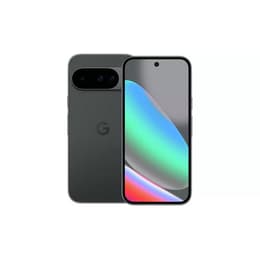
Google Pixel 10
Starting at

Refurbished price:£416.00

Versus £999.00 new

See options
iPhone 17 Pro Max
Starting at

Refurbished price:£1,014.00

Versus £1,199.00 new

See options

Differences at a glance

The Google Pixel 10 (2025) and the Apple iPhone 17 Pro Max (2025) represent high-end smartphone options within their respective operating systems, offering distinct design philosophies and feature sets. While both devices deliver current-generation smartphone capabilities, they differ significantly in size, software ecosystems, and hardware integration. Running on Android 16 and iOS respectively, these smartphones cater to users looking for modern mobile technology tailored to different interface preferences.

Available Models

Colour

Storage (GB)

Scores

Durability

Both smartphones provide robust long-term support timelines, though their approach to software lifecycles and physical resilience reflects distinct manufacturer standards.

  • Software Support: Both models receive extended multi-year operating system updates and security patches, ensuring modern software features remain accessible throughout their operational lifespan.
  • Repairability and Build: Both devices incorporate durable frame materials and scratch-resistant glass protections, while maintaining modular internal layouts designed to facilitate professional maintenance and component replacements over time.
  • Expected Lifespan: High-capacity internal power units and efficient thermal management systems help maintain daily reliability across several years of continuous use.

Year of Release

2025

2025

Compatible with latest Update

Yes

Yes

OS

Android

iOS

Foldable

No

No

Performance

Handling demanding applications, heavy multitasking, and everyday navigation smoothly, these devices use advanced internal hardware to maintain system fluidity.

  • Multitasking and Responsiveness: Generous memory configurations allow multiple applications to remain open concurrently without noticeable stutter or forced reloads.
  • Battery Behavior: Power efficiency optimizations ensure that both devices comfortably sustain a full day of standard usage, with support for rapid wired and wireless replenishment methods.
  • Storage Capacity: Available in multiple storage configurations starting from spacious baseline tiers, accommodating large media libraries and heavy application files without external expansion cards.

Screen quality

Equipped with expansive, high-resolution OLED panels, both smartphones prioritize visual clarity, deep contrast levels, and outdoor legibility.

  • Display Technology: Advanced organic light-emitting diode panels deliver rich color reproduction and true blacks for enhanced media consumption.
  • Refresh Rate and Fluidity: Adaptive refresh rates scaling up to high thresholds ensure smooth scrolling animations and responsive touch interactions during gaming or web browsing.
  • Brightness Performance: High peak luminance thresholds allow the screens to remain clearly readable even under direct sunlight or bright outdoor lighting conditions.

Resolution

1080x2424

2868x1320

Screen type

OLED

Super Retina XDR

Audiovisual

Featuring sophisticated multi-lens rear camera arrays and high-resolution sensors, both models capture detailed photographs and high-definition video across various lighting environments.

  • Photography Performance: Versatile optical zoom capabilities and wide-angle lenses handle low-light scenes and distant subjects with clear detail and balanced dynamic range.
  • Video Recording: Advanced stabilization systems and high-frame-rate recording options allow users to produce steady, professional-grade video clips.
  • Audio and Media: Stereo speaker setups deliver clear sound output for calls and media playback, supported by sensitive multi-microphone arrays for noise reduction.

Front camera

42 megapixels

18 megapixels

Miscellaneous

Practical everyday features, connectivity standards, and physical dimensions shape the handling and usability of each device in daily scenarios.

  • Connectivity: Support for rapid cellular networks, advanced Wi-Fi protocols, and modern Bluetooth standards ensures reliable peripheral pairing and data transfer.
  • Security and Ports: Biometric authentication methods include secure facial recognition and integrated fingerprint sensors alongside reversible universal ports for charging and data.
  • Physical Design: Ergonomic proportions and balanced weight distribution influence single-handed reach and pocket comfort, with the larger model offering an expansive viewing area at the cost of added bulk.

Weight

204 g

233 g

Screen size (in)

6.3

6.9

Mobile network

5G

5G

SIM card

Physical SIM + eSIM

Physical SIM + eSIM

Carrier compatibility

Unlocked

Unlocked

Connector

USB-C

USB-C

What the community thinks

User discussions across community forums frequently praise the Google Pixel 10 for its intuitive software integration, helpful artificial intelligence tools, and comfortable handling. Conversely, actual users often highlight the iPhone 17 Pro Max for its robust build quality, expansive display real estate, and reliable media recording performance. Some common criticisms involve the larger physical footprint of the latter and the specific learning curve associated with switching between Android and iOS ecosystems.

Users prioritizing a compact form factor, clean software navigation, and deep daily assistant integration may prefer the Google Pixel 10, while users focusing on a larger display canvas, extensive video capabilities, and long-lasting battery reserves in a larger chassis will find the iPhone 17 Pro Max well-suited to their needs. For those seeking a sustainable choice, exploring a quality-assured refurbished option through Back Market offers a reliable path to acquiring either device with reduced environmental impact.