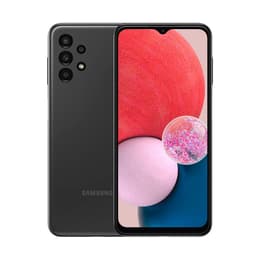
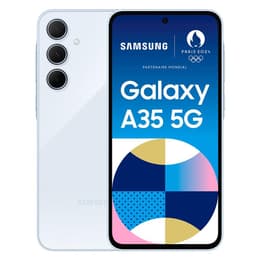

Galaxy A13 Vs Galaxy A35

Galaxy A13
Galaxy A13
Starting at

Refurbished price:£73.00

Versus £249.00 new

See options
Galaxy A35
Galaxy A35
Starting at

Refurbished price:£119.00

Versus £367.31 new

See options

Ratings

The Samsung Galaxy A13 (released March 2022) and the Samsung Galaxy A35 (released March 2024) are both smartphones from Samsung's A-series, targeting different segments of the market. While the Galaxy A13 offers essential smartphone functionalities, the Galaxy A35 introduces significant upgrades in display technology, processing power, and overall build quality. Both devices run on the Android operating system with Samsung's One UI interface, providing a familiar user experience.

Scores

Durability

The longevity and update support differ between these two models, reflecting their respective release timelines and market positioning.

  • Release Timeline: The Galaxy A13 was released in March 2022, making it an older model compared to the Galaxy A35, which launched in March 2024. This two-year difference directly impacts their expected software support.
  • OS Support Duration: The Galaxy A13, originally launched with Android 12, was eligible for approximately three years of OS updates, with Android 14 (One UI 6.1) likely being its last major OS upgrade. Security updates for the A13 are expected to continue until the end of 2025. In contrast, the newer Galaxy A35, launched with Android 14, is promised four generations of OS upgrades and five years of security updates, offering a longer period of software relevance and security.
  • Practical Lifespan: Users of the Galaxy A13 have reported a noticeable slowdown in performance and responsiveness after several months of use, suggesting a shorter practical lifespan for demanding tasks. The Galaxy A35, with its more capable internal components and extended software support, is designed to maintain smoother performance for a longer duration, making it a more future-ready option.

Year of Release

2022

2024

Compatible with latest Update

No

Yes

OS

Android

Android

Foldable

No

No

Performance

Performance is a key area where the Galaxy A35 demonstrates a notable advancement over the Galaxy A13, impacting daily usage and multitasking capabilities.

  • Processor Capabilities: The Galaxy A13 is equipped with an octa-core processor that handles basic daily tasks adequately. However, users have frequently reported that the device can become slow and laggy, especially when running multiple applications or more demanding games, with performance degrading over time. The Galaxy A35 features a more powerful octa-core processor, which provides a smoother and faster experience for everyday tasks, multitasking, and even moderate gaming. Benchmark tests indicate the A35's processor is significantly faster than the A13's.
  • System Responsiveness: The Galaxy A35 offers a more fluid user interface and quicker app loading times compared to the Galaxy A13. While the A35 generally provides a responsive experience, some users have noted occasional minor stutters when launching heavier applications.
  • Storage and RAM: The Galaxy A13 comes with various RAM options (3GB, 4GB, 6GB) and storage (32GB, 64GB, 128GB). The Galaxy A35 typically offers higher base RAM (6GB, 8GB, with some regions offering 12GB) and storage options (128GB, 256GB), which contributes to better multitasking and overall system fluidity. Both models support expandable storage via microSD cards.

Memory (GB)

4 GB

6 GB

Screen quality

The display experience is a significant differentiator between these two Samsung Galaxy smartphones.

  • Display Technology: The Galaxy A13 features a 6.6-inch PLS TFT display. In contrast, the Galaxy A35 boasts a 6.6-inch Super AMOLED display, which is known for producing deeper blacks, higher contrast, and more vibrant colors.
  • Resolution and Clarity: Both devices offer a Full HD+ resolution (1080 x 2408 pixels for A13, 1080 x 2340 pixels for A35), providing clear and sharp visuals for general viewing.
  • Refresh Rate and Brightness: The Galaxy A13 has a standard 60Hz refresh rate, while the Galaxy A35 features a smoother 120Hz refresh rate, resulting in more fluid scrolling and animations. The A35 also offers higher peak brightness (up to 1000 nits HBM), improving outdoor visibility compared to the A13.

Resolution

1080 x 2408

1080 x 2340

Screen type

PLS LCD

Super AMOLED

Audiovisual

The camera systems on the Galaxy A13 and Galaxy A35 offer different capabilities for capturing photos and videos.

  • Rear Camera System: The Galaxy A13 features a quad-camera setup with a 50-megapixel main sensor, a 5-megapixel ultrawide, and two 2-megapixel sensors for macro and depth. The Galaxy A35 has a triple-camera system, including a 50-megapixel main sensor with Optical Image Stabilization (OIS), an 8-megapixel ultrawide, and a 5-megapixel macro lens. The OIS on the A35's main camera helps in reducing blur from handshakes, especially in challenging lighting conditions.
  • Photography Performance: User feedback for the Galaxy A13 suggests that its camera performance, particularly in low-light conditions, can be a significant drawback, despite the high megapixel count of its main sensor. The Galaxy A35 generally produces good daylight photos, though low-light shots can still be blurry and noisy. Some users consider the macro lens on the A35 to be less practical.
  • Video Recording and Front Camera: The Galaxy A13 records video at 1080p at 30 frames per second and has an 8-megapixel front camera. The Galaxy A35 offers higher video recording capabilities, supporting 4K resolution at 30 frames per second, and features a 13-megapixel front camera, allowing for more detailed selfies and video calls.

Main camera

50 megapixels

50 megapixels

Front camera

8 megapixels

13 megapixels

Miscellaneous

Beyond core specifications, several practical elements contribute to the overall user experience of these devices.

  • Connectivity: The Galaxy A13 supports 4G LTE networks. The Galaxy A35 offers 5G connectivity, providing faster download and upload speeds in supported areas. Both devices include standard Wi-Fi and Bluetooth capabilities.
  • Ports and Sensors: Both phones feature a USB Type-C port for charging and data transfer. The Galaxy A13 retains a 3.5mm headphone jack, which is also present on the A35. For security, both include a fingerprint sensor.
  • Build Materials and Durability: The Galaxy A13 has a plastic build and Gorilla Glass 5 for screen protection. The Galaxy A35 features a more robust build with a metal body and Gorilla Glass Victus for enhanced screen durability. Additionally, the A35 comes with an IP67 rating for dust and water resistance, offering better protection against environmental elements. The Galaxy A13 is splash resistant but lacks an official IP rating.
  • Dimensions and Weight: The Galaxy A13 measures 165.1 x 76.4 x 8.8mm and weighs 195g. The Galaxy A35 is slightly more compact in height and thinner at 161.7 x 78.0 x 8.2mm, but slightly heavier at 209g.

Weight

195 g

209 g

Screen size (in)

6.6

6.6

Mobile network

4G

5G

SIM card

Dual Physical SIM

Dual Physical SIM

Carrier compatibility

Unlocked

Unlocked

The Samsung Galaxy A13 and Galaxy A35 cater to different user expectations, with the A35 representing a significant upgrade in several key areas. Users often praise the Galaxy A13 for its initial affordability and basic functionality, making it suitable for light usage such as calling, messaging, and casual browsing. However, common criticisms include its tendency to slow down over time, particularly with more demanding applications, and its less impressive camera performance, especially in low light.

The Galaxy A35, on the other hand, receives positive feedback for its vibrant Super AMOLED display, smoother performance, and improved camera capabilities with optical image stabilization. Users appreciate its longer software support and more durable build with an IP67 rating. Some minor concerns for the A35 include occasional lag with very heavy apps and its charging speed.

Users prioritizing a device for essential communication, light social media, and basic web browsing, where long-term high performance is not the primary concern, may find the Galaxy A13 sufficient. For those who value a more fluid user experience, a superior display for media consumption, better photography and videography capabilities, and a longer period of software updates and physical durability, the Galaxy A35 is well-suited. It offers a more robust and future-proof experience for users who engage in more demanding tasks or simply desire a more refined smartphone. Both models are available as quality-assured refurbished options, providing an eco-friendly alternative for consumers.

See all articles

Our recent comparisons