
Galaxy S21 Ultra 5G Vs Google Pixel 7A

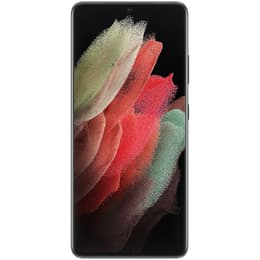
Galaxy S21 Ultra 5G
Galaxy S21 Ultra 5G
Starting at

Refurbished price:£186.00

Versus £1,800.00 new

See options
Google Pixel 7A
Google Pixel 7A
Starting at

Refurbished price:£128.00

Versus £649.99 new

See options

Ratings

The Samsung Galaxy S21 Ultra 5G, released in January 2021, and the Google Pixel 7A, launched in May 2023, represent different approaches to the smartphone experience. While the S21 Ultra was a flagship device at its launch, the Pixel 7A is positioned as a more accessible option within Google's lineup. These devices run on the Android operating system, offering distinct user interfaces and feature sets tailored by their respective manufacturers. The primary differentiators lie in their camera systems, display technologies, and overall design philosophy.

Scores

Durability

The expected practical lifespan of a smartphone is influenced by its release timeline, software support, and physical durability. The Galaxy S21 Ultra 5G, being an earlier release, has received several major Android updates and continues to receive security patches. The Pixel 7A, being a newer device, benefits from a longer guaranteed software support period from Google, typically receiving several years of OS upgrades and security updates from its launch date.

  • Software Longevity: The Pixel 7A is expected to receive software updates for a longer duration due to its more recent release, ensuring access to newer Android features and security enhancements for an extended period. The S21 Ultra 5G has already received a significant number of its guaranteed updates.
  • Physical Durability: The Galaxy S21 Ultra 5G features Corning Gorilla Glass Victus on both its front and back, along with an aluminum frame, offering robust protection. The Pixel 7A uses Corning Gorilla Glass 3 for its display and has an aluminum frame with a plastic back, providing a good balance of protection and lighter construction. Both devices carry an IP rating for water and dust resistance, with the S21 Ultra 5G rated IP68 and the Pixel 7A rated IP67.
  • Repairability: While specific repairability scores can vary, both devices are designed with internal components that require specialized tools and expertise for repair. Users considering extending the life of their device through repair might find quality-assured refurbished options to be a practical and sustainable choice.

Year of Release

2021

2023

Compatible with latest Update

Yes

Yes

OS

Android

Android

Foldable

No

No

Performance

The performance of these devices is driven by their respective internal components, impacting how smoothly applications run, how quickly tasks are completed, and the overall responsiveness of the user interface.

  • Application Handling: The Galaxy S21 Ultra 5G, with its powerful processor from its release era, handles demanding applications and multitasking with ease, providing a fluid user experience. The Pixel 7A, equipped with a more recent generation processor, also offers smooth performance for everyday tasks, gaming, and AI-driven features, though it may not match the peak performance of a former flagship in all scenarios.
  • Multitasking Capabilities: The S21 Ultra 5G typically comes with higher RAM configurations, allowing for more applications to be kept open in the background without needing to reload. The Pixel 7A offers a substantial amount of RAM, ensuring efficient multitasking for most users.
  • Storage Options: The Galaxy S21 Ultra 5G was available with various internal storage capacities, offering flexibility for users with extensive media libraries or numerous applications. The Pixel 7A comes with a single, ample internal storage option, which is suitable for the majority of users but does not offer expandable storage.

Memory (GB)

12 GB

8 GB

Screen quality

The display is a primary interface for smartphone interaction, and both devices offer vibrant viewing experiences with distinct characteristics.

  • Display Technology and Clarity: The Galaxy S21 Ultra 5G features a 6.8-inch Dynamic AMOLED 2X display, offering a high resolution for sharp text and detailed images. The Pixel 7A comes with a 6.1-inch OLED display, providing rich colors and deep blacks, which is characteristic of OLED technology.
  • Brightness and Refresh Rate: The S21 Ultra 5G boasts a high peak brightness, making it highly visible even in bright outdoor conditions, and features an adaptive refresh rate that can scale from 10Hz to 120Hz for smooth scrolling and power efficiency. The Pixel 7A offers a 90Hz refresh rate, providing a smoother visual experience than standard 60Hz displays, and maintains good brightness for outdoor use, though it may automatically adjust its refresh rate in direct sunlight to conserve battery.
  • Screen Size and Viewing Experience: The larger display of the S21 Ultra 5G provides an expansive canvas for media consumption and productivity. The Pixel 7A's slightly more compact screen offers comfortable one-handed use while still delivering an immersive viewing experience.

Resolution

1440 x 3200

1080 x 2400

Screen type

Dynamic AMOLED 2X

OLED

Audiovisual

Both smartphones prioritize camera performance, albeit with different hardware configurations and software processing philosophies.

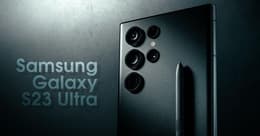
  • Rear Camera System: The Galaxy S21 Ultra 5G features a versatile quad-camera setup, including a high-resolution main sensor, an ultrawide lens, and two telephoto lenses offering significant optical zoom capabilities. This allows for a wide range of photographic styles, from expansive landscapes to detailed distant subjects. The Pixel 7A is equipped with a dual-camera system, featuring a high-megapixel main sensor and an ultrawide lens. Google's computational photography excels at producing consistent, high-quality images across various conditions, particularly in everyday and low-light scenarios.
  • Low-Light and Video Performance: Both devices offer strong low-light performance, with the S21 Ultra 5G leveraging its large sensor and the Pixel 7A relying on its advanced software processing (Night Sight). For video recording, the S21 Ultra 5G supports 8K video capture, while both phones offer 4K recording at various frame rates with effective stabilization.
  • Front Camera and Audio: The S21 Ultra 5G includes a high-resolution front camera for detailed selfies and video calls. The Pixel 7A also features a capable front camera, known for its clear image quality. Both devices provide stereo speakers for media consumption, and their microphones are designed for clear audio capture during calls and recordings.

Main camera

108 megapixels

64 megapixels

Front camera

40 megapixels

13 megapixels

Miscellaneous

Beyond the core features, several practical elements contribute to the overall user experience and differentiate these two devices.

  • Connectivity and Ports: Both smartphones support 5G connectivity, Wi-Fi 6E, and modern Bluetooth standards, ensuring fast and reliable wireless communication. The S21 Ultra 5G and Pixel 7A both utilize a USB-C port for charging and data transfer, but neither includes a traditional 3.5mm headphone jack.
  • Biometric Security: The Galaxy S21 Ultra 5G features an ultrasonic in-display fingerprint sensor and supports face recognition. The Pixel 7A also includes an optical under-display fingerprint sensor and face unlock capabilities.
  • Design and Handling: The S21 Ultra 5G is a larger and heavier device, offering a substantial feel and a large screen, which may appeal to users who prefer a more immersive viewing experience. The Pixel 7A is more compact and lighter, making it easier to handle with one hand and carry in a pocket. The S21 Ultra 5G also uniquely supports the S Pen, offering additional productivity features, though the stylus is sold separately.

Weight

227 g

193 g

Screen size (in)

6.8

6.1

Mobile network

5G

5G

SIM card

Dual Physical SIM + eSIM

Physical SIM + eSIM

Carrier compatibility

Unlocked

Unlocked

The Samsung Galaxy S21 Ultra 5G and the Google Pixel 7A cater to different user priorities, reflecting their respective positions in the market and release timelines. Users often praise the S21 Ultra 5G for its expansive and vibrant display, its highly versatile camera system with significant zoom capabilities, and its premium build quality. Some common user concerns for the S21 Ultra 5G at its launch included its substantial size and weight, and initial battery performance, though software updates have improved this over time.

The Google Pixel 7A is frequently lauded for its exceptional camera performance, particularly its computational photography prowess that delivers consistent and high-quality images, often rivaling more expensive devices. Users also appreciate its clean Android experience and guaranteed long-term software support. However, some users have noted that its battery life, while generally sufficient for a full day, might not be as robust as some competitors for heavy usage, and its charging speeds are not the fastest.

Users prioritizing a large, high-resolution display, advanced zoom photography, and a premium, feature-rich experience may find the Galaxy S21 Ultra 5G well-suited to their needs. Conversely, users who value a more compact device, a top-tier point-and-shoot camera experience driven by AI, and a longer software update commitment will likely lean towards the Google Pixel 7A. Both devices offer a quality Android experience, and choosing between them often comes down to specific feature preferences and form factor. For those seeking an eco-friendly alternative, both models are available as quality-assured refurbished options, providing a sustainable choice for acquiring advanced technology.


See all articles

Our recent comparisons